

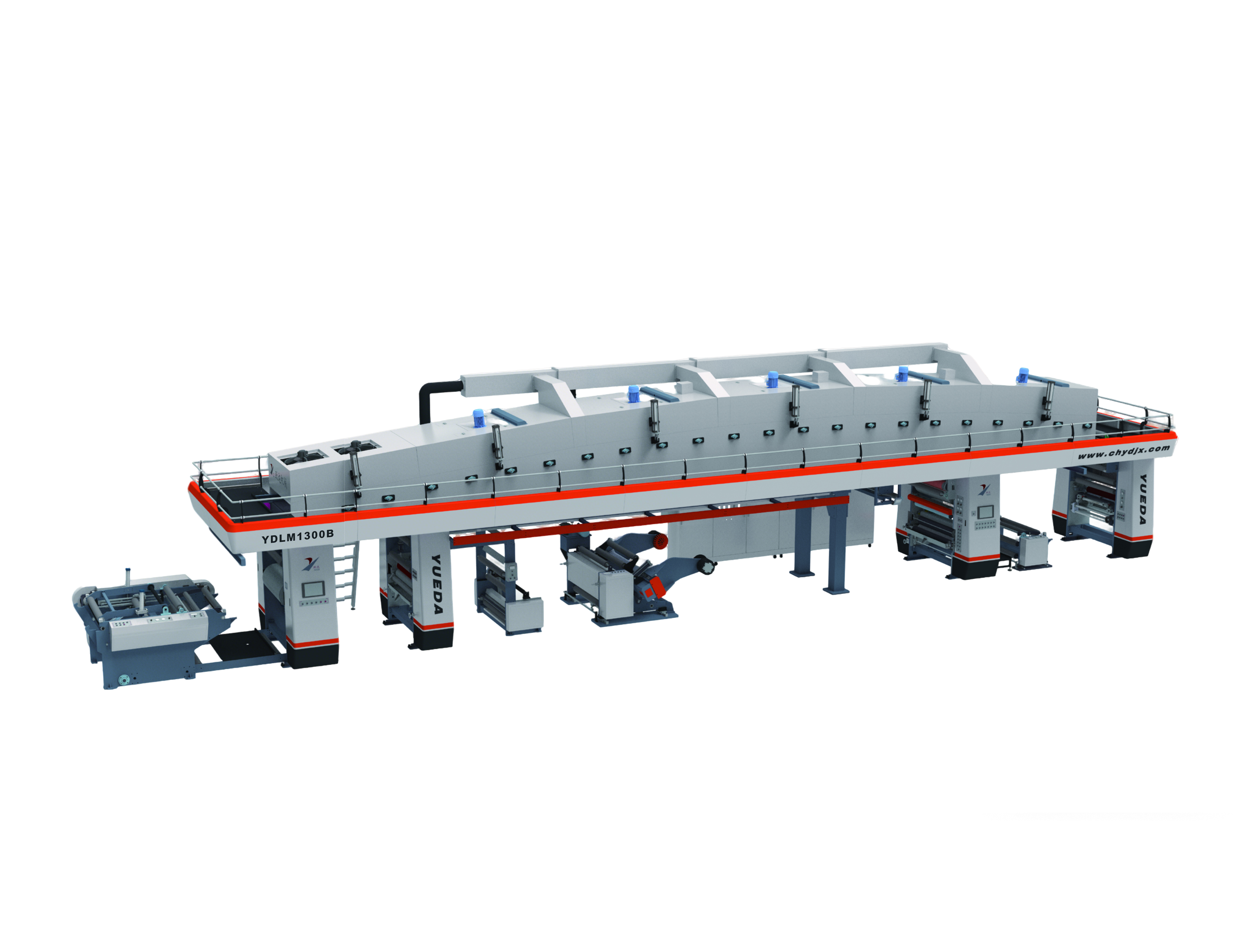
When evaluating industrial sheet cutting solutions, one of the most common comparisons is between YD1300 and YD1400 shaftless positioning sheeters. These machines are widely discussed in the paper converting, packaging, printing, and finishing industries because they are designed to deliver precise sheet cutting, stable performance, and efficient production output. For buyers, engineers, and plant managers, the key question is not only how these sheeters differ in cutting width, but also how each model fits specific job requirements, production environments, and material formats.
This article provides a detailed, SEO-friendly, and industry-focused overview of YD1300 vs YD1400 shaftless positioning sheeters. It explains the meaning of shaftless positioning sheeting, the benefits of each width class, the typical job requirements they handle, and the technical factors that matter most in real-world production. The content is designed for use in blog pages, category pages, industry landing pages, and informational HTML sections.
A shaftless positioning sheeter is a converting machine used to cut rolls of paper or other web materials into precise sheet lengths. Unlike traditional shafted systems, a shaftless design uses a more flexible loading and unwinding structure that supports easier roll handling, faster changeovers, and improved adaptability for different production formats. The “positioning” function refers to the ability to control sheet length accurately through a servo-driven or digitally controlled positioning system.
In industrial applications, shaftless positioning sheeters are favored because they combine high cutting accuracy, reliable registration, and efficient workflow management. They are commonly used in paper processing, label production, packaging material conversion, book production, commercial printing, and other sheet-fed operations where dimensions must remain consistent across long production runs.
The main reasons manufacturers choose shaftless positioning sheeters include:
The comparison between YD1300 and YD1400 is primarily about width capacity, but the choice affects much more than just material size. Cutting width influences machine footprint, feeding stability, supported paper formats, job flexibility, and the kinds of industrial tasks a machine can handle. In many cases, a 100 mm difference in maximum width can determine whether a machine is suitable for standard paper grades, oversized sheets, packaging substrates, or wider roll-to-sheet converting tasks.
Understanding the practical difference between YD1300 and YD1400 shaftless positioning sheeters helps buyers make better decisions based on:
The most obvious difference between YD1300 and YD1400 shaftless positioning sheeters is the supported working width. In general, YD1300 is designed for a nominal maximum width around 1300 mm, while YD1400 supports a nominal maximum width around 1400 mm. That extra width can be highly valuable for operations that process larger roll formats or want more flexibility in sheet layout and nesting.
From a practical standpoint, width capacity influences:
Although 100 mm may seem like a small difference, in industrial converting it can make a significant impact on throughput and job versatility. For example, a wider sheeter may allow a plant to process broader parent rolls without pre-slitting, or it may allow the production of larger format sheets used in packaging, printing, or special paper applications.
The YD1300 shaftless positioning sheeter is often selected for jobs where the production width is moderate, the sheet sizes are standard, and the plant wants a balanced solution between footprint, performance, and cost efficiency. This width class is well suited to many common converting tasks.
YD1300 is often a strong fit when a facility does not need the extra width of a 1400 mm system but still requires dependable sheet cutting performance. It is commonly used in environments where standardized job sizes dominate production and the machine must run efficiently with minimal setup complexity.
For operations focused on efficiency, ease of integration, and routine sheet cutting, YD1300 provides a practical industrial solution. It is especially useful when the production mix does not require exceptionally large formats.
The YD1400 shaftless positioning sheeter offers a wider working range, making it suitable for applications that require more material width, larger sheet formats, or greater flexibility in job planning. In many industrial settings, this added capacity creates strategic value because it expands the range of jobs the machine can support.
YD1400 is generally better suited to operations with wider input materials, more diverse order sizes, or a need to maintain production capability for both standard and larger jobs. The extra width can also improve nesting possibilities, allowing more efficient sheet layout and potentially better material yield depending on the job design.
For facilities that serve multiple markets or that expect changing customer requirements, YD1400 provides additional room for production planning. It is often chosen when businesses want to minimize limitations related to width and maximize machine utility across more job types.
| Comparison Item | YD1300 Shaftless Positioning Sheeter | YD1400 Shaftless Positioning Sheeter |
|---|---|---|
| Nominal Working Width | About 1300 mm class | About 1400 mm class |
| Main Advantage | Compact balance of size and productivity | Greater width flexibility and broader job support |
| Best For | Standard sheet cutting and moderate-width jobs | Wider formats and more flexible converting tasks |
| Material Range | Common paper and standard converting materials | Standard materials plus wider input rolls |
| Space Requirement | Usually more compact | Typically requires slightly more floor space |
| Job Flexibility | Suitable for routine and repeat jobs | Better for mixed jobs and future expansion |
| Production Strategy | Efficiency for standard workload | Flexibility for variable and larger formats |
| Typical Industry Use | Paper converting, printing, packaging | Paper converting, packaging, finishing, wider format production |
Width is not just a dimensional specification. In industrial sheeting, width affects machine design, feeding behavior, sheet alignment, output planning, and waste management. A wider sheeter can support larger master rolls, but it may also require more careful control of web tension, edge guiding, and cutting synchronization.
Key operational impacts of width include:
When comparing YD1300 and YD1400, the extra width of the YD1400 may justify itself if the production team regularly receives larger rolls or wants to avoid limitations on sheet size. However, if the business primarily handles common width materials, YD1300 can provide sufficient capability with potentially better space efficiency.
Although exact specifications vary by configuration, shaftless positioning sheeters in this class often share several common industrial features. These features directly support sheet cutting precision, uptime, and production reliability.
These features are important because sheet cutting is not only about speed. It is also about controlling dimensions, minimizing waste, and maintaining quality from the first sheet to the last. Shaftless positioning technology supports these goals by improving the machine’s responsiveness and setup convenience.
The YD1300 width class offers several practical advantages for general industrial users. Its appeal is often based on versatility and compact productivity rather than maximum width.
For many businesses, YD1300 offers the right combination of performance and efficiency. It is a logical choice when width requirements are consistent and do not exceed common industry standards.
YD1400 offers a wider application range and may be more appropriate for businesses that need additional capability beyond standard width constraints.
For plants that want to serve more than one market segment, the YD1400 width class can be a valuable operational asset. The extra width may reduce the need to split jobs across multiple machines, which can improve planning efficiency and reduce process interruptions.
Choosing between YD1300 and YD1400 should be based on production requirements rather than width alone. A buyer should evaluate the machine in the context of current workload, future demand, and operating conditions.
If the business mostly handles standard-width jobs and values a more compact footprint, YD1300 is often sufficient. If the business needs more width margin, handles larger roll sizes, or anticipates more varied jobs in the future, YD1400 may be the more strategic choice.
Both YD1300 and YD1400 shaftless positioning sheeters are used across multiple industries. Their specific value depends on how each operation defines sheet size, tolerance, and throughput goals.
| Industry | Typical Use | Relevant Width Preference |
|---|---|---|
| Paper Converting | Cutting rolls into sheets for downstream processing | Both YD1300 and YD1400 depending on roll size |
| Printing | Preparing sheet stock for print finishing | YD1300 for standard work, YD1400 for wider formats |
| Packaging | Producing liner sheets, inserts, and flat packaging materials | YD1400 often preferred for wider layouts |
| Book Production | Processing paper sheets for notebooks, books, and manuals | YD1300 commonly used for standard formats |
| Commercial Finishing | Sheet preparation for post-print operations | Depends on job mix and required sheet dimensions |
When discussing shaftless positioning sheeters, job requirements should always be considered together with efficiency. A machine that matches the job width but lacks proper control features may create waste, downtime, or quality issues. Conversely, a machine that is too large for the work may lead to unnecessary investment and underutilized capacity.
To improve production efficiency, a facility should examine:
In many cases, the right sheeter is the one that balances width, speed, precision, and operational simplicity. That is why the YD1300 and YD1400 comparison is so important: the correct width class can directly affect plant productivity and job profitability.
The following table provides a general industry-oriented specification overview for YD1300 and YD1400 shaftless positioning sheeters. Exact values may vary depending on machine configuration, material type, and production setup.
| Specification Item | YD1300 | YD1400 |
|---|---|---|
| Working Width Class | 1300 mm class | 1400 mm class |
| Machine Type | Shaftless positioning sheeter | Shaftless positioning sheeter |
| Primary Function | Roll-to-sheet cutting | Roll-to-sheet cutting |
| Best Job Range | Standard-width converting jobs | Wider-format converting jobs |
| Control System | Digital / servo positioning | Digital / servo positioning |
| Operational Strength | Compact efficiency | Broader flexibility |
| Typical End Use | Paper and print finishing | Paper, packaging, and wider finishing jobs |
| Selection Focus | Standard production balance | Width capacity and future scalability |
In the industrial converting market, YD1300 and YD1400 shaftless positioning sheeters are both valuable options for roll-to-sheet cutting. The main difference is width capacity, but the impact of that difference extends to job requirements, layout flexibility, machine utilization, and long-term production planning. YD1300 is often the better fit for standard-width jobs, compact production environments, and routine converting tasks. YD1400 is often better for wider formats, more variable orders, and applications that require additional room for expansion.
For buyers and production planners, the choice should be based on the material width range, sheet size needs, application type, and overall workflow goals. Both models represent the core advantages of shaftless positioning technology: accurate cutting, easier roll handling, and more efficient production control.
Yes, in many industrial environments YD1300 is sufficient for standard-width paper and converting tasks. It is often used where sheet sizes remain within common production ranges.
YD1400 is generally better when wider input rolls, larger finished sheets, or greater job flexibility are needed. It is a strong option for operations that anticipate changing production demands.
Not always. Wider machines offer more flexibility, but the best choice depends on actual job requirements, plant layout, and material formats. A machine should match the workload rather than exceed it unnecessarily.
They offer easier roll handling, accurate sheet length control, reduced setup time, and strong adaptability for a range of converting applications.
For businesses evaluating YD1300 vs YD1400 shaftless positioning sheeters, the decision comes down to width, workflow, and the type of jobs being produced. Understanding those factors helps ensure the machine selected supports both present production needs and future operational growth.
Contact: Peter Chen/Jack Chen
Mail : peterchen@yuedamachine.com
Cellphone: +86 18767458866/ +86 19857780001
Address: Building 2, No. 1333 Times Avenue, Longgang City,Wenzhou City, Zhejiang Province China
Copyright © 2026 Wenzhou Yueda Packaging Machinery Co., Ltd. All Rights Reserved.
SitemapThis website uses cookies to ensure you get the best experience on our website.
 Español
 Portugues
 Indonesia
 Tiếng Việt



 Phone
 E-mail
Comment
(0)