

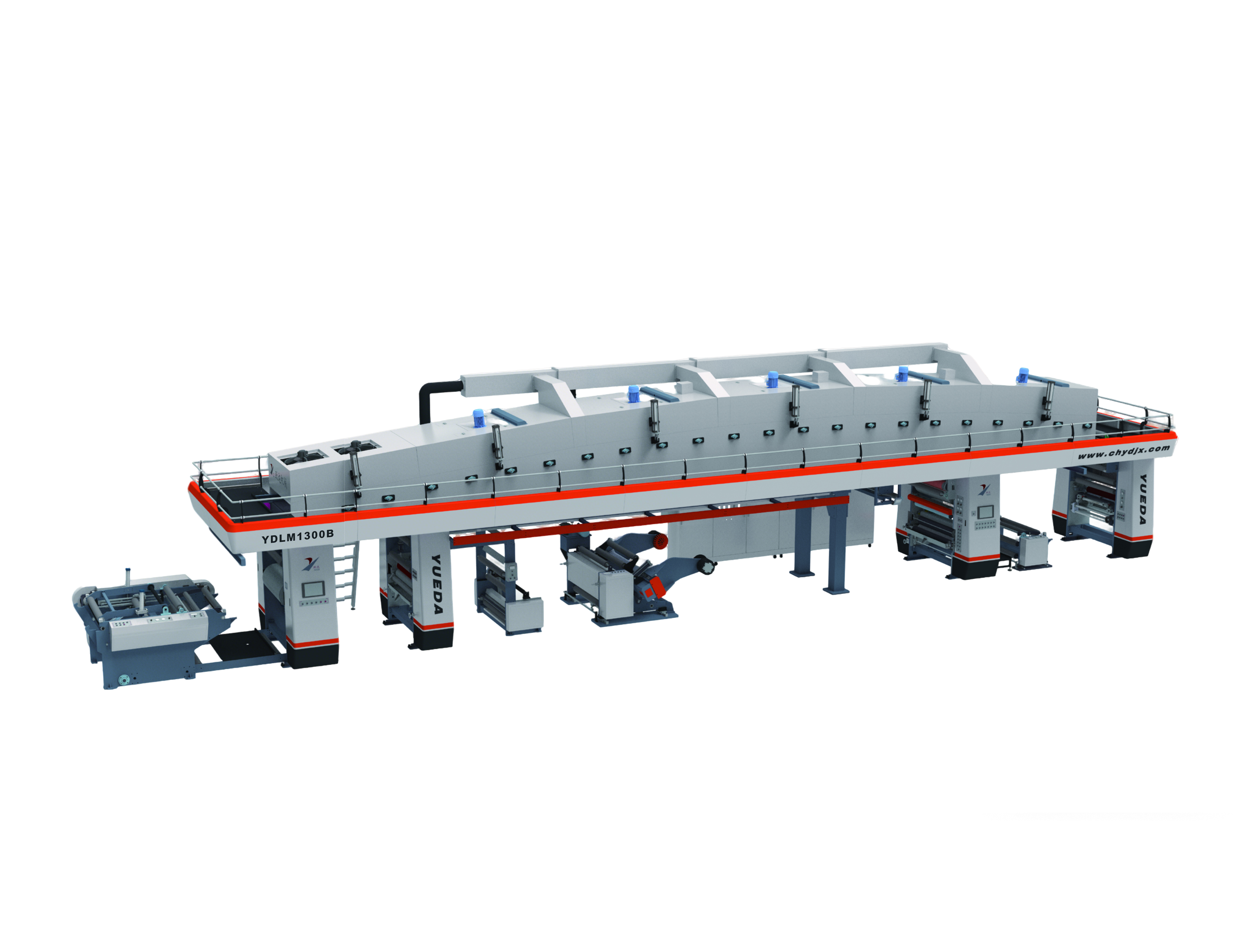
The topic of ZNFH1300, ZNFH1400 and ZNFH1500 water glue lamination proposals is highly relevant for packaging manufacturers, printing plants, label converters, paperboard processors, and industrial laminators seeking efficient, stable, and cost-conscious surface bonding solutions. In modern production environments, water-based glue lamination is widely used because it supports strong adhesion, cleaner operation, lower odor, and a more environmentally friendly workflow compared with many solvent-heavy alternatives.
This article provides a comprehensive, SEO-friendly, industry-oriented comparison of the three proposal types: ZNFH1300, ZNFH1400, and ZNFH1500. It is written for use in blog posts, category pages, directory pages, equipment introduction sections, and technical landing pages. The content focuses on general industry information only, including definitions, use cases, advantages, specifications, and selection considerations. It does not include specific company recommendations.
Water glue lamination is a lamination process that uses water-based adhesive to bond one substrate to another. It is commonly applied in packaging, paper converting, hardcover book production, carton reinforcement, decorative board finishing, and other industrial surface bonding applications. The term “water glue” generally refers to a type of adhesive formulated with water as the primary carrier, making it easier to handle, clean, and apply in many production lines.
In a typical water glue lamination workflow, adhesive is distributed evenly onto a substrate, then a second layer or film is pressed onto it using pressure and, in some cases, heat. The result is a bonded composite material with enhanced strength, appearance, moisture resistance, or structural performance. For many factories, water glue lamination remains a practical choice because it can offer a balanced combination of performance, cost efficiency, and operational simplicity.
The model names ZNFH1300, ZNFH1400, and ZNFH1500 are commonly understood as different width or capacity configurations within the same lamination proposal family. While exact configurations may vary by system designer, the naming usually suggests a progression in working width, output capacity, and production scale. That makes these models relevant for businesses comparing compact, medium-scale, and higher-capacity water glue lamination solutions.
For buyers and engineers, comparing these proposals is important because the right choice can affect throughput, labor efficiency, material compatibility, floor space usage, and return on investment. A properly selected lamination proposal can improve production stability while helping reduce material waste, setup time, and operator workload.
In general industry terms, the three proposals can be understood as follows:
These proposals are often compared by working width, speed range, adhesive handling, substrate compatibility, and system expansion potential. Although the exact parameters depend on the final technical build, the general comparison remains useful for decision-making in printing and packaging operations.
Before comparing the three models, it is helpful to understand the broader advantages of water glue lamination systems. These advantages are one of the main reasons why water-based adhesive lamination continues to be widely used in commercial and industrial settings.
| Benefit | Industry Relevance |
|---|---|
| Cleaner operation | Water-based adhesive generally supports easier cleaning and less residue buildup. |
| Lower odor | Often preferred in factories where worker comfort and air quality matter. |
| Stable bonding | Suitable for many paper, board, and film lamination applications. |
| Cost efficiency | Water glue can help reduce adhesive processing complexity and material costs. |
| Environmental compatibility | Often chosen for production lines seeking more eco-conscious materials and workflows. |
| Broad application range | Useful in packaging, printing, publishing, and paper converting industries. |
The following comparison highlights the most important differences among the three proposals from a general industry perspective. The table is designed for SEO use and can be directly inserted into an HTML page as part of a product guide, comparison section, or technical blog post.
| Parameter | ZNFH1300 | ZNFH1400 | ZNFH1500 |
|---|---|---|---|
| General positioning | Compact / entry to mid-level | Balanced mid-range | Higher-capacity / large-format |
| Typical working width | Approx. 1300 mm class | Approx. 1400 mm class | Approx. 1500 mm class |
| Production output potential | Moderate | Medium to high | High |
| Floor space requirement | Lower | Moderate | Higher |
| Best for | Smaller converters, compact plants, flexible short runs | Growing factories, mixed-order production | Large-scale operations, wider sheets, higher throughput |
| Operating flexibility | Good | Very good | Excellent for broader formats |
| Investment profile | Generally lower | Balanced | Typically higher due to scale |
| Automation potential | Available in many configurations | Commonly requested | Often paired with advanced automation |
| Material handling | Suitable for standard sheets and boards | Suitable for broader applications | Ideal for larger sheets and heavier demand |
The ZNFH1300 water glue lamination proposal is typically considered a practical choice for businesses that need a compact but capable system. It is often selected by operations that process standard-size materials and want a more space-efficient setup. Because of its more compact width class, it may fit better in workshops, small production facilities, or lines where space planning is a priority.
ZNFH1300 can be attractive for users who want a lower initial footprint while still maintaining industrial-level lamination performance. It is commonly associated with straightforward operation, manageable maintenance, and reliable adhesive coating for a range of paper and board products.
The ZNFH1400 water glue lamination proposal is often viewed as the middle-ground option in the family. It typically offers a wider working range than ZNFH1300 while remaining more space-efficient and cost-conscious than larger models. This makes it appealing for businesses that want scalability without moving directly into the highest-capacity tier.
In many plant environments, the ZNFH1400 class is ideal for balancing throughput and operational flexibility. It may support a broader range of substrate sizes and application types, making it suitable for converters dealing with mixed orders or frequent product changes.
The ZNFH1500 water glue lamination proposal is generally positioned as the largest or most capacity-oriented option among the three. It is suitable for facilities that process wider materials, higher-volume production batches, or lines that must maximize throughput. In industrial environments where efficiency and output consistency are priorities, a 1500-class proposal can offer strong advantages.
Because of its wider format and higher-capacity profile, ZNFH1500 is often chosen by larger packaging operations, dedicated converting factories, and production sites that need room to grow. While it may require more installation space and a higher initial investment, the system can deliver better long-term productivity when production demand is high.
Choosing the right water glue lamination proposal depends on more than just width. Buyers should consider production goals, substrate types, plant space, operator experience, and future expansion plans. The most suitable model is not always the largest one; rather, it is the system that best fits the workflow and business strategy.
| Selection Factor | What to Consider |
|---|---|
| Production volume | Higher volume usually supports wider and more capable lamination proposals. |
| Material size | Larger sheet formats may require a wider working width. |
| Plant layout | Compact factories may benefit from narrower equipment footprints. |
| Budget | Initial investment and operating costs should both be evaluated. |
| Product variety | Mixed product types may require a more flexible mid-range solution. |
| Growth plans | Future expansion may justify choosing a larger model in advance. |
| Automation needs | Higher output operations often benefit from more automation and control features. |
Although proposal details differ by configuration, several core features are commonly evaluated in any water glue lamination system. These features influence machine stability, product quality, and operating efficiency.
The following section summarizes how the three proposals typically compare in performance orientation. This can help readers quickly understand the practical differences between each model class.
| Performance Area | ZNFH1300 | ZNFH1400 | ZNFH1500 |
|---|---|---|---|
| Space efficiency | Strong | Good | Moderate |
| Output capacity | Moderate | Good | Very strong |
| Order flexibility | Good | Very good | Good for larger orders |
| Material compatibility | Standard applications | Broad applications | Wide-format applications |
| Scalability | Entry-level to mid-level | Balanced scaling | High production scaling |
Water glue lamination is used across multiple industries because it provides a reliable and adaptable bonding process. The following use cases are among the most common in commercial and industrial environments.
Selecting the appropriate proposal size can significantly improve production efficiency. A machine that is too small may create bottlenecks, while a machine that is too large may increase costs without delivering proportional value. This is why comparing ZNFH1300, ZNFH1400 and ZNFH1500 is so important for buyers.
The right choice can help reduce downtime, improve line stability, and align output with actual demand. For example, a business producing standard-size packaging with moderate order volumes may find ZNFH1400 more practical than moving directly to ZNFH1500. On the other hand, a large-scale converter with rising production pressure may benefit from the broader capability of ZNFH1500.
For content optimization, the following keyword themes are relevant and can be naturally integrated into page titles, H2/H3 headings, meta descriptions, and body content:
The main difference is generally the working width and production capacity. ZNFH1300 is typically the most compact, ZNFH1400 offers a balanced middle option, and ZNFH1500 is usually the widest and highest-capacity proposal.
ZNFH1300 is often suitable for smaller operations, while ZNFH1400 is usually a strong choice for medium production environments that need more flexibility and output.
Yes. Water glue lamination is widely used in packaging because it can provide strong adhesion, stable finishing, and cost-effective processing for paper and board products.
Not necessarily. A larger width can improve capacity and flexibility, but the best option depends on production volume, material sizes, plant space, and investment goals.
Yes, especially if a business expects growth in order volume or product size. ZNFH1400 and ZNFH1500 may offer more room for future scaling, depending on the production strategy.
When comparing ZNFH1300, ZNFH1400 and ZNFH1500 water glue lamination proposals, the best choice depends on your production scale, available space, material size, and long-term business plans. ZNFH1300 is a practical compact solution, ZNFH1400 is a balanced all-round option, and ZNFH1500 is better suited for larger-format, higher-output operations.
For businesses evaluating water glue lamination machines, the most important step is to match equipment capacity with actual workflow needs. A well-chosen proposal can improve productivity, support consistent lamination quality, and help strengthen the efficiency of packaging and converting operations.
In short, the right water glue lamination proposal is not simply the biggest model available. It is the model that best supports the production environment, material requirements, and growth strategy of the operation. By comparing ZNFH1300, ZNFH1400 and ZNFH1500 carefully, manufacturers can make a more informed and cost-effective equipment decision.
Contact: Peter Chen/Jack Chen
Mail : peterchen@yuedamachine.com
Cellphone: +86 18767458866/ +86 19857780001
Address: Building 2, No. 1333 Times Avenue, Longgang City,Wenzhou City, Zhejiang Province China
Copyright © 2026 Wenzhou Yueda Packaging Machinery Co., Ltd. All Rights Reserved.
SitemapThis website uses cookies to ensure you get the best experience on our website.
 Español
 Portugues
 Indonesia
 Tiếng Việt



 Phone
 E-mail
Comment
(0)