

A Double Rotary Knife Sheeter can be part of a line that turns paperboard from a roll into sheets for later converting. When a buyer considers a different board grade, the relevant question is whether the proposed material can pass through the intended line and arrive at the next operation in a usable condition. A grade that has a similar commercial description to the current stock can differ in surface, caliper, stiffness or the condition in which the roll reaches the machine. A useful qualification records the actual input and output instead of expecting one successful cut to settle every question.
Start with a reason for the change. A converter may need to qualify a second source, adapt to a different finished carton, or make use of a grade that is available in a particular width. Put the reason at the top of the trial brief. A second source trial needs a clear comparison with a current approved material. A new carton job may need a different sheet format and a new downstream check. The reason also helps the people reviewing the results understand which requirements are fixed and where the proposed arrangement can change.
Do not begin by asking whether a machine can cut paperboard in general. Identify the machine model and the equipment already installed or being considered, then give the supplier the relevant grade and roll information. Ask which items need to be checked against the documented machine limits. The same family name can cover different configurations, and photographs of related machines cannot establish a capability for a specific line. A responsible machine recommendation needs enough information to distinguish the material and the intended job from a superficially similar application.
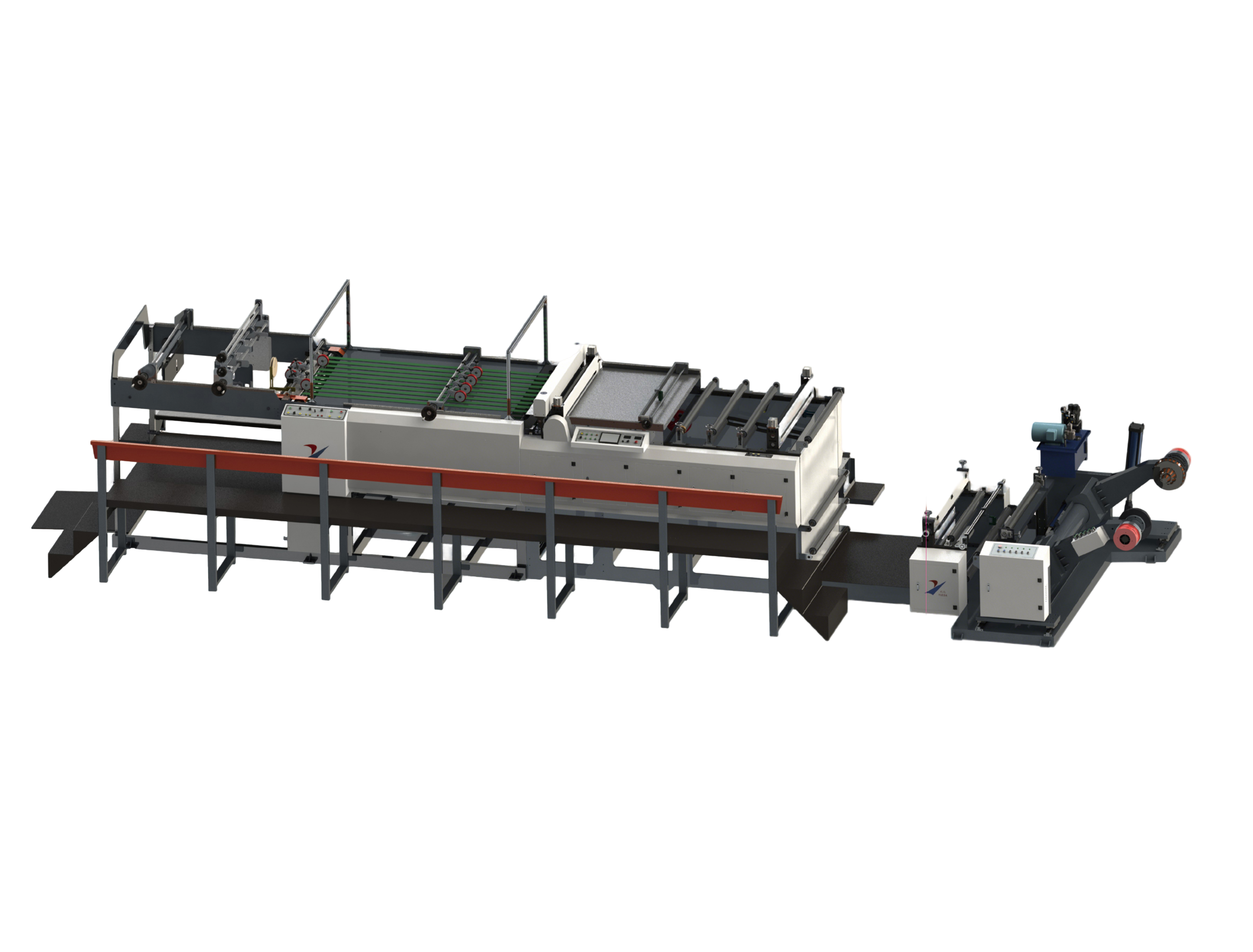
Shaft-less Positioning Sheeter shown in the Yueda product range.
Record the present board by the supplier reference, grade name and available lot or roll identification. Add the information the purchasing and production teams rely on when they order and receive it. If the specification gives a range for thickness or weight, retain the range and record the values observed on the trial material separately. Include the surface and coating descriptions where they matter. A sheet sample from a previous job is helpful if its origin is clear. Without the reference, the reviewer may be comparing the proposed board with a different material that happens to look familiar.
Next write down the current job in terms of what it delivers. List the usable sheet format, which edge is the leading edge at the next operation, and what is expected at the corners and cut edges. Include the current practice for identifying stacks and protecting them during transfer. Capture normal acceptance decisions rather than copying an entire machine manual into the brief. If the present line produces an occasional mark that the next process tolerates, record that fact with an example. The trial can then distinguish a genuinely new issue from an old variation that has already been accepted.
Collect observations at more than one point in the current run where practical. Use identified samples from the start and from a stable portion of the job. If material near a roll change is handled separately, note it rather than mixing it into an average. Keep a few sheets or clear photographs with their sample identifiers. A reference trial does not need to be large to be useful, but it does need a visible boundary. Write down which machine, material and conditions the reference describes and do not extend the result to another job without checking the differences.
Ask the proposed supplier for its data on the material being offered. The categories may include thickness, basis weight, roll width, core and roll dimensions, winding orientation and a description of the surface. Keep the data linked to the exact roll or lot used for the trial whenever possible. The machine supplier may also need information about how the roll will be supported and guided in the intended configuration. Share the actual available information and mark any missing item as open. Guessing a number to finish a request form can make later advice less useful.
Thickness and weight should not be treated as interchangeable. They describe different characteristics, and two papers described by the same nominal weight can behave differently when handled or stacked. The buyer does not need to assign a technical cause to every difference before the trial. It is more useful to record what has changed and let the responsible engineers decide which observations deserve more attention. For instance, a sheet that is harder to flatten at transfer can deserve a practical handoff check even if the edge appears clean. Record that as a handling question rather than a conclusion about the knife.
Surface differences also matter beyond appearance. A coated face, an uncoated face and a board with a decorative finish may require different attention to contact marks, orientation and stack separation. Identify which face should remain visible or protected and how staff distinguish it. If an item arrives with a finish different from the one described, do not assume the rest of the trial remains representative. Ask the supplier to confirm the sample and record the discrepancy. A well documented hold at receiving can prevent a line trial from answering the wrong question.
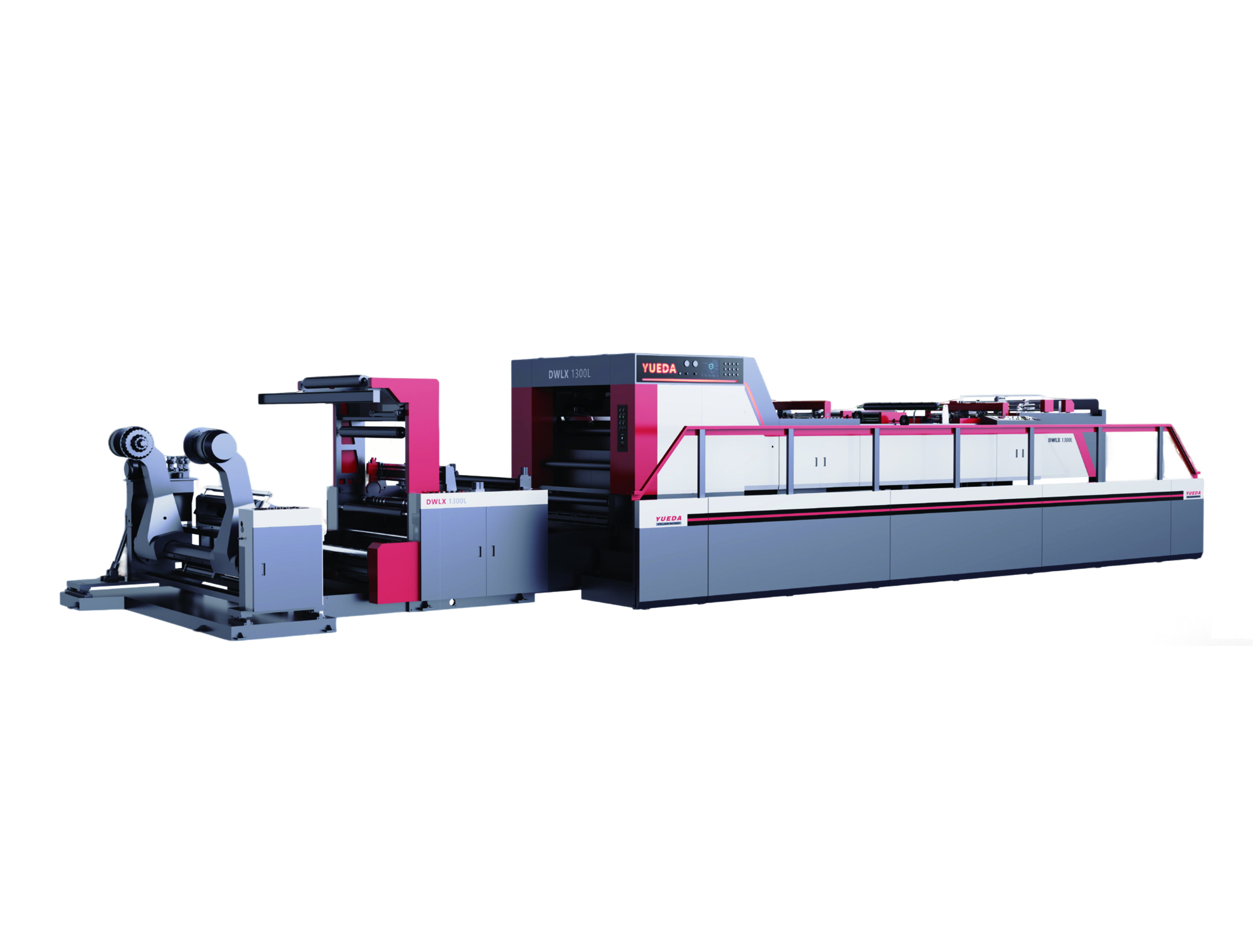
Double rotary sheeting equipment shown as a complete machine layout.
The clearest comparison keeps the output format and acceptance method unchanged while comparing the two materials under a compatible, approved setup. That may not always be practical. A proposed roll can come in a different width, or the new carton may require a change in sheet length. When more than the material changes, state that explicitly. A combined trial can still be valuable as an evaluation of a complete production arrangement. It should not be used to claim that every observed difference was caused by the board grade alone.
Make a short trial matrix before the day of the run. Each row should identify the material, the job format, the sample point and the next check it must pass. Put the reference row next to the proposed row and note differences in available equipment. If the proposal is for a new line rather than the current production machine, retain the distinction. A result on a different line is evidence about that trial arrangement. It may justify a further check, but it does not replace validation on the actual production line if that line will be used later.
Keep adjustment authority with the people responsible for the equipment. The trial brief should ask them to record the approved setup references and material changes, not give improvised instructions for knife adjustment or access to guarded areas. Any setup that is outside the supplier guidance or site safety procedure should be resolved before the run. Where machine conditions need to change to accommodate the new grade, record what was changed in the approved setting record. This allows the buyer to understand the test without treating a purchasing guide as operating instructions.
Before running, check that the trial roll is the one the brief names. Record visible damage, edge condition, winding direction and any difference from the planned size or handling arrangement. If the board has been stored or transported in conditions that may influence its state at the line, write down what is known. Do not try to infer a precise history from appearance alone. A note about the condition at receipt and a photo of an identified area can help explain whether a later observation was present before the trial began.
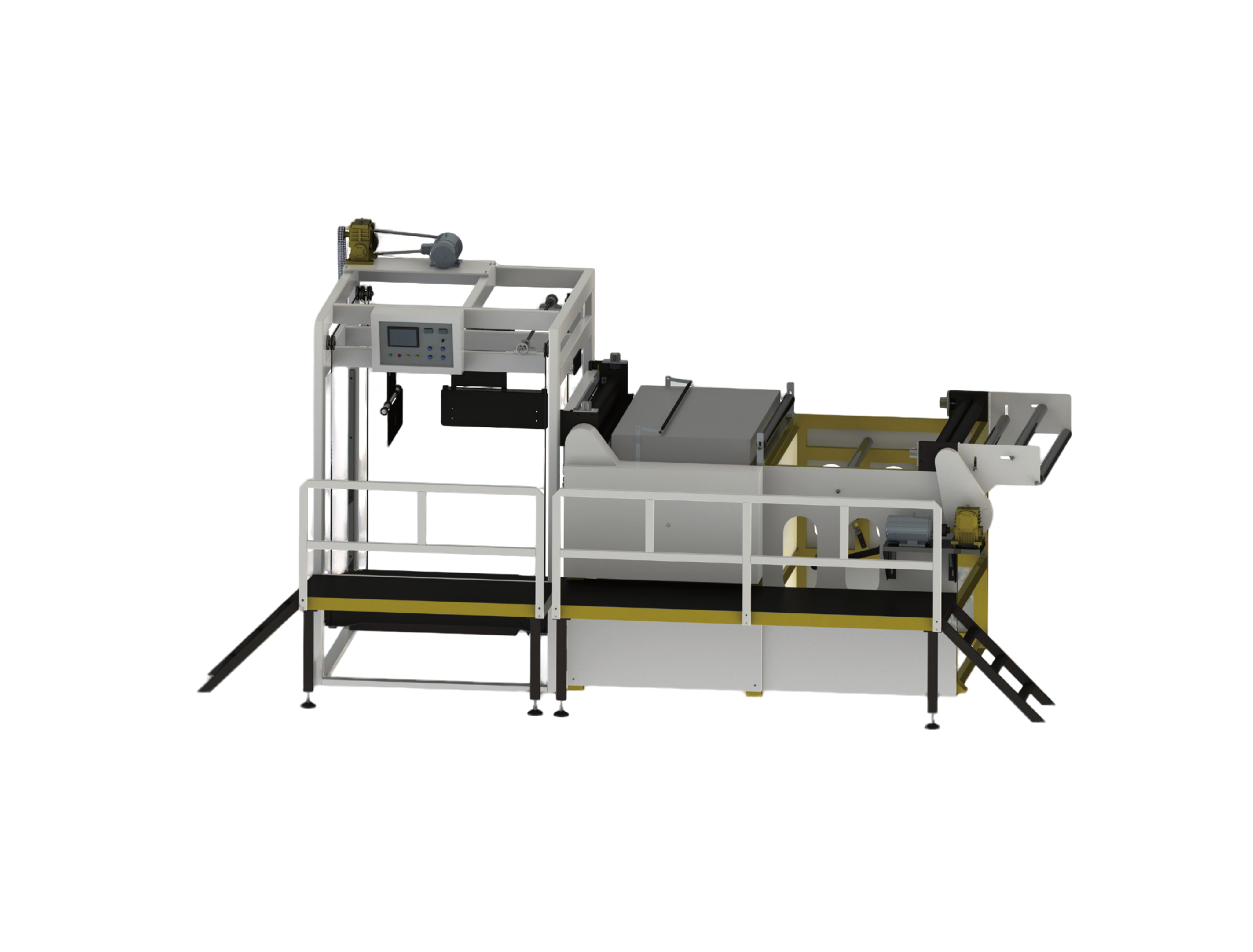
Elevation type transverse paper cutting equipment product view.
Decide how trial sheets will be separated from normal production. The sample path should make it clear which pile belongs to each material and which area will be used for comparison. Label representative sheets as they are taken. If the sampling point is after a transfer or a stack movement, record that fact. A bent corner observed only after a stack is moved is a different question from one first seen at the discharge. By preserving that distinction, the team can direct its attention toward the process stage that needs a closer check.
Plan for an interrupted trial. A material may be held if the roll identity is uncertain, if a quality observation cannot be assessed safely, or if an unplanned change makes the comparison unclear. Define who can hold or release the sample and where the sheets are put while a decision is pending. Avoid letting an interruption erase the value of the work already done. Label the partial results with the conditions covered and list the missing observations. The next trial can then resume at the open question rather than start over without using the existing evidence.
The cut review should describe what a person can actually see or measure. Check the sheet dimensions against the drawing or job brief and state the measurement convention. Note where edge fibers, dents, delamination or deformation are observed if present. If the material has a coated face, check both the cut edge and the nearby surface. Take comparison photographs under similar lighting and with the same scale reference where useful. A description like slight marks near the leading corner on the coated face is easier to evaluate than a general comment that one board looks worse.
Separate observations across the width and along the run. A mark occurring at a repeated position can need a different investigation from a mark scattered across several sheets. A size difference limited to the start of the run should not be combined with the readings taken after the run has settled. Record how many sheets were checked and which sample positions they represent. Avoid interpreting a limited number of samples as a statistical proof about all future production. The record can still be sufficient for a practical decision if the intended scope and remaining uncertainty are clear.
Give the downstream reviewer an identified set of sheets rather than an anonymous pile. Include a sample that represents normal output and any borderline sample that the line team wants reviewed. The person examining the sheets should know which characteristics are being assessed and whether the check applies to all visible faces. Ask the reviewer to record any mismatch with the next operation instead of reducing the result to a single good or bad comment. This creates a useful connection between the cut observation and the consequence for the job.
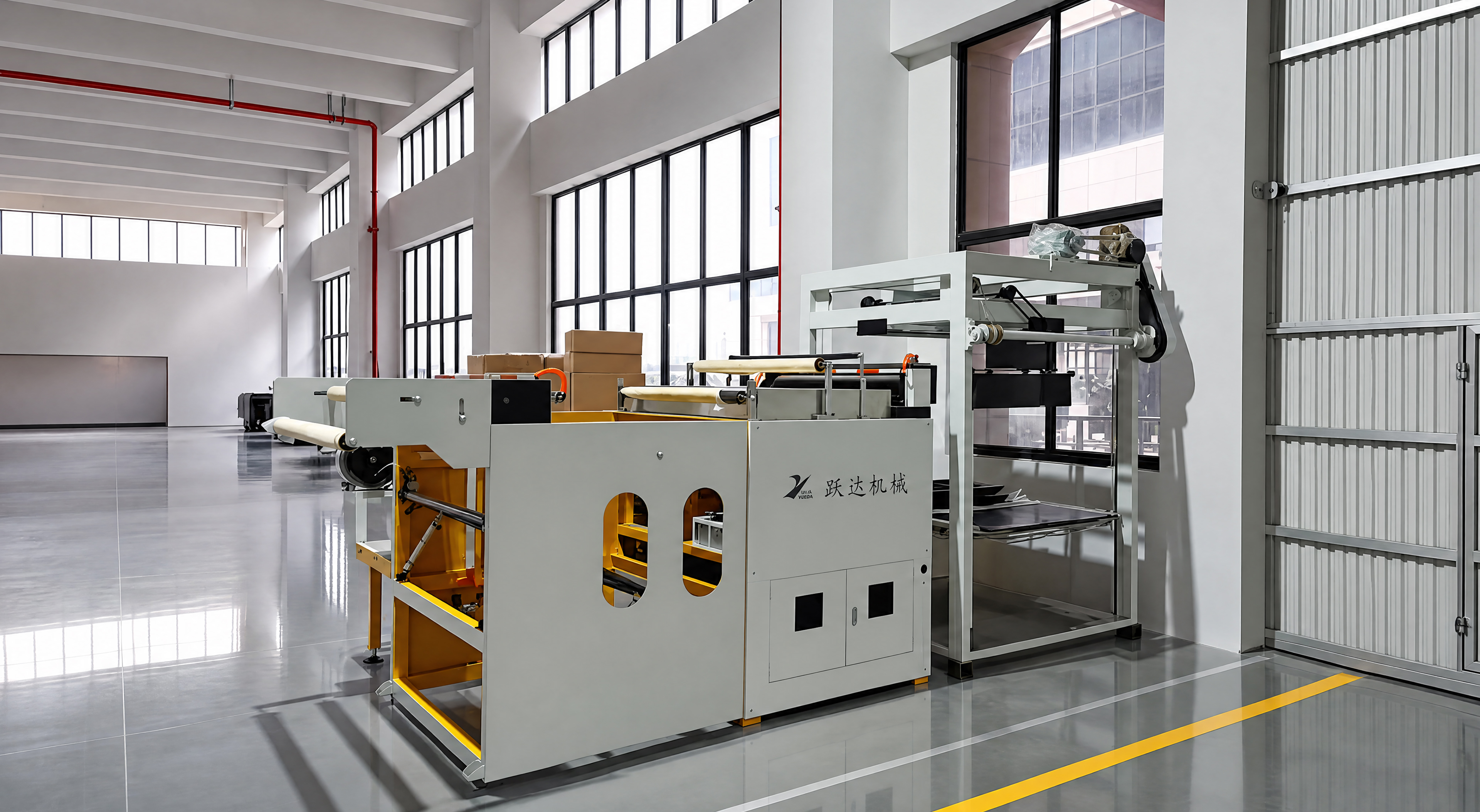
Paper converting equipment on the workshop floor.
The individual sheet is only one part of the output. Look at how a stack forms and whether the edges remain reasonably aligned for the planned transfer. Check the upper and lower sheets where access is permitted under normal site procedure. A surface mark can arise when sheets move against one another, and a sheet that looks fine by itself can be awkward to feed in a stack. Identify where the stack is inspected and how it was handled before the check. Otherwise a problem introduced during movement may be attributed to the cutting step.
Evaluate the format that the next process will actually receive. If a downstream feeder takes smaller lifts than the full sheeter stack, observe a representative lift under the normal handling arrangement. If stacks are transported on pallets, check the pallet and protection method planned for this job. Do not assume that an alignment visible directly at the machine will be preserved under every handling arrangement. A useful trial includes the handoff boundary because the person accepting the sheets needs to understand how much manual correction is likely to be required.
Note which stack characteristics are essential for release and which can be addressed by a change in handling. A board can satisfy the cut dimensions but still need a different stack quantity or protection method to arrive at the next station as intended. A proposed handling change should be tried before it is treated as a solution. If the change adds labor, space or delay, include that consequence in the comparison. The purchase decision should reflect the whole route, including the work required to deliver the accepted sheet to the next operation.
Take the identified samples through the next operation that matters for the job. It may be printing, folding, die cutting or another conversion step. Define the review with the operator or process owner in advance. Some questions can be answered on a small sample while others need a representative stack. Note what was actually checked, which setup was used, and any practical differences between the trial and production. A sheeter trial is stronger when the acceptance decision explains what the output must do after leaving the line.

Workshop view showing several paper converting machines.
Inspect the sheet condition after that operation as well as before it. A board that feeds differently may create registration or handling observations even when the cut dimensions are similar. The downstream result can also show that a visible difference in the stack is immaterial for a particular job. Do not speculate about a broad cause from one check. Record the observation and, if it is important, arrange a follow-up that can separate the material, the cut and the next process conditions. Keep enough sample identification to match those records later.
If the board is intended for several jobs, do not assume a single format represents them all. List the jobs for which the trial is directly relevant and identify what is different for the others. A buyer can approve one use while leaving another open. That approach is more useful than a vague decision that the grade is approved for everything or rejected entirely. The release note should identify the acceptable combination of material, sheeting configuration and downstream job, along with any further trial needed before expanding its use.
Put the decision and the supporting observations in one place. Record the approved material reference, roll details, output format, sample identifiers and people who reviewed the results. If the proposal is approved with conditions, list the conditions in plain language. Include any check to be repeated on the first production delivery. If the result is a hold, name the question still open and who will obtain the evidence. This helps the buyer compare a later quotation or delivery with the same decision rather than rely on a remembered impression of the trial.
Where a different sheeter configuration is being considered, send the equipment supplier a concise summary of the comparison. Give it the roll and grade data, desired output, downstream requirement and photos of the actual samples where useful. Ask the supplier to distinguish documented limits from points that need a trial. Do not request a guarantee of a performance figure without the conditions necessary to evaluate it. A specific exchange about material and output is more useful than asking several suppliers to confirm an undefined description of heavy board or high precision.
Revisit the decision when the underlying assumptions change. A later delivery from another source, a different coating or a new roll size can affect the comparison. That does not necessarily require repeating the complete exercise. Identify which checks the difference could affect and decide what evidence is appropriate. Keep the previous result rather than rewriting it as if it had covered the new conditions. Over time this builds a set of qualification records that can guide purchasing and line planning while preserving the boundaries of what was actually observed.
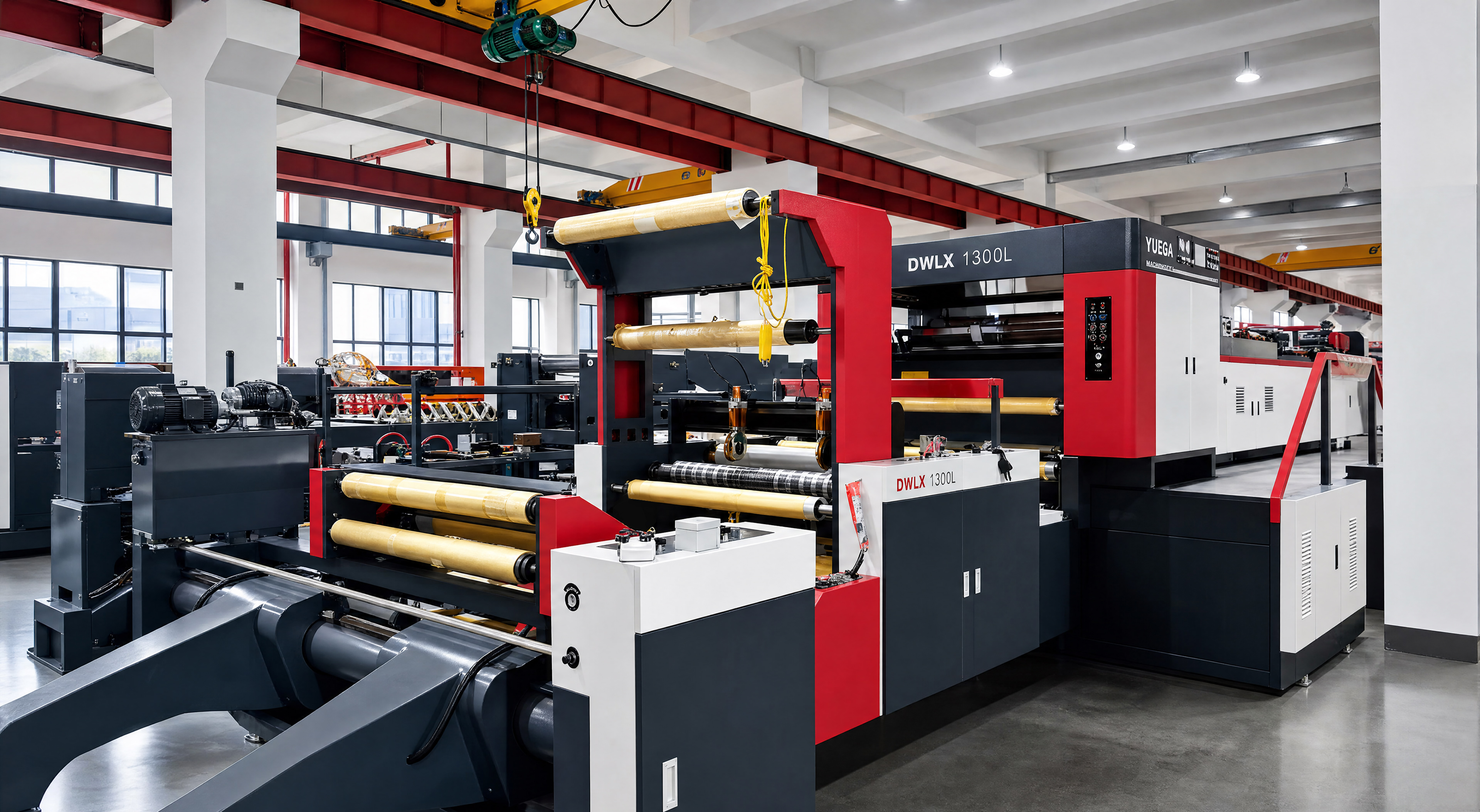
Close view of a DWLX 1300L machine inside the workshop.
When a grade change is proposed for commercial reasons, compare the cost of the output that can actually be used. A lower input price is only one part of the comparison. The trial can also reveal that the new width changes the quantity of trim, or that the new stack arrangement needs additional protective material. Record the assumptions and separate observed quantities from estimates. A trial run may consume more startup material than a familiar job, so the buyer should decide which costs are likely to recur and which belong to the one-time qualification. Keep the figures tied to the format, since a different sheet layout can change the comparison.
Track where material is removed or held during the run. Identify startup sheets, routine trim, samples retained for inspection and sheets rejected for a specific observation. If a pile is waiting for downstream review, record it as pending rather than counting it as either accepted or scrap. The separation makes it possible to discuss the next trial with evidence. A problem caused by an unsuitable stack transfer may be more useful to resolve than a small difference in trim. The record should show which difference matters to the job, not just provide one combined number for material that did not reach the next operation.
Agree on what the first production order will need to show before the change is treated as routine. The volume and timing of that order depend on the business, but the acceptance steps should be clear in advance. The team may want to confirm that an identified lot can be received, sheeted and used at the next operation with the same observations that supported the trial. If that first order introduces a different width or finish, record it as an additional change. Maintaining the link between the trial and the first order lets purchasing evaluate savings and usability using the same reference.
Does matching basis weight mean a grade change can be approved without a trial? A weight match is one useful detail, but it does not establish the same thickness, surface condition, stiffness or handling behavior. Review the proposed roll and sheet requirements and decide which observations are needed for the actual job. A small comparison may be enough for a limited decision, but the decision should name the material and conditions it covers.
What should the buyer provide when discussing a double rotary knife sheeter? Identify the proposed board grades, roll information, required sheet formats, accepted orientation, cut and stack requirements, and the next operation. Describe which combinations are existing production and which are still being evaluated. If a sample is available, keep it linked to its material reference. That information lets the supplier review a concrete job instead of trying to infer requirements from a general machine category.
Can an accepted sheet sample replace a complete production assessment? An accepted sample is useful evidence for the material and trial conditions it represents. It cannot by itself show how every delivery, stack arrangement or downstream job will behave. Compare the sample result with the intended production route, capture any conditions on release, and plan a first delivery check when appropriate. Keep the approved sample available so a later difference can be investigated with a reference rather than a memory.
How should an unresolved edge or stack issue be reported? Describe the observed location, the sample identity, the material and the point in the run or transfer at which it was first noticed. Provide the corresponding reference sample if there is one. Ask the people responsible for the machine and downstream operation to review the evidence under the applicable procedures. A precise description of the symptom is a good basis for deciding what to test next, even when the cause is not yet known.
Contact: Peter Chen/Jack Chen
Mail : peterchen@yuedamachine.com
Cellphone: +86 18767458866/ +86 19857780001
Address: Building 2, No. 1333 Times Avenue, Longgang City,Wenzhou City, Zhejiang Province China
Copyright © 2026 Wenzhou Yueda Packaging Machinery Co., Ltd. All Rights Reserved.
SitemapThis website uses cookies to ensure you get the best experience on our website.
 Español
 Portugues
 Indonesia
 Tiếng Việt



 Phone
 E-mail
Comment
(0)