

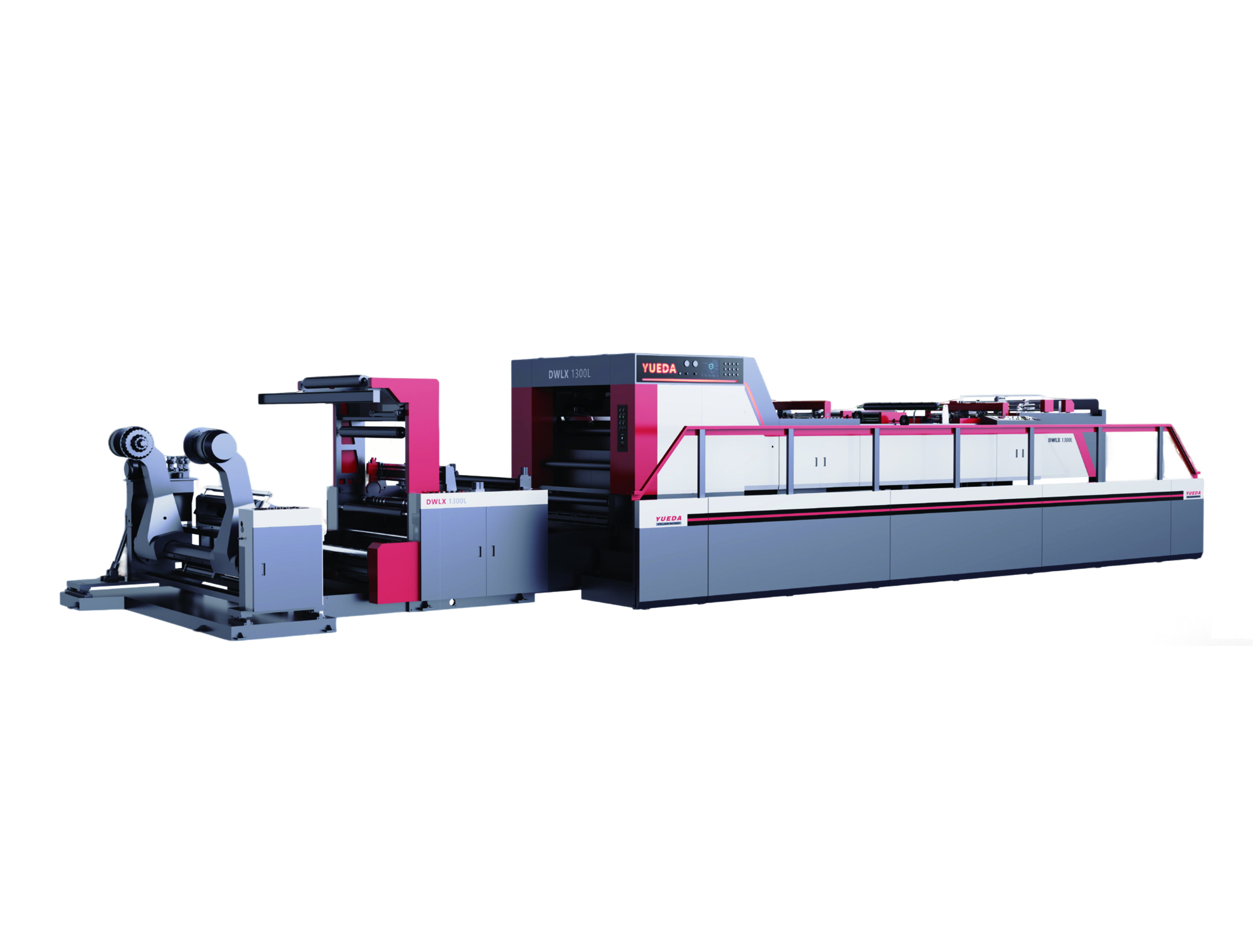
When comparing DWLX double rotary sheet cutters for industrial converting, packaging, printing, or sheet-processing lines, the most important purchasing decision is not only the cutting speed. It is the depth of control system design, the reliability of automation features, and the quality of the supplier proposal. A well-specified double rotary sheet cutter can improve throughput, reduce waste, stabilize cutting accuracy, and support continuous production. A poorly specified machine, on the other hand, can create downtime, inconsistent sheet lengths, higher scrap rates, and difficult maintenance.
This guide explains the key DWLX double rotary sheet cutter control and automation features that should be verified before placing an order. It is written for buyers, engineers, production managers, procurement teams, and OEM integrators who need a practical checklist for evaluating a supplier proposal. The content below is industry-neutral, SEO-friendly, and structured for direct use in a blog post, category page, or industrial product page.
A double rotary sheet cutter is a high-speed industrial machine used to cut continuous web material into precise sheets. In a double rotary design, two rotating cutter cylinders work together to create a clean cut while the web travels continuously through the machine. This structure is widely used for paper, film, foil, laminated materials, lightweight board, and other roll-fed substrates that require stable and repeatable sheet lengths.
The term DWLX is often associated with a machine family or application category in sheet cutting systems. In supplier proposals, buyers should focus less on brand-specific wording and more on the technical elements that define performance: servo control, registration accuracy, touch-screen HMI, sensor integration, automatic speed synchronization, fault alarms, tension control, and data connectivity.
In modern converting operations, a sheet cutter is no longer a purely mechanical device. It is an integrated automation platform. The control architecture determines whether the cutter can maintain sheet length accuracy, adapt to changing roll conditions, and support high-speed operation without compromising quality. Strong automation features also reduce operator dependency, simplify setup, and make the machine more suitable for continuous production.
For a supplier proposal, these features are not optional extras. They are core indicators of engineering maturity and total cost of ownership. A machine may look similar on paper, but differences in PLC logic, servo response, HMI usability, servo tuning, and alarm handling can have a major impact on daily performance.
| Control Feature | Why It Matters | What to Verify in the Proposal |
|---|---|---|
| PLC-based control system | Provides stable machine logic, sequence control, and automation coordination | PLC brand/model, I/O capacity, expandability, diagnostics, and program backup support |
| Servo drive system | Ensures precise motion control, speed synchronization, and cutting accuracy | Servo motor type, drive brand, torque rating, response time, and tuning capability |
| Human-machine interface (HMI) | Improves operator control, recipe management, and real-time monitoring | Screen size, language options, parameter storage, alarms, and user access levels |
| Automatic length setting | Reduces setup time and prevents manual input errors | Length input method, unit conversion, memory presets, and adjustment range |
| Synchronization control | Keeps the cutting action matched to line speed | Encoder feedback, speed tracking, phase adjustment, and stability under acceleration |
| Alarm and fault system | Helps operators identify and solve issues quickly | Alarm history, fault codes, stop logic, and maintenance reminders |
| Data communication interface | Supports integration with upstream and downstream equipment | Ethernet, Modbus, Profinet, OPC support, or other required protocols |
| Safety interlock control | Protects operators and reduces accident risk | Emergency stop design, guard switches, door interlocks, and safety relay compliance |
A strong double rotary sheet cutter automation system should support fast changeovers, consistent cutting quality, and low operating labor. The best supplier proposals clearly explain how automation is achieved. Buyers should look for the following features.
Automatic web speed tracking allows the cutter to follow the incoming material speed. This is essential for maintaining cut length accuracy when the line accelerates, decelerates, or runs at variable speed. Suppliers should specify whether the machine uses encoder-based tracking, servo-following control, or a closed-loop feedback system.
Material stretch, shrinkage, and thickness variation can affect final sheet length. A good system should offer automatic length compensation or correction logic to preserve dimensional consistency. This is especially important in high-precision converting applications.
Recipe management lets operators store cutting parameters for different products. This can include sheet length, count, speed profile, cutting phase, and material-specific settings. In a supplier proposal, confirm the number of recipes supported, how they are stored, and whether password protection is available.
Many production lines require precise batch quantities. Automatic counting helps operators complete orders without manual tracking. Batch control functions can stop the machine after a preset number of sheets, reduce overproduction, and improve order accuracy.
Efficient automation should include intelligent stop and restart sequences. For example, the system may pause when material breaks, when a downstream stacker is full, or when a safety alarm is triggered. Restart logic should minimize waste after recovery.
More modern systems may support remote diagnostics or production monitoring. Even if remote service is not required immediately, buyers should confirm whether the control system is designed for future connectivity. This supports long-term factory digitalization.
A DWLX double rotary sheet cutter must deliver more than speed. It must provide repeatable cut quality across long production runs. The supplier proposal should clearly define key performance indicators such as cutting accuracy, registration stability, maximum speed, and allowable material range.
| Performance Spec | Typical Industry Expectation | Buyer Verification Point |
|---|---|---|
| Sheet length accuracy | High repeatability under stable operating conditions | Ask for tolerance range and testing method |
| Cut edge quality | Clean edge with minimal burr, dust, or deformation | Request sample cut photos or test reports |
| Line speed range | Broad operating window for different substrates | Check minimum and maximum running speed |
| Phase adjustment | Allows fine alignment of cutting timing | Verify whether adjustment is manual, semi-auto, or fully automatic |
| Repeatability | Consistent results over long runs | Ask for endurance or continuous production test data |
A clear proposal should combine control features with mechanical and electrical details. Even the best automation package cannot compensate for incomplete specification data. The table below shows the main items that should appear in a professional supplier proposal for a double rotary sheet cutter.
| Specification Category | Details to Include |
|---|---|
| Material compatibility | Paper, film, foil, laminated web, coated materials, or other approved substrates |
| Web width range | Minimum and maximum input width supported by the cutter |
| Sheet length range | Shortest and longest cut length possible under standard operation |
| Cutting speed | Rated operating speed and practical production speed |
| Drive configuration | Servo-driven, motorized, or synchronized drive arrangement |
| Power supply | Voltage, frequency, phase, and installed power requirements |
| Control cabinet | Electrical layout, cooling method, protection class, and cable routing |
| Machine dimensions | Footprint, height, service access space, and installation clearance |
| Operator interface | HMI size, language support, alarm display, and user access control |
| Safety configuration | Emergency stop buttons, protective covers, interlocks, and safety standards |
A well-designed sheet cutter control system reduces operator workload and improves line uptime. Convenience features are not cosmetic; they directly influence productivity and error prevention.
Safety is a major part of automation quality. A supplier proposal should never treat safety as a minor appendix. For a DWLX double rotary sheet cutter, the following features should be reviewed carefully:
| Safety Feature | Purpose | Verification Question |
|---|---|---|
| Emergency stop system | Allows immediate machine shutdown | How many E-stops are installed and where are they located? |
| Safety door interlock | Prevents access to moving parts during operation | Are access panels interlocked and monitored by the control system? |
| Overload protection | Protects motors and drives from excessive load | Does the system detect overload and shut down safely? |
| Guarding design | Reduces contact with rotating and cutting parts | Are guards fixed, removable, or transparent where needed? |
| Electrical protection | Prevents short circuits, overheating, and electrical hazards | What circuit protection and enclosure rating are provided? |
A strong supplier proposal should be more than a price sheet. It should present a technical solution with clear specifications, measurable performance commitments, and support terms. Use the following checklist when reviewing proposals for a double rotary sheet cutter.
High-level automation offers clear operational advantages. These benefits should be highlighted in any product page or industry content because they represent the real value of the machine beyond the hardware itself.
| Advantage | Operational Impact |
|---|---|
| Higher throughput | More sheets processed per hour with stable line performance |
| Better cut precision | Consistent sheet length and cleaner edges |
| Lower labor demand | Fewer manual adjustments and less operator intervention |
| Reduced scrap | Less material waste during setup and production changes |
| Faster changeover | Quicker switching between product specifications |
| Improved traceability | Production data and alarms can be tracked more easily |
| Better line stability | More reliable operation during long production runs |
Buyers sometimes focus only on machine price or maximum speed. This can lead to poor decisions. Common mistakes include:
The best way to validate a proposal is to ask direct technical questions. Use questions like these during procurement review:
A DWLX double rotary sheet cutter should be evaluated as a complete automation system, not just as a mechanical cutting unit. The most important elements in any supplier proposal are the control platform, servo synchronization, HMI usability, automatic length setting, recipe management, alarm handling, safety interlocks, and integration readiness. When these features are clearly defined, buyers can compare suppliers more accurately and choose equipment that delivers stable performance, high productivity, and long-term value.
For manufacturers and converters, the right double rotary sheet cutter can significantly improve operational efficiency. The key is to verify the control and automation features in detail before purchase. A well-structured proposal should answer technical questions, provide measurable specifications, and show how the machine supports precision cutting, safe operation, and scalable production.
Contact: Peter Chen/Jack Chen
Mail : peterchen@yuedamachine.com
Cellphone: +86 18767458866/ +86 19857780001
Address: Building 2, No. 1333 Times Avenue, Longgang City,Wenzhou City, Zhejiang Province China
Copyright © 2026 Wenzhou Yueda Packaging Machinery Co., Ltd. All Rights Reserved.
SitemapThis website uses cookies to ensure you get the best experience on our website.
 Español
 Portugues
 Indonesia
 Tiếng Việt



 Phone
 E-mail
Comment
(0)