

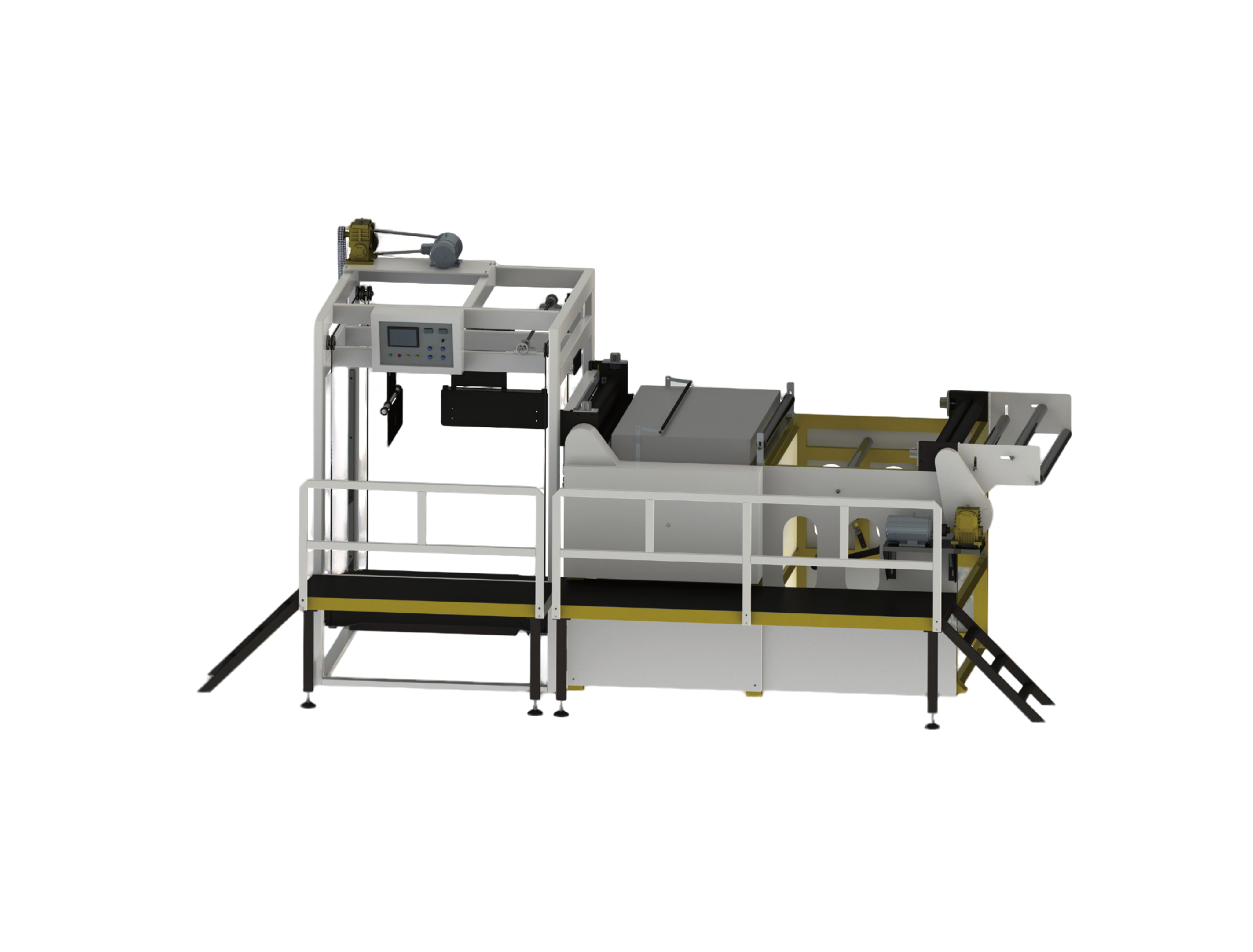
A DWLX Double Rotary Sheet Cutter is a high-performance converting machine designed to convert large paper rolls into accurate, uniformly cut sheets at high speed. In modern paper converting operations, this type of machine plays a critical role in improving production efficiency, reducing waste, and ensuring consistent sheet quality. When planning a converting line, understanding how to manage paper roll input and sheet output is essential for stable operation, predictable throughput, and high-quality finished products.
This article provides an in-depth, SEO-friendly overview of DWLX Double Rotary Sheet Cutters, including definitions, working principles, process planning, performance advantages, technical specifications, application scenarios, and key factors for integrating the machine into a converting line. The content is written for industrial readers, buyers, engineers, and procurement teams looking for general information about sheet cutting systems. It is not a company recommendation page and does not reference specific manufacturers.
A DWLX Double Rotary Sheet Cutter is a type of industrial paper cutting equipment used to convert paper rolls into sheets through a rotary cutting mechanism. In general, “double rotary” refers to a system that uses rotating cutting elements to achieve continuous, precise, and high-speed sheet cutting. This design is widely used in paper converting, printing, packaging, and paper product manufacturing lines where accuracy and productivity are important.
Unlike simple offline cutters, a double rotary sheet cutter is usually integrated into a continuous converting line. The machine receives paper roll input, controls tension, synchronizes web feeding, and cuts the material into sheets of a preset length. The cut sheets are then stacked, counted, conveyed, or transferred to downstream processing stages.
In a converting line, the paper roll input and sheet output are tightly connected. Poor planning at either end of the process can reduce productivity, increase waste, and cause quality issues. The roll input side must deliver stable web feeding, while the sheet output side must collect and transfer cut sheets smoothly without damaging edges or disrupting sheet alignment.
Proper planning helps manufacturers achieve:
The working principle of a DWLX double rotary sheet cutter is based on continuous roll feeding and synchronized rotary cutting. Paper is unwound from the roll and passed through tension control systems, guiding devices, and cutting sections. As the web moves through the machine, the rotating knives or rotary cutting cylinders cut the moving paper into sheets of a defined length.
The process usually includes the following stages:
The rotary design is valued for its speed, smooth operation, and ability to handle continuous production with relatively low vibration and stable cutting performance.
A DWLX double rotary sheet cutter offers several practical advantages for paper converting operations. These advantages make it suitable for factories that need reliable sheet cutting performance and efficient line integration.
| Advantage | Description | Production Benefit |
|---|---|---|
| High cutting speed | Rotary cutting supports continuous, fast sheet production. | Higher output and better line efficiency. |
| Precise sheet length | Servo or synchronized drive systems improve cutting accuracy. | Consistent finished sheet size. |
| Stable web handling | Tension and guiding systems help maintain roll stability. | Reduced wrinkling, slippage, and waste. |
| Automatic operation | Modern systems support automatic control and monitoring. | Lower labor demand and fewer manual errors. |
| Flexible integration | Can be matched with unwinders, stackers, conveyors, and packaging systems. | Improved line design flexibility. |
| Better material utilization | Accurate cutting reduces off-spec sheets and trim loss. | Lower raw material cost per unit. |
The paper roll input section is the starting point of the converting line. If the input side is not planned correctly, even a highly advanced cutting system may not reach its full performance. Roll input planning should focus on roll dimensions, core size, material properties, unwinding method, and tension management.
Before selecting or installing a sheet cutter, the production team must define the maximum and minimum roll diameter, roll width, and roll weight. These factors affect the unwind stand design, lifting systems, and floor space requirements. Large rolls can improve runtime by reducing changeovers, but they also require stronger handling systems and more storage space.
Different paper grades behave differently during unwinding and cutting. Coated paper, kraft paper, board paper, printing paper, and specialty papers may each require different tension settings and cutting parameters. Thickness, moisture content, surface finish, and stiffness all influence the cutting result.
A stable unwind system is critical for continuous input. Common unwind configurations include single-position, dual-position, and automatic roll change systems. In high-volume converting lines, automatic roll changing can reduce downtime and help maintain production continuity.
Tension control keeps the paper web stable during unwinding and feeding. Too much tension can stretch the paper and affect sheet length. Too little tension can cause slack, wrinkles, and tracking problems. Correct tension is essential for accurate sheet cutting and smooth downstream delivery.
Web guiding systems help keep the paper centered and aligned throughout the process. Misalignment at the input side can lead to uneven cutting, poor sheet stacking, and edge defects. Proper guide roller positioning and sensor-based correction improve line stability.
The sheet output stage is just as important as the input stage. After cutting, the sheets must be transferred, counted, aligned, stacked, and prepared for the next process. If output handling is poorly designed, the line may experience jams, uneven stacks, damaged edges, or bottlenecks.
Cut sheets can be delivered through conveyors, overlap belts, delivery tables, or stackers depending on the machine design and line layout. The selected delivery method should match the sheet size, output speed, and the intended downstream process.
Accurate stacking is important for packaging, printing, and further processing. Sheets must be collected in consistent piles without shifting or curling. Stacking accuracy depends on cutting precision, airflow control, timing synchronization, and conveyor speed coordination.
Many converting lines require sheet counting for batching and packaging. The output system should support stable counting logic, batch separation, and optional reject functions for defective sheets. This improves quality control and downstream efficiency.
The output section must match the cutting speed of the machine. If output is too slow, sheets may accumulate and cause congestion. If output is too fast or poorly synchronized, sheet positioning may become unstable. Proper speed matching supports a smooth, continuous workflow.
While exact machine configurations may differ, most double rotary sheet cutters include several common functional parts. Understanding these components helps with equipment selection, operation planning, and maintenance preparation.
| Component | Function | Importance in Production |
|---|---|---|
| Unwind stand | Holds and feeds the paper roll into the line. | Supports roll input and stable unwinding. |
| Tension control system | Maintains proper web tension during operation. | Prevents stretching and wrinkling. |
| Web guide system | Keeps the paper web aligned. | Improves cutting accuracy and registration. |
| Rotary knife unit | Performs the actual cutting action. | Determines cut quality and speed. |
| Drive system | Powers and synchronizes machine movement. | Ensures stable and precise operation. |
| Control panel | Allows parameter setting and monitoring. | Improves usability and process control. |
| Sheet delivery unit | Transfers finished sheets to the output area. | Supports stacking and downstream flow. |
Below is a general reference table showing common specification categories for a DWLX double rotary sheet cutter. Actual values vary based on model configuration, application requirements, and production goals.
| Specification Item | Typical Range or Description |
|---|---|
| Paper roll width | Customizable according to production needs |
| Paper roll diameter | Depends on unwind capacity and line design |
| Paper basis weight | Suitable for light, medium, and selected heavy paper grades |
| Cutting length | Adjustable within the machine’s control range |
| Cutting accuracy | High precision with stable servo synchronization |
| Production speed | Depends on material, cut length, and line configuration |
| Control system | PLC and/or servo-based control architecture |
| Power supply | Industrial electrical configuration according to regional standards |
| Safety features | Emergency stop, guards, alarms, and interlocks |
| Output format | Stacked sheets, conveyed sheets, or batch delivery |
To maximize performance in a DWLX double rotary sheet cutter line, several machine and process factors must be managed carefully. These factors directly influence whether the final sheets meet dimensional and surface quality requirements.
The most important performance indicator is often cut length accuracy. If the sheet length varies, downstream printing, packaging, or folding operations may be affected. Accurate length control depends on drive synchronization, encoder feedback, tension stability, and knife timing.
Clean edge quality is essential for premium paper applications. Dull knives, incorrect pressure, poor tension, or misalignment may create rough edges, dust, or burrs. Routine inspection and knife maintenance help preserve edge consistency.
In high-speed output, stack uniformity is a sign of balanced machine performance. Sheets that are misaligned or shifted in the stack can cause packaging problems and additional manual work. Proper delivery timing and static control can improve stack uniformity.
Vibration, inconsistent drive speed, and unstable feeding may reduce cutting consistency. A stable frame structure, quality drive system, and proper installation foundation contribute to better performance over time.
A DWLX double rotary sheet cutter is particularly valuable when integrated into a complete converting line. Its role is not only to cut paper, but also to balance upstream material flow and downstream product delivery.
Double rotary sheet cutters are used across many industries where roll-to-sheet conversion is required. The exact application depends on paper type, sheet size, output quality, and production volume.
| Application Area | Typical Use | Why the Machine Fits |
|---|---|---|
| Printing industry | Paper sheets for offset, digital, or commercial printing | Accurate sheet size and stable output are critical |
| Packaging industry | Paperboard or sheet material for packaging production | High speed and consistency support mass production |
| Paper converting | Roll-to-sheet conversion for various paper grades | Designed for continuous roll processing |
| Stationery manufacturing | Notebook, office paper, and paper supply products | Needs clean cuts and reliable batch output |
| Specialty paper processing | Custom sheet formats for specialty applications | Flexible cutting length and controlled output |
Selecting the right sheet cutter setup requires more than looking at maximum speed alone. Buyers and production planners should evaluate the full converting line requirements, including material type, sheet format, automation needs, and downstream processing capacity.
Proper installation is important for a stable converting line. Even the best machine will not perform well if it is not positioned, aligned, and powered correctly. Basic installation considerations include floor leveling, electrical connection, safety guarding, and material handling space.
During operation, it is important to monitor speed, tension, knife condition, sheet formation, and output stacking. Operators should be trained to recognize early signs of misalignment, dull cutting tools, or unstable sheet delivery. Preventive maintenance should be scheduled regularly to reduce unplanned downtime.
Regular maintenance supports reliable operation and extends machine life. A well-maintained DWLX double rotary sheet cutter is more likely to maintain accuracy and productivity over time.
| Maintenance Task | Recommended Purpose |
|---|---|
| Knife inspection | Maintain cutting sharpness and edge quality |
| Alignment check | Preserve cutting accuracy and web tracking |
| Lubrication | Reduce wear on moving parts and bearings |
| Tension calibration | Keep web feed stable and consistent |
| Electrical inspection | Ensure control system reliability and safety |
| Cleaning | Remove dust, paper particles, and residue |
| Sensor testing | Confirm accurate monitoring and automation |
For content optimization and search visibility, the following keyword themes are commonly associated with this topic:
Its main purpose is to convert paper rolls into accurately sized sheets using a rotary cutting system in a continuous converting line.
Tension control keeps the paper web stable, prevents wrinkles, and supports accurate cutting and sheet formation.
Cutting accuracy, knife condition, web alignment, output speed coordination, and stack handling all affect sheet output quality.
Yes, but machine settings may need adjustment depending on paper thickness, surface type, stiffness, and moisture level.
Yes. A double rotary sheet cutter is often chosen for automated or semi-automated converting lines because of its speed and precision.
A DWLX Double Rotary Sheet Cutter is an important solution for paper roll to sheet converting operations. Its value lies in the combination of high-speed rotary cutting, stable web handling, and efficient sheet output. When paper roll input and sheet output are properly planned, manufacturers can achieve better throughput, improved product consistency, and lower waste across the converting line.
For industrial users, the most important planning points include roll size, paper grade, tension control, cutting accuracy, stacking method, and downstream compatibility. With the right configuration and maintenance strategy, a double rotary sheet cutter can become a highly productive core machine in a modern paper converting line.
```
Contact: Peter Chen/Jack Chen
Mail : peterchen@yuedamachine.com
Cellphone: +86 18767458866/ +86 19857780001
Address: Building 2, No. 1333 Times Avenue, Longgang City,Wenzhou City, Zhejiang Province China
Copyright © 2026 Wenzhou Yueda Packaging Machinery Co., Ltd. All Rights Reserved.
SitemapThis website uses cookies to ensure you get the best experience on our website.
 Español
 Portugues
 Indonesia
 Tiếng Việt



 Phone
 E-mail
Comment
(0)