

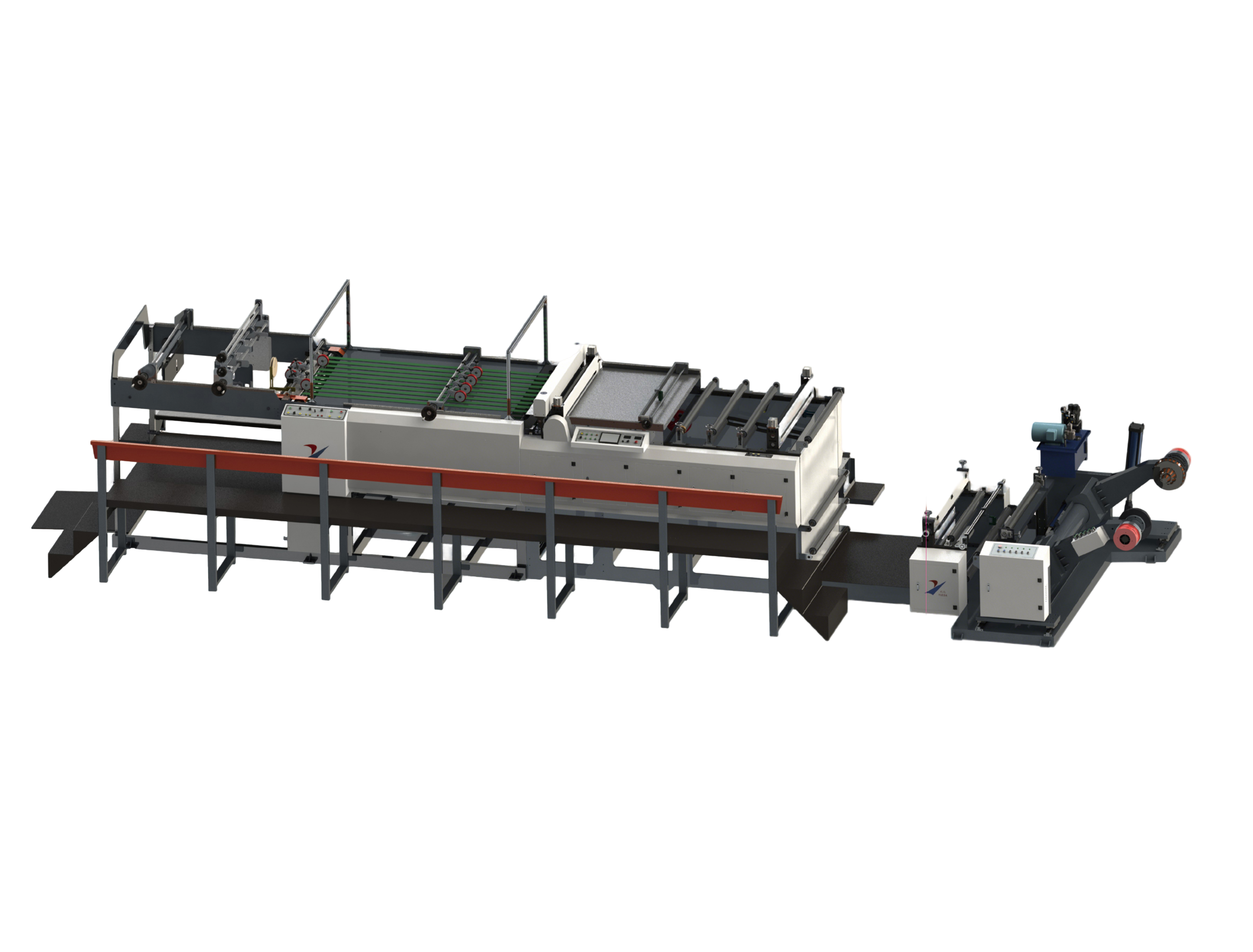
When buyers search for DWLX Double Rotary Sheet Cutters, they are often trying to solve one practical problem:
how to verify cutting quality, production stability, and sample consistency before making a larger purchasing decision.
In industrial sheet cutting, trial samples are not just a courtesy step. They are a critical part of the acceptance process,
especially when production depends on dimensional accuracy, clean edges, repeatable performance, and stable machine operation.
This article provides an original, SEO-friendly, industry-focused overview of double rotary sheet cutters,
with special attention to trial sample evaluation, buyer acceptance criteria, technical specifications,
performance advantages, and the questions buyers frequently ask before placing an order.
The content is written for use on blog pages, category pages, product directories, and industrial information pages.
It contains no brand recommendation and no company-specific promotion. Instead, it focuses on general market knowledge,
standard machine characteristics, and practical purchasing guidance.
A double rotary sheet cutter is a cutting machine designed to process sheet materials using a rotary cutting mechanism,
typically involving two synchronized rotary components that support efficient, continuous, and accurate cutting.
The term “double rotary” generally refers to a dual-roller or dual-rotary blade structure that helps improve feeding control,
cutting consistency, and surface finish compared with simpler manual or intermittent cutting systems.
In industrial applications, double rotary sheet cutters are commonly used for materials that require stable edge quality,
uniform length control, and high repeatability. These machines may be used for paper-based sheets, laminated sheets,
light industrial materials, packaging materials, composite sheet substrates, and other flat sheet products depending on the exact machine design.
The final application depends on material thickness, hardness, width, surface coating, and production requirements.
Because buyers often compare performance across multiple suppliers or machine models, the discussion around
DWLX Double Rotary Sheet Cutters often centers on sample testing, acceptance standards, and output verification.
In many procurement cases, the buyer does not want only a machine specification sheet. They also want proof that the cutter can
actually deliver the required results on the intended sheet material.
Trial samples are one of the most important checkpoints in the evaluation of any industrial sheet cutter.
A specification sheet may suggest that a machine can cut a certain width or thickness, but only sample testing can show
whether the machine performs properly with the buyer’s actual material.
For double rotary sheet cutters, sample testing helps determine:
Trial samples are also important because sheet materials can behave differently under pressure, speed, and blade contact.
A material that looks easy to cut may still produce edge fray, dimensional error, or static-related feeding issues.
Buyers therefore often request a trial sample before final acceptance to reduce risk and to confirm that the machine is suitable for the target production line.
Buyer acceptance is the process by which the purchaser confirms that the machine meets the required quality, function,
and performance standards. In industrial equipment procurement, acceptance can happen in several stages:
| Acceptance Stage | Purpose | Typical Focus |
|---|---|---|
| Pre-order evaluation | Initial comparison before purchase | Specifications, machine type, material compatibility |
| Sample testing | Verify cutting result on actual material | Edge quality, accuracy, speed, stability |
| Factory inspection or FAT | Confirm machine performance before shipment | Operation, control system, output consistency |
| Installation and commissioning | Verify machine after delivery | Calibration, setup, operator training |
| Final acceptance | Buyer approves machine for full production | Production output, defect rate, stability |
For buyers of double rotary sheet cutters, acceptance is usually based on measurable performance indicators rather than appearance alone.
The machine may look well-built, but the buyer’s final approval often depends on whether the cutting sample meets the required standard.
When evaluating DWLX Double Rotary Sheet Cutters or any similar industrial sheet cutter, buyers often ask the same essential questions.
These questions help define whether the equipment is suitable for mass production.
| Buyer Question | Why It Matters |
|---|---|
| Can the machine cut my actual sheet material? | Material compatibility is the foundation of successful production. |
| What is the cutting tolerance? | Precision determines whether the output matches required dimensions. |
| How clean is the edge after cutting? | Edge quality affects downstream processing and product appearance. |
| Does the sample remain flat and undamaged? | Warping, scratches, or compression can reduce product usability. |
| Can the machine maintain stable output at production speed? | Speed without stability can create waste and inconsistency. |
| How many repeated cuts remain consistent? | Repeatability is critical for industrial acceptance. |
| Does the machine require special operator skill? | Ease of use affects labor cost, training, and daily production efficiency. |
A trial sample for a double rotary sheet cutter is usually assessed through a combination of visual inspection and measurement.
The buyer may compare the sample against a reference standard, technical drawing, or approved production target.
In many industries, even a small error in sheet size can create serious downstream issues.
A poor sample may result in rejected batches, assembly problems, or packaging misfit.
That is why acceptance testing is often stricter than a basic demo run.
Double rotary sheet cutters are widely used because they offer a balanced combination of precision, speed, and operational control.
While exact performance depends on the build and configuration, the general advantages of double rotary cutting systems often include the following.
| Advantage | Industrial Value |
|---|---|
| High cutting consistency | Supports stable batch production and low defect rates |
| Better edge quality | Helps reduce trimming, rework, and secondary processing |
| Efficient continuous operation | Improves throughput in medium- to high-volume production |
| Reduced material waste | Accurate cutting helps maximize sheet utilization |
| Suitable for repeated production | Useful for standardized output and long production runs |
| Stable feeding performance | Helps reduce skew, slippage, and material misalignment |
For buyers focused on acceptance testing, these advantages matter because they directly influence whether the machine can meet
production requirements over time, not just during a short demonstration.
Before requesting trial samples, buyers usually review the technical parameters of the double rotary sheet cutter.
These parameters help determine whether the machine matches the sheet size, thickness, output target, and production environment.
| Specification Item | General Meaning | Buyer Concern |
|---|---|---|
| Cutting width | Maximum width of sheet material the machine can process | Whether the machine fits the required sheet format |
| Cutting length | Length range of the output sheet | Whether finished dimensions meet product needs |
| Material thickness range | Range of sheet thickness the cutter can handle | Whether the machine can process the actual raw material |
| Cutting speed | Production output per minute or hour | Whether the machine supports target capacity |
| Cutting tolerance | Allowed dimensional deviation | Whether the product passes quality requirements |
| Blade or roller system | Core cutting mechanism | Edge quality and service life |
| Feeding system | How the sheet enters and moves through the machine | Alignment, stability, and consistency |
| Control mode | Manual, semi-automatic, or automatic operation | Ease of use and labor requirements |
| Power requirement | Electrical or pneumatic demand | Factory compatibility and energy planning |
The following table provides a general reference format for industrial buyers.
Actual values vary by machine design, material type, and production purpose.
| Parameter | Typical Industry Range | Notes |
|---|---|---|
| Cutting width | Customizable / application-specific | Should match the sheet format used in production |
| Cutting length accuracy | Depends on machine configuration | Should be verified with trial samples |
| Material compatibility | Paper-based, laminated, light industrial sheet materials | Depends on blade system and feed design |
| Cutting mode | Continuous rotary cutting | Useful for stable, repeated output |
| Control system | Mechanical, digital, PLC-based, or automatic | Higher automation may improve repeatability |
| Production capacity | Medium to high output | Varies with sheet size and speed settings |
| Edge quality | Clean to very clean | Must be confirmed through sample inspection |
| Maintenance requirement | Routine inspection and blade/roller care | Regular maintenance supports stability |
A good trial sample evaluation should be systematic. Buyers should not rely only on visual appearance. Instead, they should use
a structured checklist that covers material behavior, machine stability, and final product quality.
Buyers who request a trial sample should also ask for full testing conditions, including machine settings, ambient conditions,
and material batch information. This helps prevent misunderstandings and makes buyer acceptance more objective.
During sample evaluation, a buyer may discover certain issues that indicate the machine is not yet ready for approval.
These issues do not always mean the machine is unusable, but they do signal the need for adjustment or further testing.
| Problem | Possible Meaning | Impact on Acceptance |
|---|---|---|
| Uneven cut length | Feeding or synchronization issue | May fail dimensional tolerance |
| Rough or torn edges | Blade condition or unsuitable cutting pressure | May reduce product quality |
| Sheet curling | Excessive pressure, tension imbalance, or material response | May affect downstream use |
| Surface scratches | Improper contact, guide issue, or contamination | May be unacceptable for visible products |
| Frequent misalignment | Feed instability or insufficient machine control | Reduces repeatability and raises waste |
| Speed drop under load | Power, drive, or mechanical limitation | May fail production target |
Double rotary sheet cutters are used in a variety of industrial contexts. Exact applications vary by material type and machine configuration,
but the underlying need is the same: precise, repeatable sheet cutting with a low defect rate.
In all of these applications, sample approval is important because the buyer needs confidence that the machine can maintain quality
under real operating conditions, not only during a short demonstration.
From an SEO perspective, content around DWLX Double Rotary Sheet Cutters, trial samples,
buyer acceptance, industrial sheet cutter specifications, and double rotary cutting performance
tends to attract high-intent search traffic.
Buyers entering these queries are often close to a purchasing decision and are looking for practical evaluation details.
Search-friendly content should include:
The use of structured headings, tables, and lists improves readability and makes the page easier for search engines to interpret.
This is especially useful for directory pages and industry pages that need strong topical relevance.
Its main purpose is to cut sheet materials with high consistency, good edge quality, and stable production performance.
It is designed for repeated industrial use where dimensional accuracy matters.
Buyers request trial samples to verify that the machine can cut their real material correctly.
This helps confirm accuracy, edge quality, stability, and overall suitability.
Buyers should check length, width, squareness, edge finish, surface condition, repeatability, and any signs of deformation or damage.
Usually no. A single sample may show initial cutting ability, but acceptance typically requires repeated results and stable performance over multiple runs.
No. Machines can differ in cutting width, thickness range, automation level, control system, blade design, and production capacity.
The most important factors are sample quality, tolerance control, machine stability, and whether the machine meets the buyer’s actual production requirements.
To reduce procurement risk, buyers should approach acceptance testing in a disciplined way. Good practice includes clear communication,
defined test conditions, and documented results.
When buyers and suppliers use the same evaluation criteria, acceptance becomes faster, more transparent, and more reliable.
DWLX Double Rotary Sheet Cutters represent an important category of industrial sheet cutting equipment where trial samples
and buyer acceptance play a decisive role in the purchasing process. For buyers, the machine’s value is not defined only by its name,
size, or claimed capacity. Real value comes from verified cutting performance, stable sample quality, and production consistency.
Whether used for packaging, paper converting, laminated sheets, or other flat material applications, the buyer must confirm that the cutter
can meet dimensional requirements, edge quality standards, and output expectations.
This makes sample testing one of the most important parts of the evaluation process.
For SEO and industry content purposes, pages built around this topic can rank effectively when they focus on buyer intent, technical clarity,
and structured information. By combining definitions, specifications, advantages, acceptance guidance, and sample evaluation methods,
this content supports both search visibility and practical procurement decision-making.
```
Contact: Peter Chen/Jack Chen
Mail : peterchen@yuedamachine.com
Cellphone: +86 18767458866/ +86 19857780001
Address: Building 2, No. 1333 Times Avenue, Longgang City,Wenzhou City, Zhejiang Province China
Copyright © 2026 Wenzhou Yueda Packaging Machinery Co., Ltd. All Rights Reserved.
SitemapThis website uses cookies to ensure you get the best experience on our website.
 Español
 Portugues
 Indonesia
 Tiếng Việt



 Phone
 E-mail
Comment
(0)