

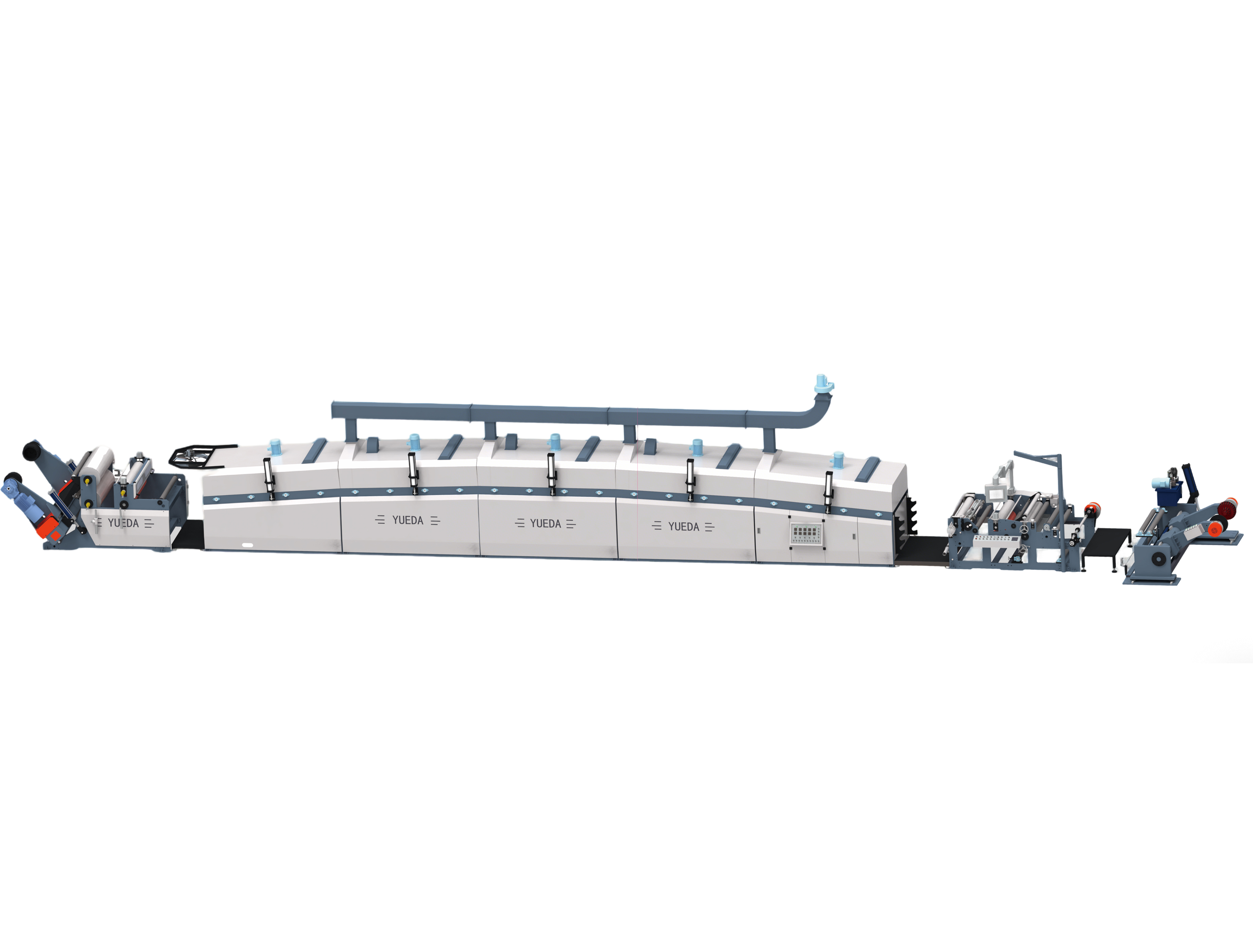
FQN elevation-type transverse cutters are widely used in industrial cutting, processing, and production environments where
precision, safety, and continuous operation are critical. In such workflows, job preparation documents and
shift handover records play a vital role in maintaining productivity, reducing downtime, improving quality
control, and ensuring operational consistency. This page provides a detailed, SEO-friendly, industry-focused overview of
these documents for FQN elevation-type transverse cutters, including definitions, benefits, templates, key fields, control
points, and standard record structures.
This content is written for direct use in blogs, category pages, industrial knowledge pages, and technical directories.
It is designed to support search visibility for terms such as FQN elevation-type transverse cutters,
job preparation documents, shift handover records, cutting machine production forms,
equipment operation checklist, and industrial cutting documentation.
FQN elevation-type transverse cutters are industrial cutting machines used to perform transverse cutting tasks with an
elevated machine structure or lifting design that supports material handling, access, or line integration. In many production
systems, these cutters are used for continuous or semi-continuous cutting processes where product width, thickness, speed,
and cut quality must remain stable across shifts.
The term elevation-type generally indicates a machine configuration designed for better working height,
process alignment, or accessibility in industrial environments. The term transverse cutter refers to the
cutting direction across the material width. In practice, this equipment may be used in packaging, converting, laminating,
film processing, paper handling, sheet processing, composite production, and other industrial lines requiring accurate
cross-cutting performance.
Because these machines are often part of a larger production line, documentation is not optional. Well-structured
job preparation documents and shift handover records help operators, technicians, quality
teams, and supervisors keep production organized and traceable.
A job preparation document is a structured production record used before machine startup. It ensures that the cutter,
tooling, material, parameters, and safety conditions are ready before the job begins. For FQN elevation-type transverse
cutters, this document reduces setup errors, supports repeatable operations, and improves first-pass yield.
In high-speed industrial cutting, even a minor setup deviation can cause material waste, dimensional inconsistency, knife
damage, or unplanned stoppages. A detailed preparation sheet ensures every critical item is reviewed before the shift starts.
A shift handover record is a formal communication document used when one shift transfers responsibility to the next. It
captures machine status, job progress, operational issues, safety observations, maintenance needs, and quality-related notes.
For FQN elevation-type transverse cutters, this record is essential because cutting operations often run continuously and
may involve frequent parameter checks, blade inspections, and product changeovers.
A strong shift handover process prevents information loss and ensures the incoming team can continue production with full
awareness of the machine condition and current job state. It is one of the most effective tools for minimizing repeated
mistakes and avoiding hidden downtime.
Although exact workflows differ by industry, most transverse cutting operations follow a similar sequence. The job
preparation document is completed before production, and the shift handover record is updated during or after production
transfer.
A practical job preparation document for an FQN elevation-type transverse cutter should be easy to fill out, easy to read,
and structured to support real production needs. Below are the most important fields.
| Section | Purpose | Typical Information Captured |
|---|---|---|
| Job Identification | Defines the production task | Job number, date, shift, operator name, line number |
| Material Details | Confirms the material being processed | Material type, roll ID, sheet size, thickness, supplier batch |
| Machine Setup | Records machine readiness and settings | Blade condition, cutter alignment, speed, tension, width settings |
| Safety Check | Ensures safe operation before startup | Guard status, emergency stop, sensor check, lockout release |
| Quality Check | Confirms product requirements | Cut accuracy, edge quality, burr level, sample approval |
| Approval Sign-off | Validates readiness | Operator signature, supervisor approval, time stamp |
A shift handover record must communicate both the visible and hidden status of the transverse cutter. The next operator
should understand what happened during the prior shift, what remains open, and what risks require attention.
| Section | Purpose | Typical Information Captured |
|---|---|---|
| Current Production Status | Shows where the job stands | Running, paused, completed, changeover, test run |
| Output Summary | Summarizes shift performance | Quantity produced, accepted units, rejected units |
| Machine Condition | Reports equipment status | Normal, minor fault, major fault, repair pending |
| Quality Notes | Captures product quality concerns | Cut deviation, uneven edge, dimensional drift, sample issues |
| Maintenance Notes | Flags service requirements | Blade wear, lubrication need, sensor issue, loose parts |
| Action Items | Lists pending tasks | Follow-up checks, replacement parts, verification steps |
The following checklist can be adapted to most FQN elevation-type transverse cutter operations. It is suitable for inclusion
in a printable form or digital production system.
| Checklist Item | Status | Remarks |
|---|---|---|
| Work order reviewed | Yes / No | Confirm product code, quantity, and due time |
| Material verified | Yes / No | Check width, thickness, lot number, and appearance |
| Blade inspected | Yes / No | Check sharpness, wear, and installation accuracy |
| Guides and rollers cleaned | Yes / No | Remove dust, residue, or foreign matter |
| Safety guards in place | Yes / No | Confirm all protective devices are active |
| Emergency stop tested | Yes / No | Functional verification before operation |
| Machine parameters entered | Yes / No | Set speed, tension, cut length, and alignment |
| Trial cut approved | Yes / No | Confirm sample meets specification |
| Operator and supervisor sign-off | Yes / No | Finalize readiness to start production |
The shift handover checklist should be concise but complete. It must support quick reading at shift change while still
containing enough detail for the next team to continue safely and efficiently.
| Handover Item | Status | Remarks |
|---|---|---|
| Machine running status | Normal / Abnormal | State current operating condition |
| Production progress | Completed / In progress | Describe quantity and remaining workload |
| Material remaining | Enough / Limited | Note remaining roll, sheet stack, or batch quantity |
| Quality issues | Yes / No | Include any defect trends or rejected samples |
| Tooling condition | Good / Needs attention | Blade wear, alignment, replacement need |
| Maintenance issues | Open / Closed | Specify unresolved faults or repair tickets |
| Safety concerns | Yes / No | List any risks, alarms, or protective failures |
| Next shift action items | Listed | Highlight what must be checked first |
| Handover signatures | Completed / Pending | Outgoing and incoming personnel confirmation |
If you are building an industrial directory page, blog article, or product-support knowledge page, the following keyword-rich
topics can help improve topical relevance for search engines while remaining useful to readers.
The table below shows a practical way to structure documentation for an FQN elevation-type transverse cutter. This is a
generic template and can be adapted to paper forms, spreadsheets, ERP systems, MES platforms, or shop-floor tablets.
| Document Item | Recommended Format | Purpose in Production |
|---|---|---|
| Document title | Plain text | Identifies the form type clearly |
| Job number | Alphanumeric code | Links document to production order |
| Shift code | Morning / afternoon / night | Supports responsibility tracking |
| Machine ID | Asset tag or line code | Supports equipment traceability |
| Operator name | Full name and badge number | Supports accountability |
| Material specification | Type, size, thickness, batch | Ensures correct setup and processing |
| Parameter settings | Speed, tension, width, cut length | Documents machine configuration |
| Inspection results | Pass / fail / comments | Records quality verification |
| Issue log | Free text with timestamp | Captures abnormal events |
| Sign-off fields | Name, role, time, signature | Validates completion and transfer |
To make job preparation documents truly useful, they must be completed accurately and consistently. The best forms are
simple enough for operators to finish quickly, yet detailed enough to support control and traceability.
Shift handover records are most effective when they are brief, factual, and action-oriented. The goal is not to rewrite the
entire shift history, but to transfer the operational essentials needed for the next team to succeed.
Strong documentation for FQN elevation-type transverse cutters prevents many common production problems. These issues often
occur when important setup or transfer information is missing.
| Common Problem | Documentation Benefit | Typical Result |
|---|---|---|
| Incorrect parameter setup | Job preparation records confirm approved settings | Reduced scrap and faster startup |
| Blade wear not reported | Inspection notes flag tool condition early | Prevented edge defects and rework |
| Missing handover information | Shift logs capture unresolved issues | Better continuity across shifts |
| Quality drift over time | Recorded checks show trends in product variation | More stable output quality |
| Delayed maintenance action | Handovers identify open repair needs | Lower downtime risk |
Below is a simple sample structure that can be converted into a printable form or digital entry screen.
| Field Group | Example Entries |
|---|---|
| Header | Document title, date, shift, machine ID |
| Work Order | Job number, customer code, product name, target quantity |
| Material | Material type, batch number, size, thickness |
| Machine Setup | Blade status, speed setting, width setting, tension setting |
| Inspection | Safety check, trial cut result, sample approval, remarks |
| Approval | Operator signature, supervisor signature, time of release |
The following table shows a practical structure for a shift handover form used in transverse cutting operations.
| Field Group | Example Entries |
|---|---|
| Shift Information | Outgoing shift, incoming shift, date, machine ID |
| Production Summary | Quantity completed, quantity remaining, downtime notes |
| Equipment Status | Normal operation, warning condition, fault code if any |
| Quality Notes | Cut consistency, edge condition, rejected samples |
| Maintenance Notes | Blade replacement needed, lubrication required, calibration check |
| Action List | Next steps, urgent actions, follow-up owner |
| Sign-off | Outgoing operator, incoming operator, supervisor |
Job preparation documents and shift handover records are used in any environment where transverse cutting accuracy and
repeatability matter. This includes paper converting, film processing, flexible packaging, nonwoven materials, textile
handling, sheet products, and similar industrial workflows. In every case, the purpose is the same: improve machine
control, support operational handoff, and create traceable production records.
FQN elevation-type transverse cutters require disciplined documentation to achieve stable output, reliable handover, and
consistent product quality. Well-designed job preparation documents support safe startup, correct parameter setup, and
fast verification before production begins. Shift handover records support continuity, accountability, and timely issue
transfer between teams.
For industrial operations, these documents are more than paperwork. They are essential tools for production efficiency,
quality control, maintenance planning, and operational traceability. Whether used in printed forms or digital systems,
clear and structured documentation remains one of the most effective ways to improve the performance of FQN elevation-type
transverse cutters across every shift.
Contact: Peter Chen/Jack Chen
Mail : peterchen@yuedamachine.com
Cellphone: +86 18767458866/ +86 19857780001
Address: Building 2, No. 1333 Times Avenue, Longgang City,Wenzhou City, Zhejiang Province China
Copyright © 2026 Wenzhou Yueda Packaging Machinery Co., Ltd. All Rights Reserved.
SitemapThis website uses cookies to ensure you get the best experience on our website.
 Español
 Portugues
 Indonesia
 Tiếng Việt



 Phone
 E-mail
Comment
(0)