

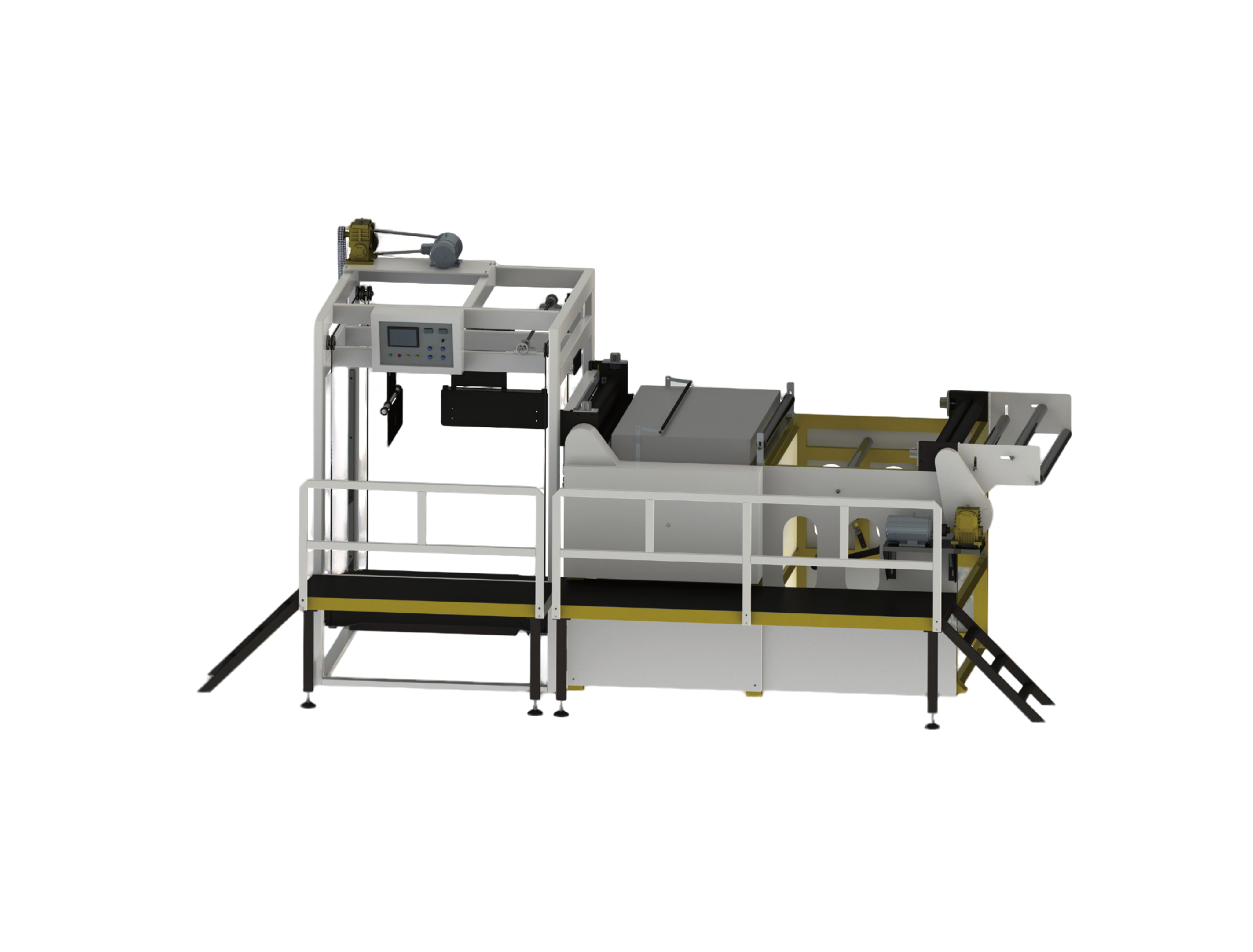
FQN Elevation-Type Transverse Cutters are specialized paper converting and cutting systems designed to support efficient paper roll input, accurate transverse cutting, and orderly sheet collection. In paper converting, printing, packaging, and finishing workflows, these machines help transform continuous paper rolls into controlled sheet lengths with high precision and consistent output. For businesses that rely on repeatable sheet dimensions, clean cut edges, stable web handling, and efficient downstream collection, an elevation-type transverse cutter can become a core production asset.
This article provides a fully original, SEO-friendly, industry-focused overview of FQN Elevation-Type Transverse Cutters, including definitions, working principles, planning considerations, technical parameters, advantages, application scenarios, and sheet collection strategies. It is written in a format suitable for direct placement into a blog post, category page, or industry information page. It contains only general industry knowledge and does not recommend specific brands or companies.
An FQN elevation-type transverse cutter is a converting machine used to feed paper rolls into a cutting section, cut the moving web transversely into sheets, and deliver the finished sheets to a collection or stacking area. The term elevation-type typically refers to a structural design in which the paper path, cutting unit, or output section is positioned at a raised level to support smoother material flow, easier operator access, improved gravity-assisted sheet handling, and more organized collection.
Unlike simple manual cutters, an elevation-type transverse cutter is designed for industrial productivity. It is commonly used in continuous paper processing lines where roll-to-sheet conversion must be precise, stable, and efficient. The machine may include components such as an unwind stand, tension control system, alignment devices, transverse cutting unit, conveyor delivery section, sheet receiving platform, and collection stacker.
In practical production environments, this type of cutter is valued for its ability to combine paper roll input planning with reliable sheet collection. That means the machine is not only responsible for cutting, but also for ensuring the entire workflow from roll loading to sheet output remains efficient and controlled.
The main purpose of an FQN elevation-type transverse cutter is to convert a paper roll into evenly sized sheets with minimal waste and maximum consistency. The system performs three important functions:
Because paper is sensitive to tension, humidity, speed, and alignment, the machine must maintain stable web control throughout the process. A well-designed system reduces wrinkling, skew, edge damage, and dimensional variation, all of which are essential for high-quality production.
Paper roll input planning is one of the most important aspects of operating a transverse cutter. The quality of the input stage directly affects cutting accuracy, output uniformity, and collection efficiency. If roll input is poorly planned, the machine may experience web deviation, tension instability, frequent stoppages, and lower sheet quality.
Planning paper roll input involves several factors:
When these variables are correctly matched to the machine’s technical specifications, the production process becomes more stable. This improves both cutting precision and sheet collection performance.
The paper roll input section begins with roll loading. The roll is typically placed on an unwind stand or shaft-supported feeding unit. After mounting, the web is guided through rollers and alignment devices that control path stability before reaching the transverse cutting station.
Common steps in roll input workflow include:
In an elevation-type layout, the raised structure can make threading and inspection easier, especially when the system is integrated into a multi-stage converting line. Better access helps operators manage roll changes, web corrections, and maintenance tasks more efficiently.
Transverse cutting refers to cutting across the direction of web travel, producing sheets from a continuous roll. The cutter must synchronize cutting action with web movement to ensure accurate length control. Depending on machine design, the cutting mechanism may use rotary knives, flying shear systems, or other industrial cutting methods.
In general, transverse cutting performance depends on:
For paper converting, clean transverse cuts are essential because they reduce edge fraying, minimize dimensional error, and improve stack quality. This is especially important when the sheets will be used in printing, packaging, lamination, further finishing, or automatic counting systems.
The elevation-type structure offers several operational advantages in industrial paper cutting environments. While designs vary, the elevated arrangement often contributes to better line organization and smoother sheet handling.
For facilities seeking high output and cleaner material handling, elevation-type transverse cutters can contribute to a more efficient production layout.
Sheet collection is the final stage of the cutting process, and it is just as important as the cutting itself. After the web is cut into sheets, those sheets must be transported, aligned, and gathered without causing jams, misfeeds, or stack deformation.
Typical sheet collection methods include:
High-quality collection systems improve final sheet alignment, make packaging easier, and reduce labor intensity. In commercial production, collection accuracy can be just as valuable as cutting accuracy because downstream operations often rely on clean stacks with consistent size and orientation.
FQN elevation-type transverse cutters are widely used in industries that require roll-to-sheet conversion. Their applications often include:
These machines are particularly valuable where production demands high consistency, large batch output, and efficient handling of finished sheets. Businesses that need repeated sheet sizes over long production runs often benefit from automated transverse cutting lines.
Below are the primary benefits of using an elevation-type transverse cutter in paper processing environments:
| Advantage | Description | Production Benefit |
|---|---|---|
| High cutting accuracy | Supports consistent sheet length and clean transverse cuts | Improves product uniformity and reduces waste |
| Efficient roll feeding | Allows controlled paper roll input with stable tension | Reduces web breakage and feeding errors |
| Organized sheet collection | Helps collect, stack, or convey cut sheets smoothly | Improves downstream handling and packaging |
| Operational flexibility | Can support different paper sizes, grades, and speeds | Suitable for multiple converting jobs |
| Better workflow layout | Elevation-type design improves machine access and material flow | Supports easier maintenance and operator control |
| Reduced manual handling | Automation can minimize direct labor in cutting and stacking | Increases productivity and consistency |
When planning or evaluating an FQN elevation-type transverse cutter, several technical specifications should be reviewed carefully. These factors determine whether the machine is suitable for the intended roll size, paper type, and production target.
| Specification | Typical Consideration | Why It Matters |
|---|---|---|
| Paper roll width | Matches the maximum input width the machine can accept | Affects machine compatibility and usable web size |
| Roll diameter | Determines loading method and unwind capacity | Influences production runtime and roll handling |
| Paper basis weight | Light, medium, or heavy paper grades | Changes tension settings and cutting behavior |
| Cutting length range | Minimum and maximum sheet length | Determines product size flexibility |
| Operating speed | Sheeting speed per minute or web speed | Impacts throughput and total capacity |
| Tension control accuracy | Stability of unwinding and web delivery | Prevents wrinkles, tears, and misalignment |
| Collection method | Stacking, conveyor, or buffer output | Determines downstream efficiency |
| Control system | Manual, semi-automatic, or fully automatic | Affects usability, precision, and automation level |
To achieve stable operation, paper roll input should be planned before production begins. Proper planning reduces machine downtime and improves cut quality. The planning process should consider the paper characteristics, job order requirements, and operating conditions.
The roll width, diameter, and core size must match the machine’s feed system. If the roll is too heavy or too large for the unwind unit, loading becomes difficult and the web may not run smoothly.
Different paper grades require different tension levels. Too much tension may stretch or damage the paper, while too little tension can cause wrinkles and tracking problems. Accurate tension control is one of the most important factors in transverse cutting quality.
Before feeding the roll, operators should check for edge damage, uneven winding, moisture-related deformation, telescoping, or loose layers. Roll defects can reduce cutting stability and cause collection issues later in the process.
Production planning should define the target sheet length and tolerance range. This helps ensure the cutting system is adjusted correctly before the line starts running at full speed.
The output zone must be ready to receive sheets. Whether the machine uses stacking, transport belts, or a receiving tray, the collection area should be clear, aligned, and sized for the expected output volume.
Several variables influence the final quality of sheet cutting in an elevation-type transverse cutter:
For this reason, cutting performance should never be viewed as a single-machine issue. It is the result of correct input planning, stable mechanics, precise control, and proper output collection.
Businesses using FQN elevation-type transverse cutters often value them for both productivity and process reliability. When the system is correctly configured, it can support high-volume roll-to-sheet operations with fewer interruptions.
Operational benefits include:
These benefits are especially important in industries where paper dimensions must remain uniform for automatic feeding, binding, sorting, or packaging.
A full production line using an elevation-type transverse cutter usually follows this sequence:
Each stage should be optimized for smooth flow. If one part of the sequence fails, such as unstable feeding or poor collection, the entire line may slow down.
To keep an elevation-type transverse cutter operating efficiently, regular maintenance is essential. Even in highly automated systems, mechanical cleanliness, blade condition, roller alignment, and sensor accuracy all influence results.
Preventive maintenance helps reduce downtime, improve sheet quality, and extend equipment life. It also keeps collection systems operating smoothly by preventing output jams and stack inconsistencies.
For search engine visibility, content around this topic often includes keywords such as:
Using these terms naturally throughout the page can help improve relevance for search queries related to paper converting, sheeting, and sheet collection equipment.
| Category | Summary |
|---|---|
| Machine purpose | Converts paper rolls into cut sheets with controlled output |
| Main process | Roll input, tension control, transverse cutting, sheet collection |
| Key benefit | Accurate sheet production with efficient handling |
| Typical output | Stacked sheets, conveyed sheets, or collected batches |
| Primary industries | Paper converting, printing, packaging, finishing |
| Important planning factor | Correct paper roll input configuration |
| Important output factor | Stable and organized sheet collection |
FQN Elevation-Type Transverse Cutters are valuable industrial systems for businesses that require precise paper roll input, accurate transverse cutting, and efficient sheet collection. Their elevated structure can support better operator access, smoother material flow, and more organized output handling. By carefully planning roll input, setting proper tension, maintaining blades and rollers, and optimizing the collection stage, manufacturers can improve cutting precision, reduce waste, and increase production efficiency.
Whether used in paper converting, printing preparation, packaging workflows, or other sheet-based operations, these machines play an important role in modern roll-to-sheet processing. For industry pages, blog content, or directory listings, this topic provides strong SEO value because it combines technical relevance, commercial importance, and high search intent across paper machinery, sheeting equipment, and sheet collection systems.
Contact: Peter Chen/Jack Chen
Mail : peterchen@yuedamachine.com
Cellphone: +86 18767458866/ +86 19857780001
Address: Building 2, No. 1333 Times Avenue, Longgang City,Wenzhou City, Zhejiang Province China
Copyright © 2026 Wenzhou Yueda Packaging Machinery Co., Ltd. All Rights Reserved.
SitemapThis website uses cookies to ensure you get the best experience on our website.
 Español
 Portugues
 Indonesia
 Tiếng Việt



 Phone
 E-mail
Comment
(0)