

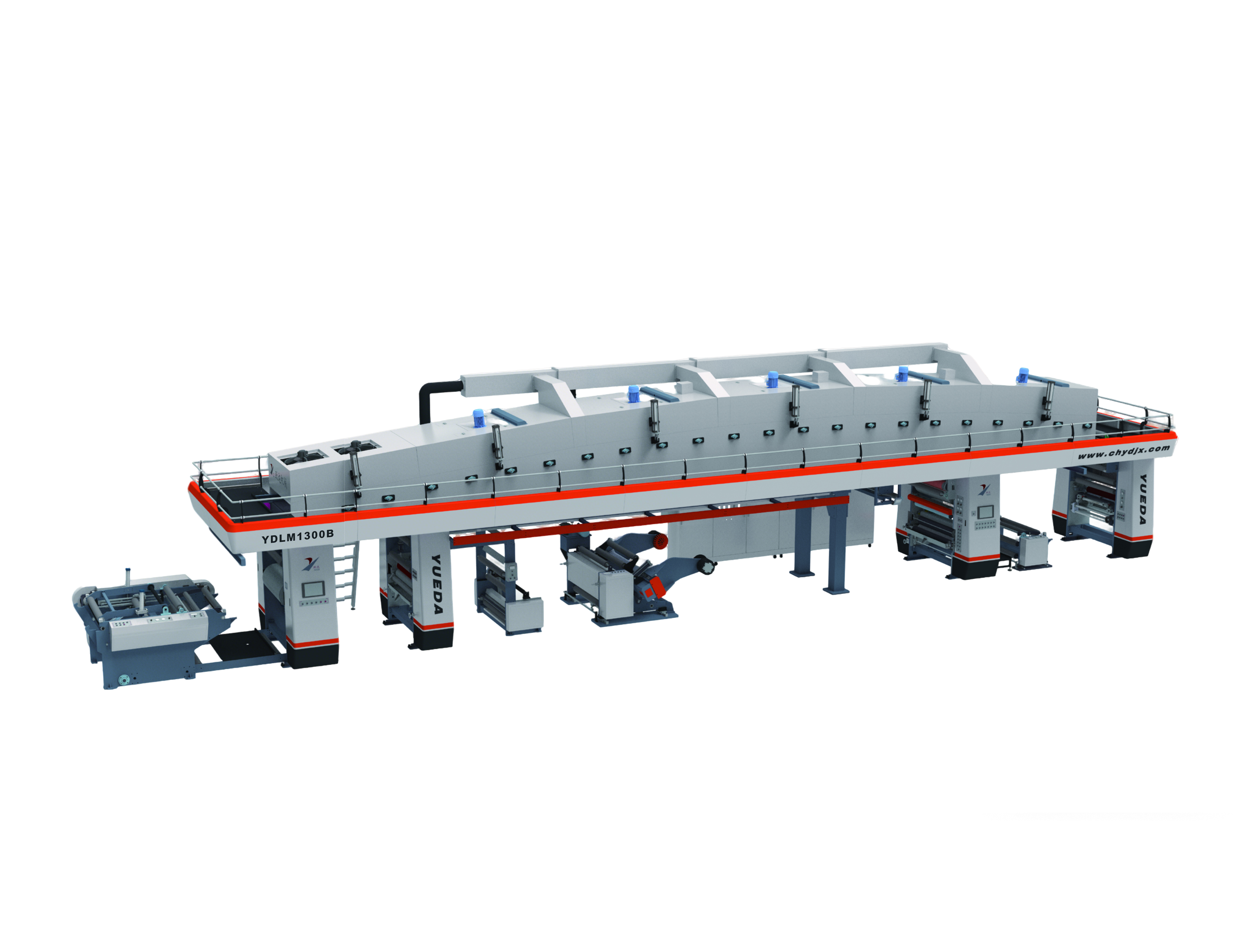
FQN transverse cutting is an important part of modern paper converting, sheet finishing, and quality-controlled production workflows.
In paper manufacturing and post-processing, transverse cutting refers to cutting paper web material across the machine direction to create
finished sheets, standardized blanks, or downstream-ready formats. When this process is combined with paper batch traceability and
finished sheet quality records, it becomes a powerful system for improving consistency, reducing waste, supporting compliance, and
strengthening customer confidence.
This article provides industry-level information about FQN transverse cutting, paper batch traceability, and finished sheet quality records.
It is written for SEO use, directory pages, industry pages, and blog content. It focuses on general definitions, advantages, quality
specifications, process structure, traceability records, and documentation best practices. No specific company recommendations are included.
FQN transverse cutting generally refers to a controlled paper cutting process in which a continuous paper web is cut across its width
to produce sheets with defined length, shape, edge quality, and dimensional accuracy. In industrial paper processing, transverse cutting
is used after slitting, rewinding, coating, printing, laminating, or other converting steps. The goal is to transform roll-based paper
into sheet-based output with stable dimensions and predictable performance.
In many operations, the term FQN is associated with quality-focused finishing and documentation workflows. When used in combination with
transverse cutting, it can indicate a system that emphasizes production control, sheet inspection, batch identification, and records
management. The exact meaning can vary by industry context, but the core focus remains the same: accurate cutting, measurable quality,
and traceable production history.
Paper batch traceability is the ability to track raw materials, production conditions, process steps, and final output back to a specific
paper batch or lot. This traceability is essential in industries that depend on consistency, compliance, and product accountability.
Finished sheet records make it possible to identify how a batch was processed, when it was cut, what quality checks were performed, and
whether the product meets required specifications.
Without batch traceability, it becomes difficult to isolate quality issues, identify root causes, or respond effectively to customer
complaints. With batch traceability, producers can connect finished sheets to source paper rolls, production dates, machine settings,
inspection results, and packaging records. This creates a complete quality trail.
| Traceability Element | Typical Content | Purpose |
|---|---|---|
| Raw Material Batch | Pulp source, paper grade, lot number | Identifies the origin of the paper supply |
| Production Record | Date, machine line, operator, shift | Shows when and how the sheet was processed |
| Cutting Parameters | Cut length, speed, tension, knife setting | Documents the transverse cutting conditions |
| Quality Inspection | Dimension checks, edge quality, defects | Proves finished sheet compliance |
| Packaging and Dispatch | Bundle code, pallet ID, shipment date | Maintains traceability after finishing |
Transverse cutting affects the final usability of paper products. Even when the base paper quality is high, poor cutting can create
edge burrs, size variation, stack misalignment, dust generation, or sheet deformation. For this reason, transverse cutting must be
handled as a precision finishing step rather than a simple mechanical operation.
Key quality outcomes supported by accurate transverse cutting include:
In high-volume paper finishing, even small errors in cutting can lead to significant losses. This is why paper batch traceability and
finished sheet quality records are often integrated into the same control system.
FQN transverse cutting is used across many paper-related industries. The exact workflow depends on the application, but the principle
remains consistent: convert continuous paper into controlled, finished sheets.
| Application Area | Typical Sheet Use | Quality Focus |
|---|---|---|
| Commercial Printing | Press-ready paper sheets | Dimensional accuracy, flatness, edge quality |
| Packaging | Carton liners, inserts, blanks | Cut uniformity, stack consistency |
| Stationery | Copy paper, note pads, writing sheets | Surface quality, size consistency |
| Label and Converting | Specialty sheet stock | Clean edges, moisture stability |
| Industrial Paper Processing | Technical paper sheets | Thickness control, defect prevention |
| Archival and Security Paper | Controlled production batches | Full traceability and record accuracy |
A strong paper batch traceability workflow normally begins before cutting and continues after the finished sheets leave the production
area. Each step adds data to the product history, making it easier to manage quality and compliance.
Finished sheet quality records are formal documents or digital entries that prove the quality status of a completed paper batch.
These records are useful for internal quality control, customer assurance, audits, claims handling, and process improvement.
| Record Field | Example Information | Why It Matters |
|---|---|---|
| Batch Number | FS-2026-001 | Links finished sheets to a unique production lot |
| Product Description | Uncoated white paper sheets | Defines the product type being verified |
| Sheet Dimensions | 210 mm x 297 mm | Confirms size accuracy |
| Basis Weight | 80 gsm | Supports product consistency and specification control |
| Inspection Result | Pass / Fail / Hold | Shows final quality status |
| Defect Notes | No visible edge defects | Documents observed issues if any |
| Inspector Name or ID | QC-Inspector-04 | Supports accountability and audit trail |
| Date and Time | 2026-10-30 14:20 | Creates a chronological record of quality checks |
Quality specifications vary by paper type, machine setup, and end-use, but most transverse cutting systems monitor a similar group of
measurable factors. These specifications are important because they directly influence appearance, performance, and customer acceptance.
| Specification | Typical Control Target | Quality Impact |
|---|---|---|
| Cut Length Tolerance | Within defined mm range | Ensures sheet size consistency |
| Squareness | Minimal angle deviation | Improves stacking and printing performance |
| Edge Cleanliness | No fraying, tearing, or burrs | Supports better appearance and handling |
| Stack Alignment | Flat and even stacking | Reduces packaging and dispatch issues |
| Surface Integrity | No marks or contamination | Maintains product value and usability |
| Moisture Stability | Within acceptable moisture range | Prevents curl, warp, or dimensional drift |
| Particle/Dust Control | Low residual dust level | Improves cleanliness in downstream processing |
Paper batch traceability provides operational and commercial benefits across the entire value chain. It allows producers to manage risk,
protect product quality, and respond quickly when problems arise. In a competitive market, traceability is no longer optional in many
segments; it is a key part of professional production management.
Finished sheet quality records are not only documentation tools. They are also quality management assets that help teams maintain
repeatability and accountability. When records are accurate and complete, they reduce uncertainty in production and logistics.
| Benefit | How It Helps | Business Value |
|---|---|---|
| Standardized Output | Documents expected sheet quality and size | Supports repeatable production |
| Complaint Handling | Provides evidence during customer disputes | Reduces service time and uncertainty |
| Process Control | Shows trends in defects or variation | Improves operational efficiency |
| Regulatory Support | Creates a verifiable production history | Assists compliance and documentation needs |
| Inventory Management | Links sheet batches to storage and shipment | Improves stock control and traceability |
Quality control systems for FQN transverse cutting often focus on detecting common defects early. Some issues are caused by knife wear,
tension imbalance, incorrect setup, environmental conditions, or raw material variation. Detecting them quickly helps prevent waste and
customer dissatisfaction.
| Defect Type | Possible Cause | Control Method |
|---|---|---|
| Ragged Edge | Dull blade or improper cutting pressure | Blade maintenance and parameter adjustment |
| Size Variation | Incorrect feeding or machine calibration | Regular measurement and setup verification |
| Misaligned Stack | Poor discharge timing or conveyor issues | Stacking system control and inspection |
| Sheet Curl | Moisture imbalance or storage condition | Environmental control and conditioning |
| Surface Marks | Dirty rollers or handling damage | Clean equipment and careful handling |
| Dust Contamination | Fiber release or poor housekeeping | Cleaning and dust control measures |
For websites building an industry page or blog article around FQN transverse cutting, paper batch traceability, and finished sheet
quality records, it is useful to organize content in a structured and keyword-rich way. A clear structure helps readers scan the page
and helps search engines understand the page topic.
Many paper producers and converters now use digital systems to store quality records, production data, and batch traceability logs.
A digital structure makes it easier to search, export, and analyze historical records.
| Digital Field | Example | Function |
|---|---|---|
| Batch ID | TR-2026-1001 | Unique identifier for the paper batch |
| Parent Roll ID | ROLL-77821 | Links finished sheets to source material |
| Cutting Line | Line 3 | Identifies the production equipment used |
| Operator ID | OP-015 | Shows who managed the process |
| Inspection Status | Accepted | Final quality decision |
| Archive Link | Record file reference | Stores proof for future audits or queries |
To achieve strong process control, paper batch traceability should be built into normal production practice rather than added at the end.
The best systems are simple, accurate, and consistent across all shifts and product types.
FQN transverse cutting represents more than a mechanical conversion step. It is part of a broader quality system that connects material
control, dimensional accuracy, finished sheet inspection, and batch-level documentation. When supported by strong traceability and
recordkeeping, transverse cutting becomes a reliable process capable of meeting demanding industry requirements.
For businesses that depend on paper sheet quality, traceability is essential for efficiency, compliance, and customer satisfaction.
Finished sheet records provide transparency, while batch traceability provides accountability. Together, they form a complete quality
management framework for paper converting and finishing operations.
FQN transverse cutting, paper batch traceability, and finished sheet quality records are tightly connected elements of modern paper
processing. Accurate transverse cutting ensures consistent sheet dimensions and clean edges. Batch traceability ensures every product
can be linked back to its source materials and production history. Finished sheet quality records document the final status of the
product and support inspection, compliance, and customer confidence.
For SEO-focused industry pages, this topic is highly valuable because it combines technical manufacturing language with quality-control
keywords, documentation terms, and product traceability concepts. A well-structured page built around these themes can support strong
search visibility while providing useful, original, and industry-relevant information.
```
Contact: Peter Chen/Jack Chen
Mail : peterchen@yuedamachine.com
Cellphone: +86 18767458866/ +86 19857780001
Address: Building 2, No. 1333 Times Avenue, Longgang City,Wenzhou City, Zhejiang Province China
Copyright © 2026 Wenzhou Yueda Packaging Machinery Co., Ltd. All Rights Reserved.
SitemapThis website uses cookies to ensure you get the best experience on our website.
 Español
 Portugues
 Indonesia
 Tiếng Việt



 Phone
 E-mail
Comment
(0)