

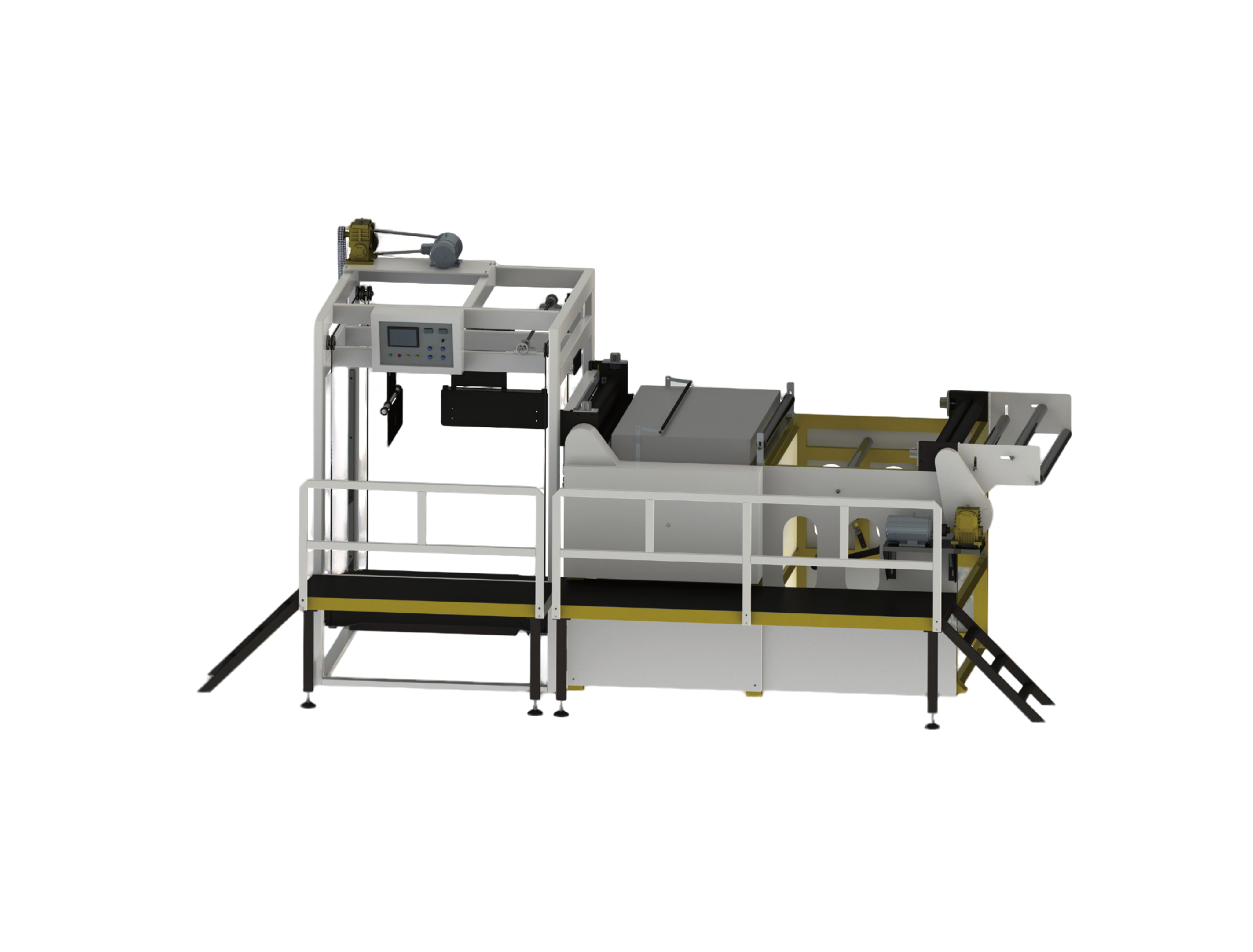
FQN1200 and FQN1400 elevation-type transverse cutters are widely discussed in the paper converting, sheet processing, and precision cutting industries because they are designed to support accurate cross-cutting of paper, film, cardboard, and other sheet materials. For buyers preparing a quotation request, technical data and specification clarity are essential. The more complete the input data, the easier it is to compare pricing, evaluate production suitability, and reduce quotation errors.
This page provides a structured, SEO-friendly, industry-generic overview of FQN1200 and FQN1400 transverse cutters, including definitions, working principles, material compatibility, application scenarios, key advantages, common technical parameters, and a quotation data checklist. The content is designed for use in industry pages, catalog pages, landing pages, and blog posts, with clear headings and tables for easy indexing and reading.
An elevation-type transverse cutter is a cross-cutting machine designed to cut continuous web material or sheet material into fixed lengths. The term “elevation-type” generally refers to a machine structure where the cutting section, feeding section, or receiving section is arranged with an elevated mechanical layout to improve material transfer, accessibility, and line integration. In many industrial setups, this type of design is used to support stable feeding, clean cutting, and efficient discharge of cut sheets.
In paper converting and sheet processing, a transverse cutter is commonly used after slitting, rewinding, laminating, coating, printing, or roll-to-sheet conversion. It converts long rolls or continuous sheets into standardized lengths. When buyers search for FQN1200 or FQN1400, they are usually looking for machine models intended to match different maximum web widths, productivity requirements, and factory layouts.
The model names FQN1200 and FQN1400 typically indicate machine variants with nominal working widths of approximately 1200 mm and 1400 mm. These widths are important because they define the maximum material span that the cutter can handle. In quotation preparation, the nominal width is one of the first factors used to estimate machine frame size, cutting length range, web guidance system, and overall configuration.
Although exact design details vary by manufacturer and production line, both model classes are generally intended for paper and sheet cutting applications where precision, repeatability, and throughput matter. The larger FQN1400 version usually supports a wider material format than the FQN1200 version, making it suitable for broader sheet stock and larger production demands.
When requesting a quotation for an elevation-type transverse cutter, buyers should not rely on model name alone. Pricing can change significantly depending on material type, thickness, width, cut length, automation level, control system, discharge method, and customization requirements. A complete quotation file helps suppliers provide accurate pricing and helps buyers avoid hidden costs.
For the paper and sheet industry, quotation data is especially important because the same machine platform may be configured differently for:
Precise data also supports better comparison between machine options, especially when evaluating cutting speed, servo control, automatic stacking, and edge accuracy.
The core purpose of these machines is to transform continuous material into uniform cut sheets. Their main functional benefits usually include:
In many production environments, a transverse cutter is a critical downstream machine. It helps ensure that the final sheet format meets size specifications for printing, packaging, converting, or finishing.
FQN1200 and FQN1400 type cutters are generally associated with a broad range of sheet-based materials. The exact compatibility depends on blade design, feed system, tension control, and thickness limits. Typical materials include:
| Material Type | Typical Industry Use | Processing Notes |
|---|---|---|
| Printing paper | Commercial printing, publishing | Requires stable feeding and accurate length control |
| Coated paper | Packaging, premium printing | Blade sharpness and surface protection are important |
| Kraft paper | Packaging, industrial wrapping | May require stronger feed traction and cutting force |
| Cardboard / board sheets | Carton making, packaging | Thickness and stiffness affect cutter configuration |
| Film and laminate sheets | Packaging, converting | Anti-static and tension control may be needed |
| Composite sheet materials | Industrial processing | Requires testing for edge quality and stability |
From an industry perspective, the main advantages of this machine category are related to precision, consistency, and operational efficiency. These advantages are often highlighted in product catalogs and quotation discussions.
Cross-cutting machines are valued for repeatable length control. A well-configured transverse cutter can produce consistent sheet dimensions across long production runs, which improves downstream packaging and printing accuracy.
FQN1200 and FQN1400 machines are generally used in production environments that require stable throughput. They are suitable for industries where sheet output must keep pace with roll feed or upstream converting equipment.
The elevation-type design can help simplify material transfer, discharge, and stacking. This is useful in compact workshops as well as larger automated lines.
Accurate cutting reduces dimensional errors, trim waste, and rejected sheets. This is especially important in paper and packaging processing where material loss directly affects cost.
These machines can often be integrated into converting lines with slitting, winding, counting, or automatic stacking systems. This makes them suitable for semi-automatic and fully automatic workflow configurations.
The following table presents common technical parameters often requested in quotation sheets for FQN1200 and FQN1400 transverse cutters. Exact numbers can vary by machine design, but these fields are commonly used for comparison and specification.
| Parameter | FQN1200 Typical Reference | FQN1400 Typical Reference | Quotation Notes |
|---|---|---|---|
| Nominal working width | 1200 mm | 1400 mm | Defines maximum material width |
| Cutting type | Transverse / cross-cut | Transverse / cross-cut | May use rotary or knife-based cutting |
| Material format | Roll or sheet web | Roll or sheet web | Depends on feeding structure |
| Cut length range | Customizable | Customizable | Need actual product length requirements |
| Cutting precision | High precision | High precision | Specification depends on servo and control system |
| Maximum material thickness | Depends on configuration | Depends on configuration | Important for cardboard and thick sheets |
| Drive system | Mechanical / servo-assisted | Mechanical / servo-assisted | Impacts speed and accuracy |
| Control system | PLC / digital control | PLC / digital control | Touchscreen or button interface possible |
| Output method | Manual or automatic stacking | Manual or automatic stacking | Determine downstream handling needs |
| Production speed | Model-dependent | Model-dependent | Must match application target |
An elevation-type transverse cutter often includes several functional sections. These sections work together to ensure precise cross-cutting and stable delivery.
In some configurations, a machine may also include tension control, anti-static devices, sensor systems, waste collection, and automatic counting functions. These features are often relevant when compiling a detailed quotation.
FQN1200 and FQN1400 transverse cutters are used across several industrial sectors. Their application scope typically includes:
They are commonly used to convert large paper rolls into fixed-size sheets for printing, packaging, and industrial use.
Cardboard, liner paper, and other packaging substrates often require accurate cutting before folding, laminating, or boxing.
Printed rolls may be cut into sheets for finishing, binding, or post-processing.
Some manufacturers use transverse cutters for composite sheets, laminated materials, or technical substrates that need repeatable length control.
The machine can serve as a downstream unit in a converting line, especially where cross-cutting must be synchronized with web speed and output flow.
When buyers request a quotation for a paper and sheet transverse cutter, they benefit from understanding the main decision factors. This can improve quotation accuracy and shorten the procurement cycle.
| Buyer Concern | Why It Matters | What to Include in the Quotation Request |
|---|---|---|
| Material type | Affects blade choice and feeding system | Paper grade, sheet type, coating, thickness |
| Working width | Determines machine frame size | Required width in millimeters |
| Cut length | Defines output sheet size | Minimum, maximum, and common lengths |
| Production speed | Impacts motor and control selection | Target output per minute or hour |
| Accuracy requirement | Important for printing and packaging | Allowed tolerance or deviation |
| Automation level | Changes price and labor demand | Manual, semi-automatic, or automatic |
| Discharge method | Influences workflow and stacking | Manual collection or automatic stacking |
To receive a useful quotation for FQN1200 or FQN1400 elevation-type transverse cutters, buyers should prepare a complete technical brief. The following checklist is commonly used in industrial procurement.
The more detailed the request, the more accurate the quotation. This is especially important when comparing machines for paper cutting, cardboard cutting, or sheet material processing.
While both models belong to the same general machine family, the key difference is usually the working width. This affects production layout, machine size, and the range of materials that can be processed.
| Comparison Item | FQN1200 | FQN1400 |
|---|---|---|
| Nominal width | Approximately 1200 mm | Approximately 1400 mm |
| Machine footprint | More compact | Larger frame and wider layout |
| Suitable material span | Medium-width paper and sheets | Wider sheets and broader production needs |
| Potential throughput | Suitable for moderate production | Often selected for wider or higher-capacity lines |
| Quotation level | Usually lower than wider models, depending on configuration | Often higher due to larger format and structure |
The price of an elevation-type transverse cutter is not determined by width alone. Several technical factors influence the final quotation:
For this reason, a quotation should be viewed as a technical package, not just a machine price.
To support search engine visibility, related keyword phrases often used in this topic include:
Using these terms naturally in product pages, directories, and blog posts can improve relevance for buyers searching for paper cutting and sheet cutting solutions.
Any industrial cutter must be used with proper safety and operational procedures. When evaluating FQN1200 and FQN1400 machines, consider the following common points:
Safety configuration is an essential part of the quotation process because it can affect not only compliance but also long-term operational efficiency.
Well-designed transverse cutters often offer easier maintenance and more stable long-term performance. Buyers usually consider maintenance because it influences uptime, labor cost, and total ownership cost.
These factors are especially important in paper and sheet processing environments where production interruptions can quickly increase cost.
Yes, in general these machines are used for paper and various sheet materials, but actual compatibility depends on thickness, stiffness, surface condition, and machine configuration.
FQN1400 is generally more suitable for wider material formats because of its larger nominal working width.
Include material type, width, thickness, cut length, speed requirements, automation level, and voltage details for the most accurate quotation.
Yes, many transverse cutter configurations are designed to work in semi-automatic or automatic production lines.
No, depending on setup, it may also be used for cardboard, film, laminated sheets, and other compatible materials.
FQN1200 and FQN1400 elevation-type transverse cutters are important machines in the paper and sheet converting industry. Their primary role is to provide accurate, efficient, and repeatable transverse cutting for a wide range of materials. For quotation purposes, the most important factors are working width, material type, cut length, production speed, automation level, and required output quality.
If you are building an industry page, directory page, or blog article, this topic is highly suitable for SEO because it combines machine specification terms, application keywords, and quotation-intent language. A well-structured quotation request helps buyers compare options more effectively and helps suppliers deliver more precise technical proposals.
In short, when evaluating FQN1200 or FQN1400 paper and sheet transverse cutters, focus on performance data, production needs, and configuration requirements. Clear technical input leads to better quotations, better machine matching, and better long-term production results.
Contact: Peter Chen/Jack Chen
Mail : peterchen@yuedamachine.com
Cellphone: +86 18767458866/ +86 19857780001
Address: Building 2, No. 1333 Times Avenue, Longgang City,Wenzhou City, Zhejiang Province China
Copyright © 2026 Wenzhou Yueda Packaging Machinery Co., Ltd. All Rights Reserved.
SitemapThis website uses cookies to ensure you get the best experience on our website.
 Español
 Portugues
 Indonesia
 Tiếng Việt



 Phone
 E-mail
Comment
(0)