

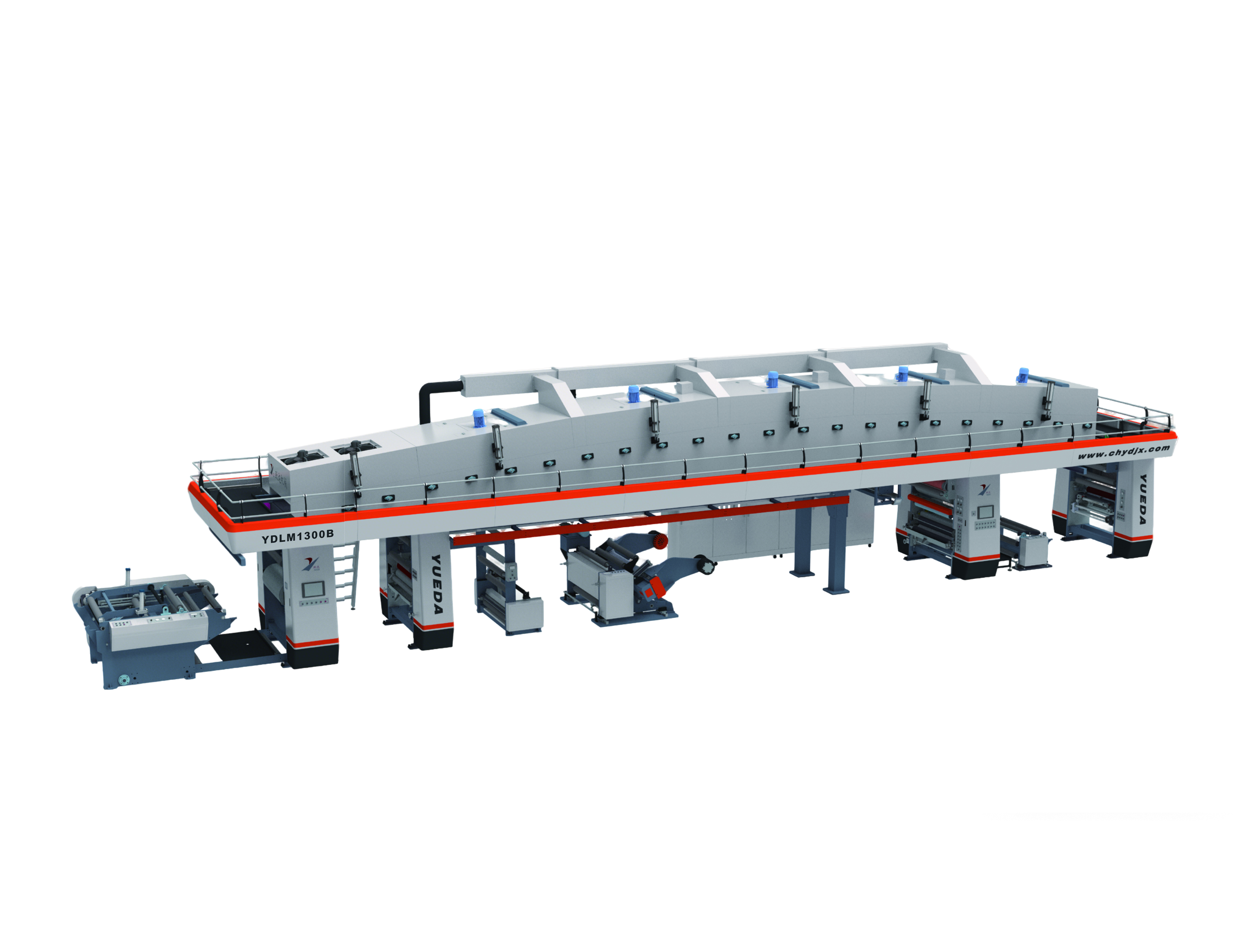
This industry-focused guide explains FQN1200 transverse cutters and
FQN1400 transverse cutters from a capacity planning perspective, with practical
data on paper grade compatibility, sheet size ranges,
output planning, and production considerations. It is designed for
SEO-friendly use in blogs, directory pages, and industrial product pages, and it focuses on
general technical information only.
A transverse cutter is a paper converting machine used to cut a continuous web of paper into
individual sheets across the machine direction. In industrial paper processing, transverse cutters
are used after printing, coating, laminating, slitting, or rewinding, depending on the production
workflow. Their role is critical in converting large rolls into precise sheet formats suitable for
packaging, printing, stationery, publishing, and industrial applications.
In capacity planning, the value of a transverse cutter is not only measured by cutting speed.
Production teams also evaluate paper grade, sheet dimensions,
basis weight, cutting accuracy, stacking stability,
and changeover efficiency. This is especially important when comparing
FQN1200 and FQN1400 transverse cutters, since sheet width and
machine throughput requirements can vary significantly.
The designations FQN1200 and FQN1400 generally refer to
transverse cutter configurations intended for different maximum web or sheet widths. While exact
technical configurations may vary by machine design, the core planning principle remains the same:
a wider machine typically supports broader sheet formats and may improve throughput for large-format
production lines.
Capacity planning for these machines involves matching the cutter to the target product range. For
example, operations that produce medium-format sheets may prioritize the 1200 class for better
space efficiency, while plants handling wide-format paper or multiple-up sheet layouts may prefer the
1400 class for greater flexibility.
When selecting or planning around FQN1200 or FQN1400 cutters, the following factors are commonly
evaluated:
In paper converting, paper grade refers to the type, structure, and performance
characteristics of the paper being processed. Paper grade determines how cleanly the web can be cut,
how stable the sheet edges remain, and whether the material will dust, curl, crack, or slip during
transport and stacking.
For transverse cutters, paper grade directly influences:
A sheet size plan that works well for one paper grade may not perform equally well with another.
For that reason, capacity planning should always combine paper grade data with
sheet size data.
Below is a general industry classification of paper grades commonly processed on transverse cutters.
Actual performance depends on moisture content, surface finish, basis weight, coating type, and
production speed.
| Paper Grade | Typical Characteristics | Cutting Behavior | Planning Notes |
|---|---|---|---|
| Woodfree Offset Paper | Smooth surface, good opacity, stable formation | Clean cutting, low edge dust | Suitable for printing and publishing sheets |
| Coated Paper | Surface coating, higher gloss, improved print quality | May show knife buildup if coating is heavy | Requires knife maintenance and dust control |
| Uncoated Paper | Absorbent, varied formation, moderate surface roughness | Generally stable, but edge fuzz may appear on lighter grades | Useful for office, book, and general print applications |
| Newsprint | Lightweight, high bulk, lower brightness | Can be sensitive to tension and humidity | Speed and humidity control are important |
| Paperboard / Light Card | Higher thickness, stiffer structure | Requires stronger cutting force | Check knife load and stack stability |
| Recycled Paper | Variable fibers, possible dust and formation inconsistency | May produce more debris and variable edges | Plan for enhanced cleaning and inspection |
| Digital Print Paper | Engineered for toner or inkjet workflows | Typically stable, but surface and heat history matter | Use precise sheet size control for finishing |
Sheet size is one of the most important variables in transverse cutter planning. The ideal sheet size
depends on the end-use application, the machine width, and the paper grade being converted.
For capacity planning, it is useful to separate maximum workable sheet size,
preferred production sheet size, and minimum practical sheet size.
| Planning Factor | FQN1200 Class | FQN1400 Class | Capacity Planning Impact |
|---|---|---|---|
| Maximum Web / Sheet Width | Up to about 1200 mm class width | Up to about 1400 mm class width | Defines the largest input format the machine can handle |
| Typical Sheet Length Range | Commonly 280 mm to 1200 mm, depending on setup | Commonly 280 mm to 1400 mm, depending on setup | Longer sheets may reduce cycle rate and stacking efficiency |
| Preferred Sheet Formats | Medium-format commercial and industrial sheets | Large-format commercial, packaging, and converting sheets | Preferred formats improve utilization and consistency |
| Minimum Practical Sheet Size | Depends on grip, tension, and stacker design | Depends on grip, tension, and stacker design | Smaller sheets may require more precise delivery control |
| Format Change Frequency | Moderate | Moderate to high in multi-format plants | Frequent format changes can lower effective capacity |
The following table presents common sheet size categories used in paper converting and finishing
operations. These are general industry references, not fixed machine limits.
| Category | Approximate Sheet Size | Common Applications | Planning Value |
|---|---|---|---|
| Small Format | 210 × 297 mm, 220 × 320 mm | Office paper, books, stationery | Good for high-volume standard output |
| Medium Format | 500 × 700 mm, 520 × 740 mm | Commercial printing, inserts, catalogs | Balanced productivity and material utilization |
| Large Format | 700 × 1000 mm, 720 × 1020 mm | Packaging, premium print, industrial sheets | Better suited to wider cutter platforms |
| Extra-Large Format | 1000 × 1400 mm and related sizes | Specialty packaging, large conversion runs | Requires robust width handling and delivery support |
Paper grade can change how efficiently a sheet size performs on a transverse cutter. For example,
lightweight uncoated paper may allow faster operation and tighter stacking, while coated stock may
require slower acceleration and more careful edge handling. Heavy paperboard may reduce the number of
sheets per stack and increase cutting force requirements.
In practice, the relationship between paper grade and sheet size can be summarized as follows:
Capacity planning should account for more than nominal width. The real production output of an
FQN1200 or FQN1400 transverse cutter depends on several interrelated factors.
| Factor | Why It Matters | Impact on Output |
|---|---|---|
| Web Width | Determines format compatibility and material usage | Affects maximum sheet layout and cut pattern efficiency |
| Sheet Length | Longer sheets reduce cycle frequency but may improve product value | Influences speed, stack height, and delivery stability |
| Paper Basis Weight | Heavier paper requires more cutting force and may slow throughput | Can lower maximum line speed |
| Moisture Content | Too dry or too wet paper can cause curl, dust, or dimensional instability | Impacts accuracy and stack quality |
| Knife Condition | Sharpness affects edge quality and machine load | Worn knives reduce efficiency and increase scrap risk |
| Operator Changeover | Frequent format changes reduce effective uptime | Lower overall daily capacity |
| Downstream Stacking | Stacker speed and reliability control the final output rate | Limits maximum usable machine speed |
Although exact machine configurations differ, transverse cutters in the FQN1200 and FQN1400 class
generally offer the following industrial advantages:
The 1200 class is often associated with compact and efficient production planning, while the 1400
class is usually selected when wider sheet formats or broader product diversity are required. In both
cases, the key advantage is the ability to match paper grade, sheet size, and production rhythm in a
controlled environment.
| Use Scenario | Preferred Paper Grade | Likely Sheet Size Range | Machine Class Fit |
|---|---|---|---|
| Commercial printing sheets | Woodfree offset paper | Medium format | FQN1200 or FQN1400 |
| Large-format catalog or brochure production | Coated paper | Medium to large format | FQN1400 preferred |
| Book and publishing applications | Uncoated paper | Small to medium format | FQN1200 suitable |
| Packaging and industrial conversion | Paperboard or light card | Large format | FQN1400 preferred |
| High-volume standard sheet output | Stable uncoated or digital paper | Small to medium format | FQN1200 efficient |
To improve capacity utilization, operators and planners should evaluate the full production chain rather
than the cutter alone. Key operational considerations include:
In many plants, capacity losses come from minor issues such as poor sheet-size matching, unstable paper
grade feeding, or delayed changeovers. Therefore, the most effective planning method is to combine
machine width data, paper grade data, and sheet size data into one operating model.
For search visibility, pages about FQN1200 and FQN1400 transverse cutters often benefit from clear,
repeated use of relevant industry terms. Useful keyword clusters include:
When using this content on a blog or directory page, structure the page with clear headings, tables,
and descriptive paragraphs so that search engines can better understand the topic relevance and
topical depth.
FQN1200 and FQN1400 transverse cutters are valuable tools in industrial paper converting because they
support controlled, repeatable sheet production across different paper grades and sheet size ranges.
For capacity planning, the best results come from aligning the cutter width with the target product
mix, ensuring paper grade compatibility, and using sheet sizes that maximize throughput without
overloading the system.
In general, the FQN1200 class is well suited to compact and efficient operations with medium-format
output, while the FQN1400 class provides additional width and flexibility for larger sheet formats and
broader product planning. Regardless of configuration, the most important factors remain paper grade
stability, sheet dimension control, knife condition, and stacking performance.
For any industrial paper operation, accurate capacity planning begins with one simple principle:
the right paper grade and the right sheet size must match the right transverse cutter capacity.
```
Contact: Peter Chen/Jack Chen
Mail : peterchen@yuedamachine.com
Cellphone: +86 18767458866/ +86 19857780001
Address: Building 2, No. 1333 Times Avenue, Longgang City,Wenzhou City, Zhejiang Province China
Copyright © 2026 Wenzhou Yueda Packaging Machinery Co., Ltd. All Rights Reserved.
SitemapThis website uses cookies to ensure you get the best experience on our website.
 Español
 Portugues
 Indonesia
 Tiếng Việt



 Phone
 E-mail
Comment
(0)