

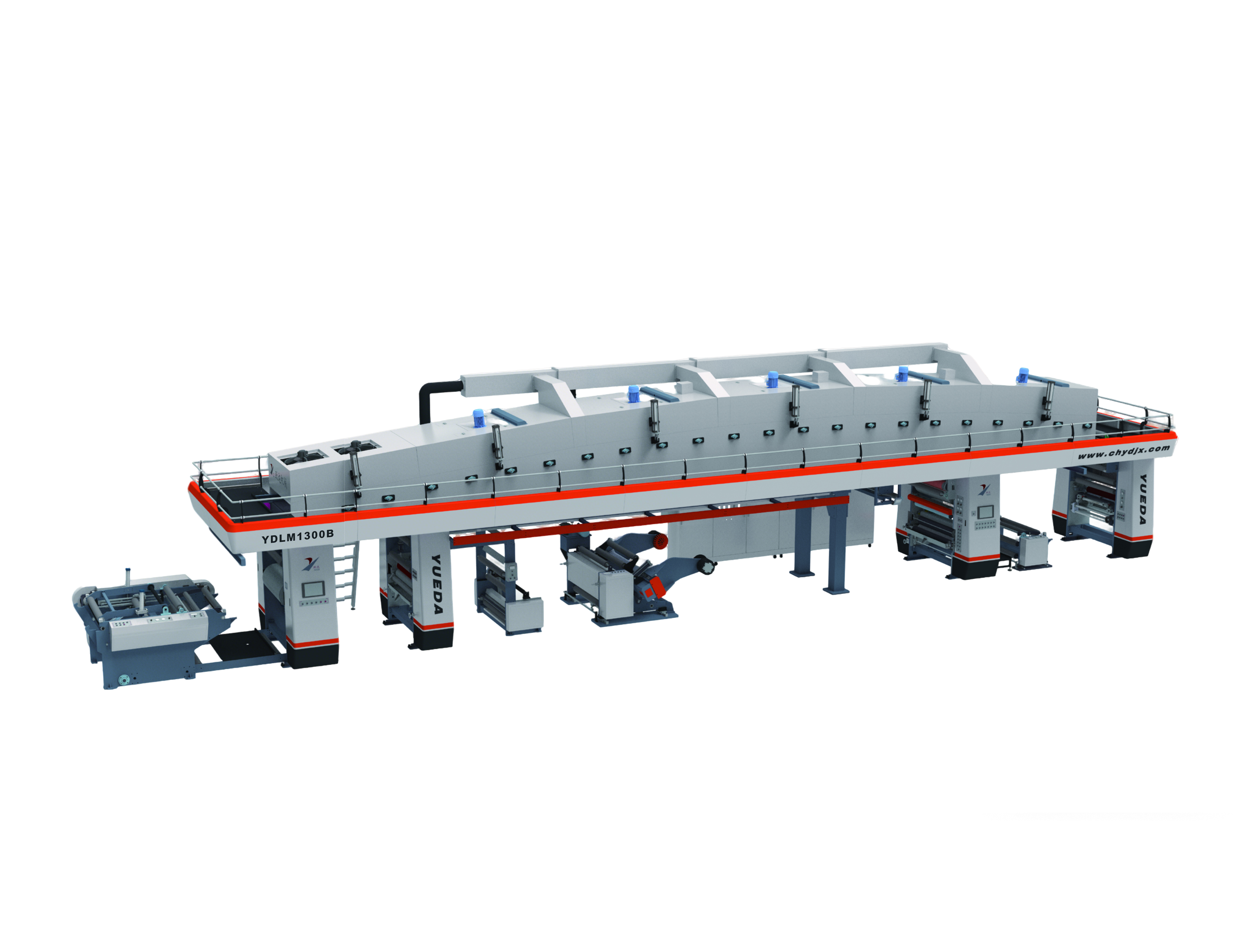
FQN1200 and FQN1400 transverse cutters are widely discussed in industrial slitting, converting, packaging, and
roll-processing environments where precise transverse cutting is critical. In many production lines, questions
about samples, sample validation, and cutting acceptance criteria determine whether a cutter meets the required
quality standard. This article provides a fully original, SEO-friendly, industry-focused guide in clear English,
with definitions, advantages, specification tables, and practical acceptance criteria language that can be used
for blog pages, directory pages, and industrial landing pages.
The information below is general industry knowledge only. It does not recommend any specific company or brand.
Instead, it explains what transverse cutters are, how FQN1200 and FQN1400 class machines are commonly
understood, what samples are used for, how to evaluate cutting quality, and what acceptance criteria are often
considered in manufacturing and quality control workflows.
A transverse cutter is a machine used to cut materials across the web direction, typically after slitting,
rewinding, laminating, printing, or converting. The term “transverse cutter” refers to the crosswise cutting
action that separates material into sheets, pieces, or finished segments. In industrial settings, transverse
cutters are used for films, paper, labels, nonwovens, laminated materials, flexible packaging materials,
adhesive products, and other roll-based substrates.
FQN1200 and FQN1400 generally refer to model categories distinguished by working width, where 1200 and 1400
indicate nominal cutting widths in millimeters. These machine classes are often used to match different web
widths, production volumes, and downstream finishing requirements. In practical terms, an FQN1200 transverse
cutter is typically suited for narrower material formats, while an FQN1400 transverse cutter provides a wider
working range for larger-format production or broader webs.
In the transverse cutting process, sample evaluation is essential because cutting performance cannot be judged
by machine appearance alone. A sample test helps verify whether the cutter delivers consistent edge quality,
accurate length, stable registration, and acceptable finished dimensions. Sampling is also used to confirm that
the machine settings are suitable for a specific material type, thickness, surface tension, coating, or
laminate structure.
Questions about samples often arise before equipment acceptance, during commissioning, after maintenance, or
when production changes to a new substrate. Typical sample questions include whether the cut edge is clean,
whether the length tolerance is within specification, whether the sample shows deformation, whether burrs or
fiber pull occur, and whether the cutter maintains repeatability over multiple cycles.
| Sample Question | What It Means | Why It Matters |
|---|---|---|
| Is the cut edge clean? | Checks whether the edge is straight, smooth, and free from tearing or fuzzing. | Clean edges improve product appearance and reduce waste in downstream processing. |
| Is the cut length accurate? | Compares the actual cut dimension to the target dimension. | Dimensional accuracy is essential for assembly, packaging, and product consistency. |
| Are there burrs, dust, or particles? | Looks for debris generated during cutting. | Excess debris can affect cleanliness, coating, sealing, or product safety requirements. |
| Is the cut repeatable? | Evaluates whether multiple samples have the same quality and size. | Repeatability is a key indicator of stable machine performance. |
| Does the material deform? | Checks for curling, stretching, compression, or edge distortion. | Deformation can signal improper blade settings or unsuitable cutting speed. |
| Does the sample match production conditions? | Confirms that the tested sample reflects real operating speed and material properties. | Acceptance should be based on realistic production conditions, not idealized tests only. |
Cutting acceptance criteria define the conditions a transverse cutter must satisfy to be considered suitable for
production. These criteria are usually based on customer requirements, internal quality standards, material
characteristics, and the intended end use of the final product. While exact limits vary by industry, the most
common acceptance factors include cut accuracy, edge quality, cycle stability, scrap rate, and operational
consistency.
For FQN1200 and FQN1400 transverse cutters, acceptance criteria often focus on measurable performance points.
These may include width or length tolerance, cut straightness, edge burr limit, surface damage control, and
stable output over a defined number of cycles. In high-precision applications, even slight deviations may be
unacceptable. In less demanding applications, broader tolerances may be allowed, but consistency remains
important.
| Acceptance Criterion | General Evaluation Method | Typical Quality Expectation |
|---|---|---|
| Cut dimension accuracy | Measure finished samples against target dimensions using calibrated tools. | Within specified tolerance band. |
| Cut edge quality | Visually inspect edge smoothness and check for fraying, tearing, or roughness. | Clean, uniform edge with minimal visible defects. |
| Repeatability | Test multiple consecutive samples under the same settings. | Consistent dimensions and edge quality across samples. |
| Material integrity | Inspect for deformation, cracking, delamination, or surface damage. | No unacceptable material damage after cutting. |
| Debris control | Check for dust, chips, or loose particles after cutting. | Debris should be within the acceptable cleanliness standard. |
| Production stability | Observe performance over extended operation or repeated cycles. | Stable performance without significant drift or downtime. |
Although the exact mechanical configuration can vary by manufacturer and project requirement, the FQN1200 and
FQN1400 categories are commonly compared by working width, throughput potential, space demand, and substrate
compatibility. A wider machine can usually process broader material formats, but it may also require more floor
space, more careful alignment, and a more robust setup. A narrower machine may be easier to integrate into
compact production environments and can be ideal for smaller roll widths.
| Feature | FQN1200 Transverse Cutter | FQN1400 Transverse Cutter |
|---|---|---|
| Nominal working width | Typically around 1200 mm | Typically around 1400 mm |
| Best suited for | Medium-width roll processing | Wider roll processing and larger formats |
| Footprint | Generally more compact | Usually larger and requires more installation space |
| Production flexibility | High for moderate-width products | High for wider product ranges |
| Typical application focus | General converting, packaging, labeling, and roll finishing | Broader converting and high-width processing lines |
| Sampling emphasis | Precision and consistency in a smaller width band | Uniform quality across a larger cutting span |
Transverse cutters offer several advantages in industrial production. First, they improve efficiency by making
it possible to separate materials quickly and consistently. Second, they enhance quality by producing uniform
cut lengths and cleaner edges compared with manual cutting methods. Third, they reduce material waste when
properly configured, because accurate cuts help minimize trim loss and rework.
Another major advantage is process standardization. Once cutting settings are optimized, the machine can produce
repeated samples that are easier to evaluate and approve. This is especially important in industries where
dimensional stability, surface appearance, and product reliability are all essential. In addition, transverse
cutters support higher productivity by reducing operator dependence and improving line speed control.
| Material Type | Typical Cutting Concern | Key Acceptance Focus |
|---|---|---|
| Paper | Fiber tear, dust, and edge roughness | Sharp edge, minimal fraying, accurate length |
| Film | Stretching, edge curl, and slippage | Straight cut, no deformation, stable tension control |
| Nonwoven | Loose fibers and compression marks | Clean separation, low fiber disturbance |
| Laminates | Layer separation or delamination | No peeling, no edge split, consistent bonding |
| Adhesive materials | Sticking, edge buildup, and contamination | Controlled cut quality and clean release behavior |
| Flexible packaging substrates | Registration errors and appearance defects | Accurate size, clean finish, production consistency |
Proper sample evaluation should be structured, repeatable, and documented. Start by defining the target material,
the machine settings, and the required measurement points. Then collect enough samples to verify consistency.
A single perfect sample is not enough to prove stable performance. Multiple samples across a continuous run are
more reliable because they reveal whether the cutter remains stable under normal operating conditions.
The evaluation process usually includes visual inspection, dimensional measurement, and functional review.
Visual inspection checks for obvious defects such as jagged edges, crush marks, or debris. Dimensional
measurement confirms that the cut size matches the target. Functional review determines whether the product can
move to the next process without issue, such as folding, packaging, stacking, or sealing.
| Checklist Item | Pass/Fail Consideration | Notes |
|---|---|---|
| Cut is straight and uniform | Pass if the line is visually even and aligned. | Important for appearance and assembly. |
| Length is within tolerance | Pass if measurements match the agreed specification. | Use calibrated measuring tools. |
| Edge is smooth | Pass if there is no major tearing, fraying, or roughness. | Edge quality depends on material type. |
| No visible deformation | Pass if the sample retains its normal shape. | Watch for curl, stretch, compression, or warping. |
| No unacceptable debris | Pass if the sample remains clean enough for the application. | Cleanliness standards vary by industry. |
| Repeatability verified | Pass if multiple samples show similar results. | Consistency is essential for production approval. |
Several factors affect whether a transverse cutting sample passes acceptance criteria. Material thickness is one
of the most important variables because thicker materials generally require different blade pressure, speed, or
cutting force. Surface coating can also change cutting behavior, especially if the material is slippery,
adhesive, or layered. Tension control is another critical factor because uneven tension may cause inaccurate
cuts or edge distortion.
Blade condition strongly influences acceptance as well. A worn blade can create rough edges, increase resistance,
and lower repeatability. Machine alignment, feed stability, and cycle speed also affect the final result.
Finally, environmental conditions such as temperature, humidity, and static electricity may influence sample
quality, especially for films, papers, and nonwovens.
For SEO purposes, pages about transverse cutters often benefit from natural use of relevant keywords such as
FQN1200 transverse cutter, FQN1400 transverse cutter, transverse cutter sample evaluation, cutting acceptance
criteria, roll processing cutter, industrial cutting machine, clean edge cutting, dimensional accuracy,
sample testing, and web converting equipment. These keywords should be integrated naturally into headings,
paragraphs, tables, and checklist sections for better search visibility.
Content about FQN1200 and FQN1400 transverse cutters works well for a variety of page types. On a blog page, it
can be used to explain how cutting quality is tested and why acceptance criteria matter. On a directory page, it
can help users compare general machine widths and application categories. On an industry page, it can support
technical education, lead generation, and search visibility by addressing common buyer questions in a structured
format.
Strong SEO pages often combine definition content, comparison tables, quality criteria, and practical checklists.
This structure helps users quickly find answers while giving search engines clear topical signals. Long-form
content is especially useful for ranking because it covers related subtopics, user intent, and keyword variants
in one place.
A sample is a piece of material cut under defined machine settings and used to evaluate quality, dimension,
edge condition, and repeatability before full production approval.
Cutting acceptance criteria are the quality standards used to judge whether the cut samples meet the required
specification for production use.
They are often compared because both represent transverse cutter categories with different working widths and
production capacities, making them useful for different material formats.
The most important factor depends on the application, but in many cases dimensional accuracy, edge quality, and
repeatability are the main priorities.
Enough samples should be tested to show consistent performance across repeated cycles, not just one successful
cut. The exact number depends on internal standards and production requirements.
FQN1200 and FQN1400 transverse cutters play an important role in modern roll processing and converting
operations. Their performance is often judged not only by machine specifications but also by the quality of
actual samples and the clarity of cutting acceptance criteria. Clean edges, accurate dimensions, stable
repeatability, and controlled material behavior are all central to approval decisions.
For businesses, engineers, and procurement teams, understanding sample evaluation and acceptance standards
makes it easier to assess transverse cutting performance and choose suitable production settings. Whether the
focus is on a 1200 mm class machine or a 1400 mm class machine, the core goal remains the same: consistent,
accurate, and reliable transverse cutting quality that supports efficient manufacturing.
Contact: Peter Chen/Jack Chen
Mail : peterchen@yuedamachine.com
Cellphone: +86 18767458866/ +86 19857780001
Address: Building 2, No. 1333 Times Avenue, Longgang City,Wenzhou City, Zhejiang Province China
Copyright © 2026 Wenzhou Yueda Packaging Machinery Co., Ltd. All Rights Reserved.
SitemapThis website uses cookies to ensure you get the best experience on our website.
 Español
 Portugues
 Indonesia
 Tiếng Việt



 Phone
 E-mail
Comment
(0)