

Laminating and coating equipment should be evaluated against a defined material combination and an agreed finished result. A machine description alone cannot establish whether a particular paper, board, film and adhesive will work together. For a useful enquiry, identify what enters the process, what should leave it, how the material will be converted afterwards and how the finished sample will be judged. These four decisions provide a stronger starting point than comparing isolated speed figures or machine photographs.
This guide explains how a packaging converter can organize that enquiry. It focuses on specifying the job, preparing meaningful trials, comparing the scope of proposals and recording acceptance. It is a purchasing framework, rather than a set of operating instructions. Machine settings, adhesive handling and safety procedures must come from the documentation for the actual equipment and materials supplied.
Describe the final packaging component before selecting a processing route. A decorative carton, a printed cover and a laminated board insert may place different demands on appearance, stiffness and subsequent conversion. State which surface will be visible, whether it will be printed, and whether the material will later be cut, creased, folded or glued. A satisfactory flat sample can still be unsuitable if it behaves poorly at the next production stage.
Keep appearance requirements separate from functional requirements. Colour, gloss and visible marks concern the intended presentation; adhesion, handling and dimensional behaviour concern how the material performs through production. Record both without assuming that one proves the other. An attractive photograph cannot demonstrate a bond requirement, while a firmly bonded sample may have an unacceptable visual finish. The purchasing brief should make these separate decisions visible to everyone reviewing the proposal.
Coating generally means applying a material to a substrate surface. Lamination generally means bringing layers together to form a combined structure. A production line may include both activities, but that does not make every machine suitable for every coating or bonding method. The buyer should describe the desired structure and ask the supplier to identify the process and equipment configuration being proposed for that specific job.
Avoid using a broad search term as a complete technical specification. The phrase Laminating Coating Equipment can refer to substantially different material paths, application arrangements and finishing requirements. Ask what each named module does, which materials it contacts and what must happen before the output can be handled or converted. A clear process description helps prevent a quotation for one type of application being compared with an unrelated line simply because the names sound similar.
Provide a separate description for every layer. Include the material reference, supplier designation where available, nominal thickness or grammage, surface treatment and supplied form. Paper and board should not be treated as interchangeable solely because their quoted weights are similar. Likewise, a decorative film description should identify the actual material being considered rather than relying only on a colour or a commercial nickname.
Send representative samples with their references attached. Note which face is intended for bonding and which face will remain visible. If several grades are planned, identify the normal job and the difficult cases instead of blending them into one general description. This allows the trial discussion to address the intended operating range. It also avoids the common misunderstanding in which a successful demonstration on an easy sample is assumed to qualify every material in the buyer's future catalogue.
State whether each input is supplied as a roll or as sheets, and give its dimensions and handling constraints. For rolls, the enquiry may need width, outside diameter, core reference and weight. For sheets, include length, width, flatness and the intended orientation. Use the units shown in the supplier's form or drawings, and check that all parties are discussing the same dimensions before interpreting a proposed machine range.
Explain how materials reach the machine and where the output goes. Consider available handling equipment, access space, storage near the line and the receiving arrangement after processing. These details influence the practical project scope even when they do not change the product itself. A proposal should distinguish the processing equipment from lifting devices, material preparation and downstream handling, so that a missing supporting item does not emerge only after the main machine has been delivered.
Record the adhesive's exact commercial reference and obtain the relevant technical information from its supplier. The appropriate application method depends on the actual adhesive and substrate combination. A description such as water glue identifies a broad category; it does not by itself define preparation, compatibility, storage, curing or permitted use. Ask the equipment supplier and adhesive supplier to review the same material references rather than receiving separate, inconsistent descriptions.
The purchasing team should also agree who supplies trial adhesive and who evaluates the resulting bond. Keep supplier recommendations linked to the exact product and revision reviewed. Do not transfer processing values from a different adhesive or use a successful result with one film to justify another. If the material combination changes, record the change and decide whether another trial is needed before production approval. This preserves the meaning of the original sample evidence.
A short job matrix helps describe the work that the investment must support. Each row should identify the substrate combination, input format, finished requirement, estimated order pattern and downstream process. Include the ordinary repeat job as well as the cases that are likely to challenge handling or appearance. Keep estimates labelled as planning assumptions until the buyer has confirmed them from actual production records.
Use the matrix to ask what is included in the quoted configuration and what needs a different arrangement or additional review. The goal is not to demand an unsupported promise that one line will process everything. It is to understand which jobs have evidence, which have only been discussed and which remain outside the proposed scope. This makes commercial comparisons more useful and reduces the chance of treating an optional capability as a standard feature.
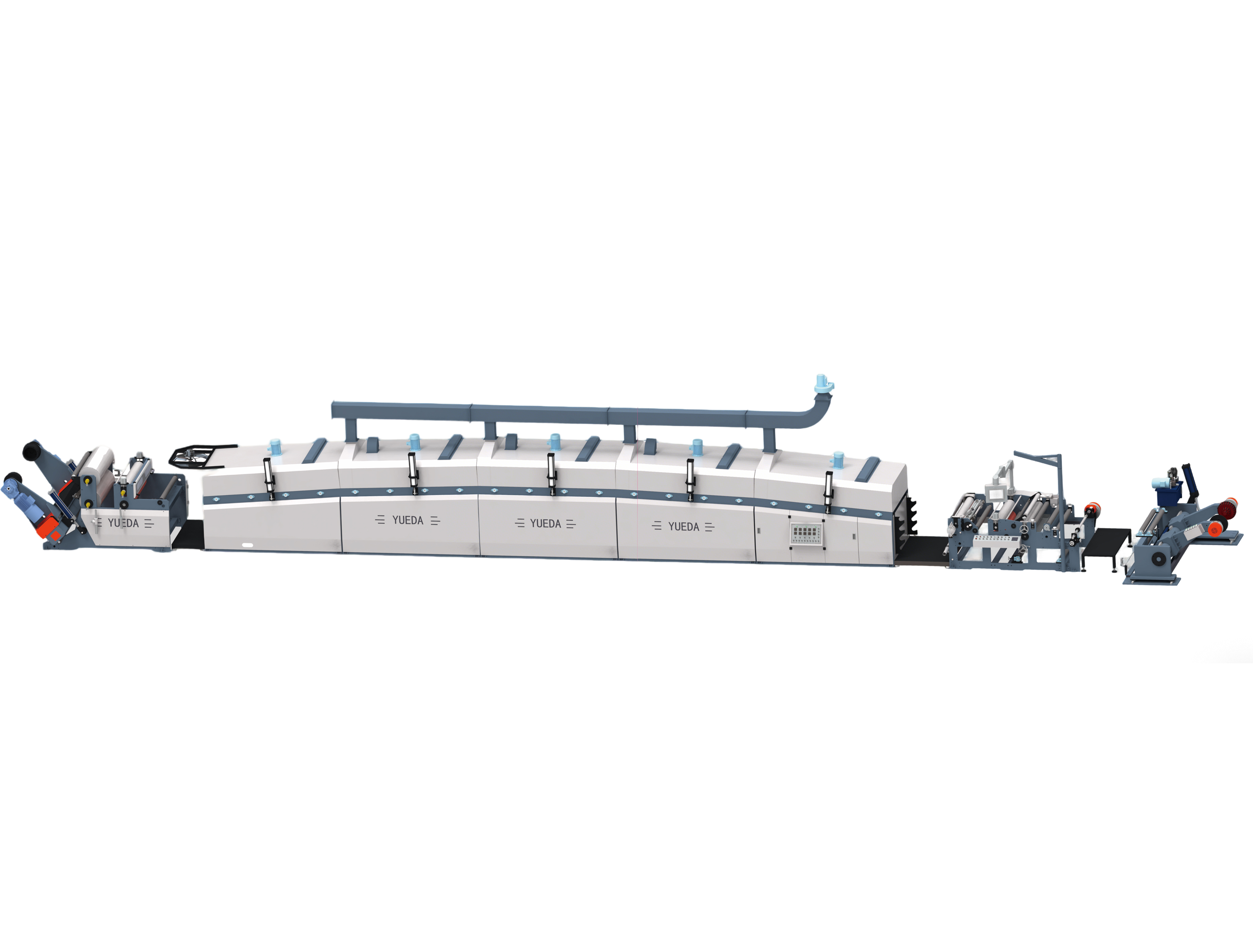
Request a layout and a written description of the proposed supply. Match each module to its role in feeding, coating, bonding, drying or other treatment, receiving and control, as applicable to the actual proposal. Ask which items are standard, optional, supplied by another party or provided by the buyer. A quotation total is difficult to compare when these boundaries are not visible.
Review interfaces as carefully as individual modules. A line can be described as a complete system while still depending on site services, external handling or separately purchased material preparation. Record those dependencies in a responsibility list. Questions about automation should likewise name the specific task: loading, alignment, process adjustment and output handling are different activities. The word automatic should lead to a clear explanation of operator responsibilities rather than an assumption that human intervention is never required.
Yueda's published equipment range includes gold and silver card laminating machinery and water glue lamination machinery. Those names are useful starting points for a product discussion, but the final configuration must be checked against the buyer's material brief. Gold and silver card in this context concerns decorative packaging board applications; it should not be confused with the manufacture of plastic membership cards or payment cards.
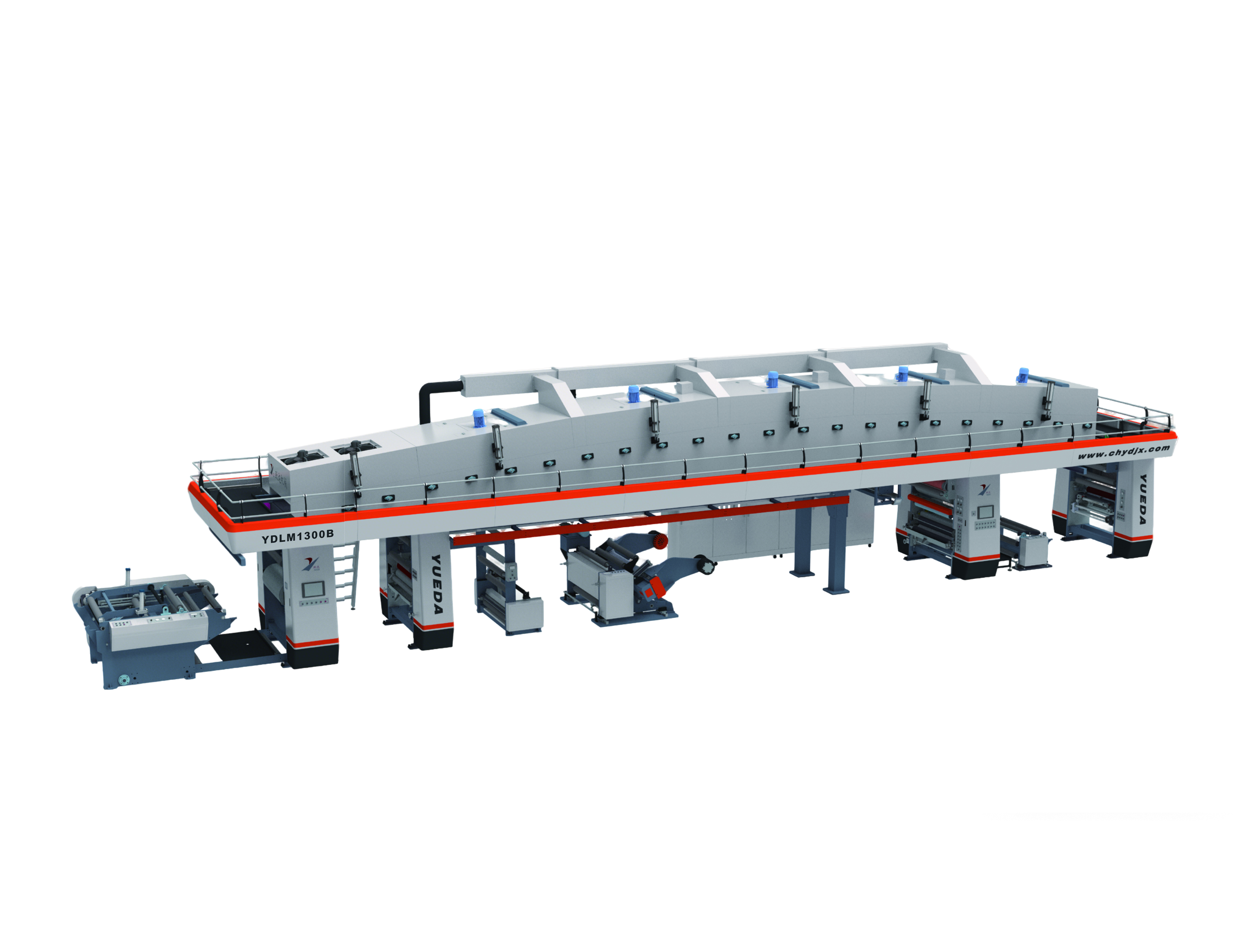
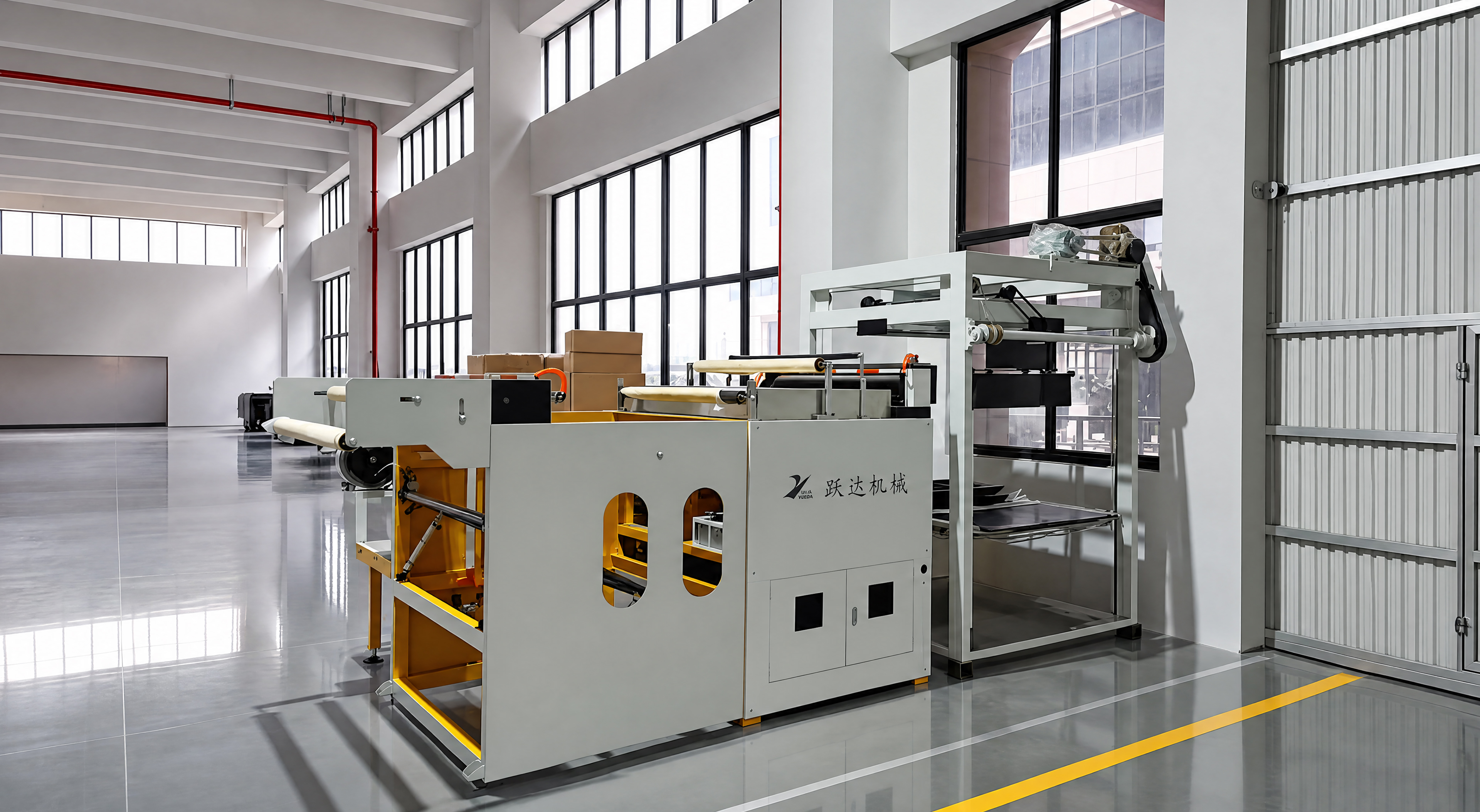
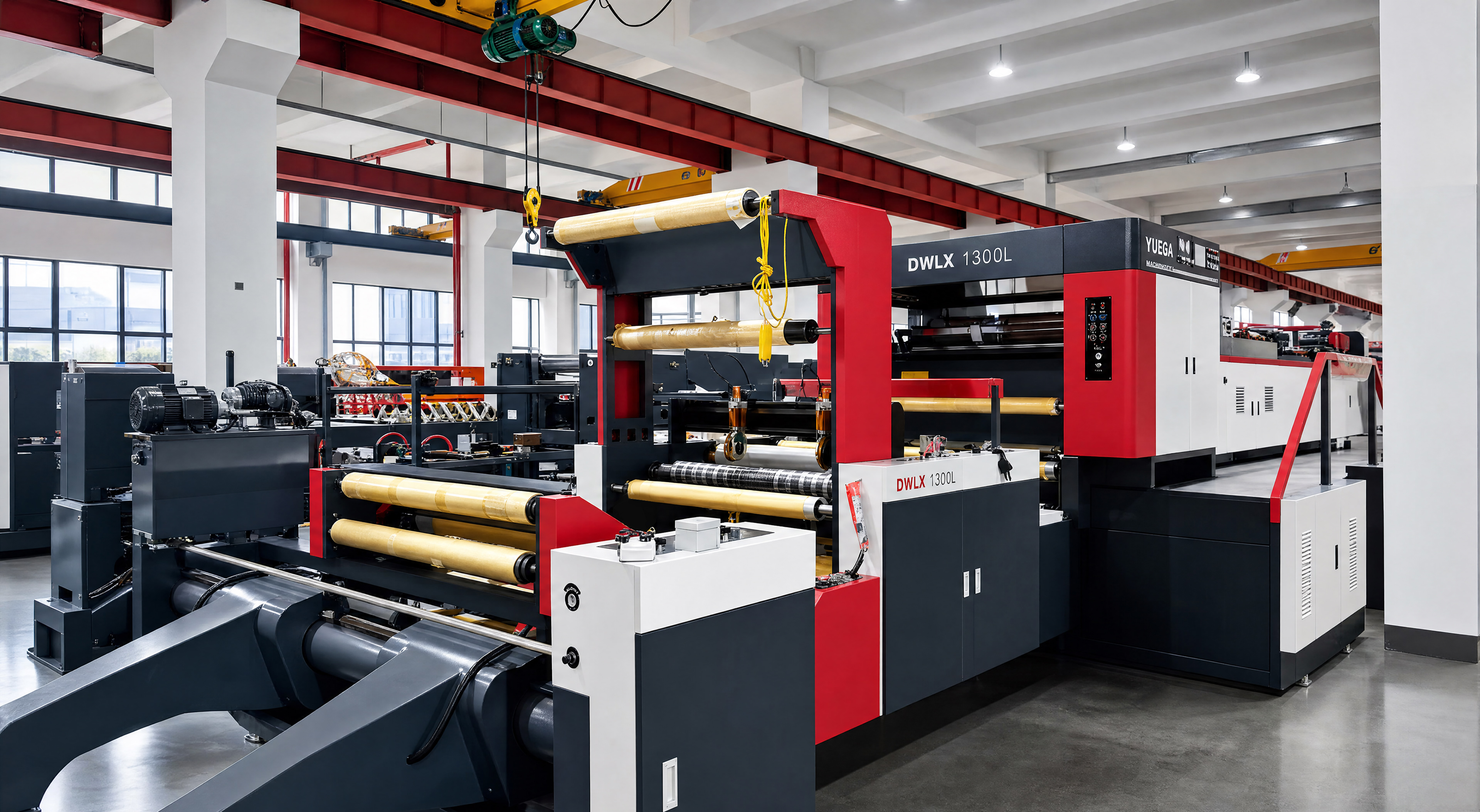
When a model is shortlisted, request its current specification and the configuration included in the particular quotation. Do not infer an operating limit, an adhesive compatibility statement or a guaranteed output from the model name. Photographs help identify the general equipment arrangement, while drawings, technical review and material trials answer different questions. Keeping these evidence types separate makes the purchasing discussion more precise without attributing unverified capabilities to a product image.
Send enough information for the trial team to understand what each sample represents. Label the substrate, adhesive, visible face, direction where relevant, and intended finished structure. Record the batch reference if it is available. Include any printing or surface treatment already present, because a blank material and a finished printed material may not represent the same purchasing requirement.
Agree how the trial will be documented before it begins. A practical package includes the submitted sample list, the proposed evaluation conditions, photographs of the result and retained physical samples. Make clear whether the trial is exploratory or intended to support an acceptance decision. An exploratory result may identify a workable direction while leaving further questions open; it should not silently become the approved production reference without the buyer reviewing those remaining questions.
Appearance requirements need more detail than a general request for a perfect surface. Identify which marks, wrinkles, bubbles, contamination or visible variation would affect the intended use. Describe the viewing conditions and use an approved physical reference where possible. Requirements should reflect the packaging application rather than an undefined expectation that every microscopic difference will be treated as a defect.
If a visual issue is found, preserve samples and record where it appears. Note whether it is localized, repeated or associated with a particular material sample. That information supports a focused technical review without guessing the cause from a photograph. Avoid directing an operator to change temperature, pressure or other settings based only on a purchasing checklist. Investigation and adjustment belong to trained personnel following the actual equipment and material instructions.
A bond evaluation is only meaningful when the parties agree what is being checked and when. Ask the material specialists to recommend an appropriate method for the exact structure and intended use. Record the preparation and conditioning requirements they specify. A result assessed immediately after processing should not be presented as equivalent to a result assessed after the agreed waiting period.
Keep the acceptance language proportionate to the available evidence. A satisfactory sample demonstrates what was observed under the recorded conditions; it does not establish universal compatibility or an unlimited service life. If there are later converting or storage requirements, include them in the evaluation plan rather than assuming that a single bond check covers them. Any regulatory, customer or market-specific requirement should be identified separately and supported by the relevant documentation for the finished application.
Review what happens after lamination. Cutting, sheeting, creasing, folding, printing and gluing can reveal issues that are not obvious in a flat retained sample. Where these stages are part of the intended production route, agree which representative samples will pass through them before approval. Record the process used and avoid describing a trial as complete when an important later stage remains untested.
Also consider the form in which the output must be delivered to that next stage. Sheet dimensions, stack handling, roll winding or other receiving requirements should be discussed explicitly where relevant. These are project questions, not assumptions about every laminating machine. A clearly described handover between stages helps the buyer evaluate the proposed line within the wider production system and gives the supplier a practical basis for explaining any equipment or handling limitations.
Any discussion of output should identify the material, format, configuration and quality conditions behind the figure. A stated mechanical range and a demonstrated result on a particular job answer different questions. Ask the supplier to explain which figure appears in the quotation and how the proposed acceptance trial will relate to the buyer's actual job matrix.
For planning, also account for activities surrounding processing, such as material preparation, changeovers, inspection and cleaning under the relevant instructions. These activities affect usable production time, but their duration should come from site review or recorded experience rather than invented averages. Comparing proposals on a common basis is more valuable than choosing the largest isolated number. The purchasing team should understand the assumptions behind its capacity estimate before using that estimate to support an investment decision.
Ask for the proposed footprint, service requirements and installation responsibilities using the supplier's current documentation. Review these with the buyer's site team. Access routes, receiving arrangements, floor suitability and connections need actual site assessment; a catalogue picture cannot establish that the planned location is ready for installation. Record who checks each item and what information remains outstanding.
Training and documentation should also be defined in the supply agreement. Clarify the intended audience, language, scope and delivery method, along with the responsibilities for commissioning and acceptance. This guide does not replace a risk assessment, a safety review or the machine's operating manual. Those activities require qualified review of the supplied configuration and the actual site. Treat them as specific project deliverables rather than assuming that a general instruction to install safely covers every responsibility.
Create a comparison sheet that uses the same scope categories for each proposal. Include the equipment configuration, options, trial obligations, installation boundary, documentation, packing and service arrangements. Mark exclusions clearly. If a price is based on a different material range or excludes an important receiving component, the difference should be visible before the totals are compared.
Keep timing assumptions explicit as well. Distinguish equipment preparation, material approval, site preparation, shipment and commissioning rather than combining them into one unsupported promise. Dates should be confirmed by the responsible parties for the actual order. A procurement team can then identify which unresolved decision could delay the project and address it directly, instead of expecting a generic lead-time statement to cover every dependency from sample submission through final acceptance.
A trial record becomes less useful if the order changes without a corresponding review. Track revisions to substrate grade, adhesive, printed surface, finished format and equipment configuration. State which changes the supplier has reviewed and which require another sample or confirmation. The purpose is to maintain a connection between the approved evidence and the goods or equipment actually being ordered.
Use a simple revision identifier on the purchasing brief and sample approval record. When several departments comment, collect the final decisions into one controlled version rather than leaving important details distributed across messages. Photographs can support the record, but retained samples and written criteria may be needed for differences that are difficult to judge on a screen. The final approval should identify who accepted the result and which open items remain conditions of the purchase.
Before samples are dispatched, assign responsibility for material selection, sample identification, adhesive information, trial coordination and final approval. These responsibilities may sit with different people inside the buying organization. A purchasing contact can coordinate the enquiry without being the person qualified to approve every technical or visual requirement. Naming the responsible reviewer helps ensure that the right question reaches the right person before an important decision is made.
Agree how questions will be resolved during the trial. If the submitted materials differ from the brief, the trial team should identify the difference rather than quietly using an alternative. If a supplier proposes a substitute, record its reference and decide whether the result will answer the original purchasing question. This prevents a visually successful demonstration from being used as evidence for a material combination that was never actually processed.
Provide a place in the trial record for unresolved observations. An open item is not necessarily a failure, but it needs a defined next action and an owner. For example, the parties may need another substrate sample, a later bond assessment or a downstream converting check. Closing those items explicitly makes the eventual approval clearer than relying on an informal statement that the demonstration was generally satisfactory.
Ask how the proposed arrangement accommodates the buyer's expected changes between materials and jobs. The discussion should identify what activities are required, which components are involved and which instructions apply. The supplier's documentation and the adhesive supplier's guidance determine the actual procedure. A buying guide should not prescribe cleaning chemicals, dismantling steps or machine settings without that equipment-specific information.

Include the practical effect of changeovers in the production plan. A project with many short jobs may require a different scheduling approach from one with long repeat runs, even when the finished material structure is similar. Use the buyer's actual order pattern to frame the question and ask the supplier to explain the relevant equipment features. Avoid replacing this review with an assumed average changeover time that has no recorded basis.
Also ask what consumables, replacement items and routine service information accompany the proposed supply. Clarify how parts are identified and how the buyer can request assistance for the supplied configuration. These questions support continuity after installation without making an unsupported promise about maintenance intervals or response times. Any service commitment that matters to the purchase should appear in the written agreement, with its scope and responsibilities stated clearly.
Finally, connect the maintenance discussion to the intended material range. An adhesive or substrate change can create new handling and cleaning questions even when the machine itself is unchanged. Keep the approved process information accessible to the people responsible for production and service. This helps maintain the link between the purchasing decision, the supplier's instructions and the material combination that was actually reviewed.
A trial is especially useful when the material combination, finished appearance or later converting requirement is uncertain. The buyer and supplier should agree what evidence is needed for the particular project. An initial discussion may narrow the configuration before a trial is arranged. What matters is that any final acceptance claim refers to the actual materials and conditions reviewed, with unresolved questions kept visible rather than treated as automatically satisfied.
No. A photograph can show the general arrangement and help identify an equipment family, but it cannot establish compatibility with a specific paper, board, film or adhesive. That decision requires the relevant technical review and, where appropriate, representative trials. Use images to support a product conversation, then obtain the configuration details and material evidence needed for the purchase. Avoid extending the meaning of a visual example beyond what it actually shows.
List foreseeable materials and distinguish confirmed jobs from possible future work. Ask the supplier to identify which combinations are within the reviewed scope and which need further evaluation. An unlimited requirement is difficult to verify and can obscure the jobs that matter most. A prioritized job matrix lets the buyer make a clear decision about the initial investment while keeping optional future applications separate from the capabilities being accepted now.
Retain the agreed brief, configuration list, trial material references, evaluation criteria, results, approved samples and relevant correspondence about unresolved items. Keep the final documents together with their revision identifiers. This record supports later discussions if a substrate or process requirement changes. It also helps new staff understand what was actually approved, without relying on recollection or treating a demonstration video as the complete technical and commercial agreement.
Begin with a concise material and application brief, then attach the detailed job matrix and sample references. State the intended finished result, downstream processes and purchasing questions that still need an answer. Ask Yueda to review the relevant laminating equipment configuration against that information. This gives both parties a shared basis for discussing feasibility, trial arrangements and supply scope, while leaving performance, delivery and other order-specific commitments to the written proposal and acceptance process.
Contact: Peter Chen/Jack Chen
Mail : peterchen@yuedamachine.com
Cellphone: +86 18767458866/ +86 19857780001
Address: Building 2, No. 1333 Times Avenue, Longgang City,Wenzhou City, Zhejiang Province China
Copyright © 2026 Wenzhou Yueda Packaging Machinery Co., Ltd. All Rights Reserved.
SitemapThis website uses cookies to ensure you get the best experience on our website.
 Español
 Portugues
 Indonesia
 Tiếng Việt



 Phone
 E-mail
Comment
(0)