

A paper sheeter converts a continuous roll of paper or board into individual sheets for a defined next process. The useful result is not simply a cut sheet. It is a sheet with the right dimensions, condition, orientation and stacking arrangement for printing, packaging conversion or another agreed operation. A purchasing decision therefore starts with the intended output and the actual input rolls, rather than with a headline machine speed.
This guide explains the roll-to-sheet workflow and the information a buyer should prepare before comparing equipment. It also shows how to make sample trials and acceptance discussions more useful. The purpose is to connect a production requirement to a documented equipment proposal. Specific operating instructions, material limits and guaranteed tolerances belong in the selected machine's technical documents and the agreed order specification.
Write down what will happen immediately after sheeting. A commercial printer, a folding-carton operation and a converter preparing intermediate stock may need different sheet formats, pile arrangements and surface conditions. Even when their nominal sheet dimensions match, their acceptance priorities can differ. One may be particularly sensitive to edge debris, while another needs dependable orientation of a printed pattern or a convenient pallet arrangement.
Define the finished sheet by width and length, and identify how those measurements relate to the machine direction. State whether the sizes are standard, frequently changed or specific to individual orders. Include the shortest and longest normal jobs, together with their approximate quantities. A single attractive demonstration format is not enough to describe a mixed production schedule.
Discuss how the downstream team will measure and accept the sheets. Agree where measurements are taken, which samples are retained and how nonconforming material is identified. If squareness matters, describe the measurement method instead of relying only on the word "accurate." This gives the supplier a usable target and prevents two teams from applying different definitions to the same trial.
Prepare a representative list of roll materials. Record the paper or board grade, nominal basis weight, width, outside diameter and core information available from the material supplier. Include coatings, laminations, printed surfaces and any handling restrictions that affect the actual stock. These details describe the application; they do not by themselves establish that a particular sheeter can process it.
Explain the variation within the supply you normally receive. A trial using one clean, well-conditioned roll does not represent every delivery. Splices, damaged edges, tight winding, uneven roll condition and storage history can affect the evaluation. Photographs and retained samples make the discussion clearer than a broad statement such as "all kinds of paper."
Where information is missing, ask the material supplier for the relevant specification rather than estimating it from appearance. Keep the input profile separate from the equipment supplier's confirmed operating range. The final proposal should identify which materials have been reviewed, which have been trialled and which remain subject to confirmation. This separation protects both the buyer and the supplier from an overly broad promise.
The unwind section presents the roll to the converting line in the required position and direction. Its configuration must be considered alongside roll dimensions, roll mass, core details and the method used to move rolls around the facility. A machine drawing alone does not describe the full loading operation or the space needed for material handling.
Describe the equipment and access routes already available at the installation site. Include doorways, turning areas, floor conditions and the area reserved for incoming rolls. Ask the supplier to explain the proposed loading concept and its documented requirements. A shaftless description, for example, concerns a particular part of the arrangement; it should not be interpreted as meaning that every part of the complete machine is without shafts.
During a review, distinguish normal production activities from maintenance and fault recovery. The operator's manual and the supplier's training should govern the approved procedures. Procurement staff can document the workflow, responsibilities and required resources without improvising instructions for lifting, threading or working near moving equipment.
Between the roll and the cutting section, the continuous material must travel through the equipment in a controlled way. The relevant configuration depends on the material, the equipment design and the requirements of the finished sheet. Ask the supplier to explain which functions are included in the quoted machine and what information is needed to assess the application.
Avoid reducing this discussion to a universal setting. A value taken from another material or another machine is not an operating instruction for your project. Instead, provide examples of the issues that matter to the next process: visible marks, curled sheets, damaged edges, inconsistent positioning or an unstable pile. Use samples to show what is acceptable and what would cause rejection.
For printed rolls, explain whether the cut needs to relate to a printed repeat, registration mark or other reference. Record the repeat information and the expected variation in the supplied material. A general paper sheeter and a positioning application should not be treated as identical solely because both produce rectangular sheets.
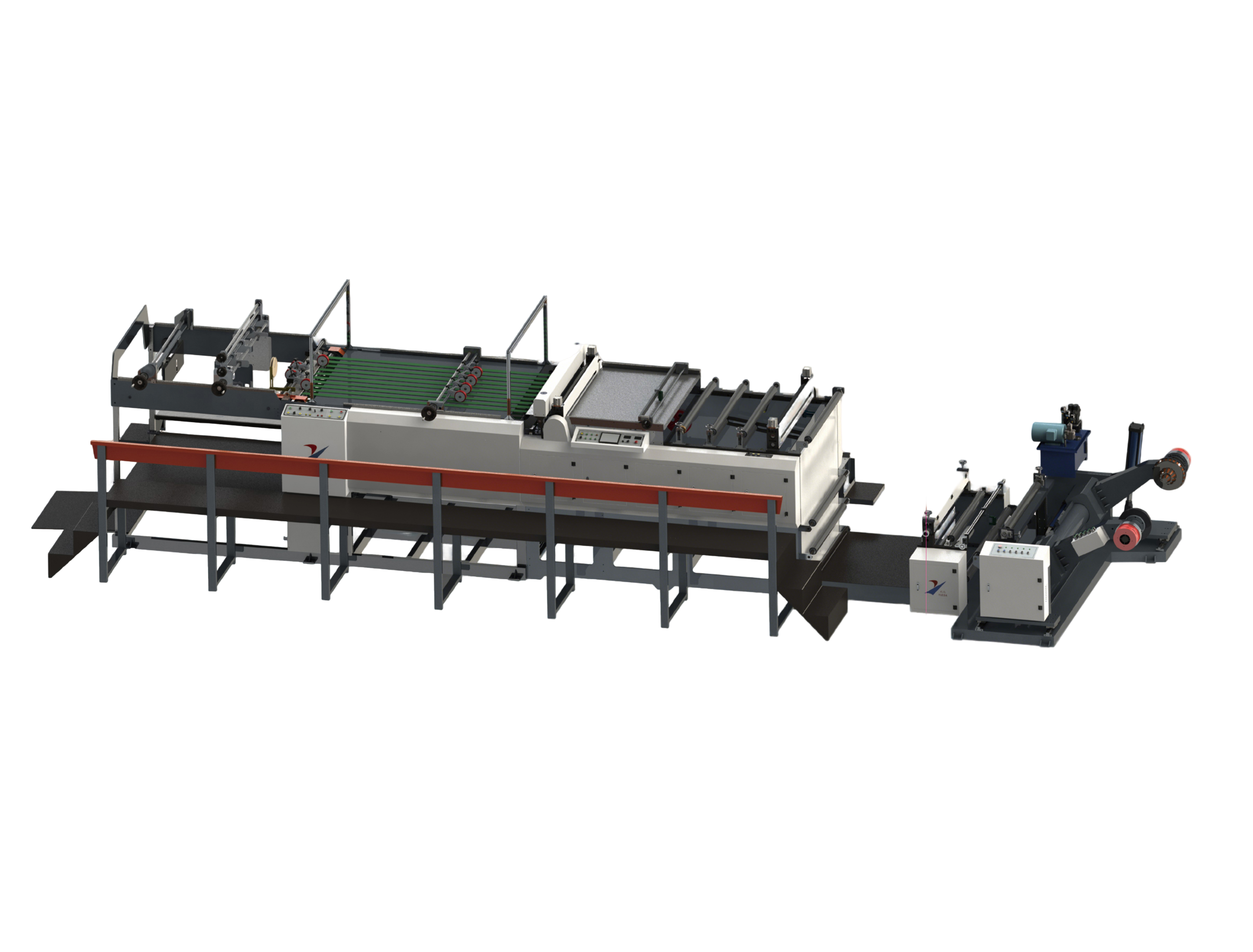
The cutting section produces the required sheet length within the chosen machine's supported application. Buyers should ask how the proposed configuration relates to their format range, paper characteristics and order mix. A model family name is a starting point for discussion, rather than a complete statement of scope.
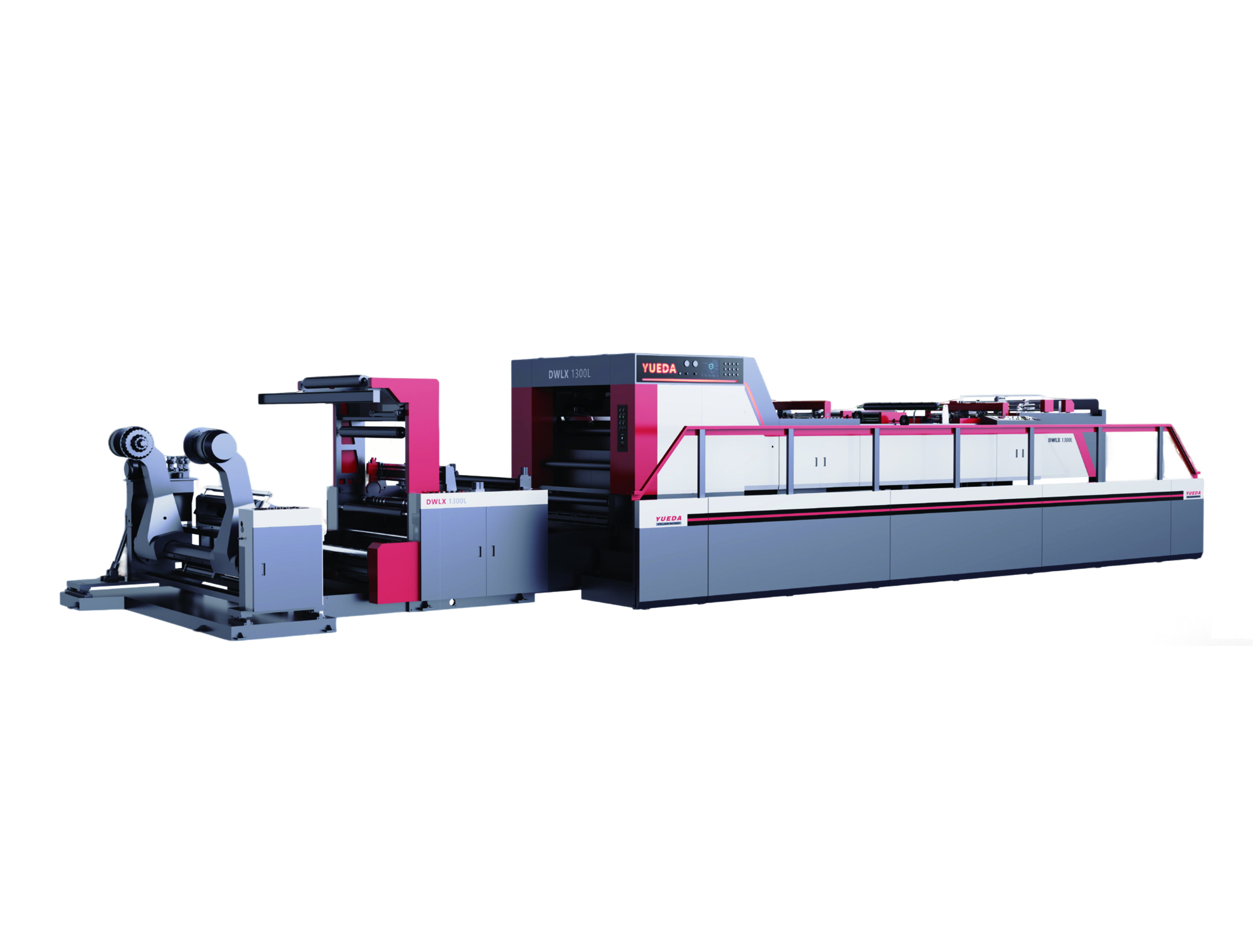
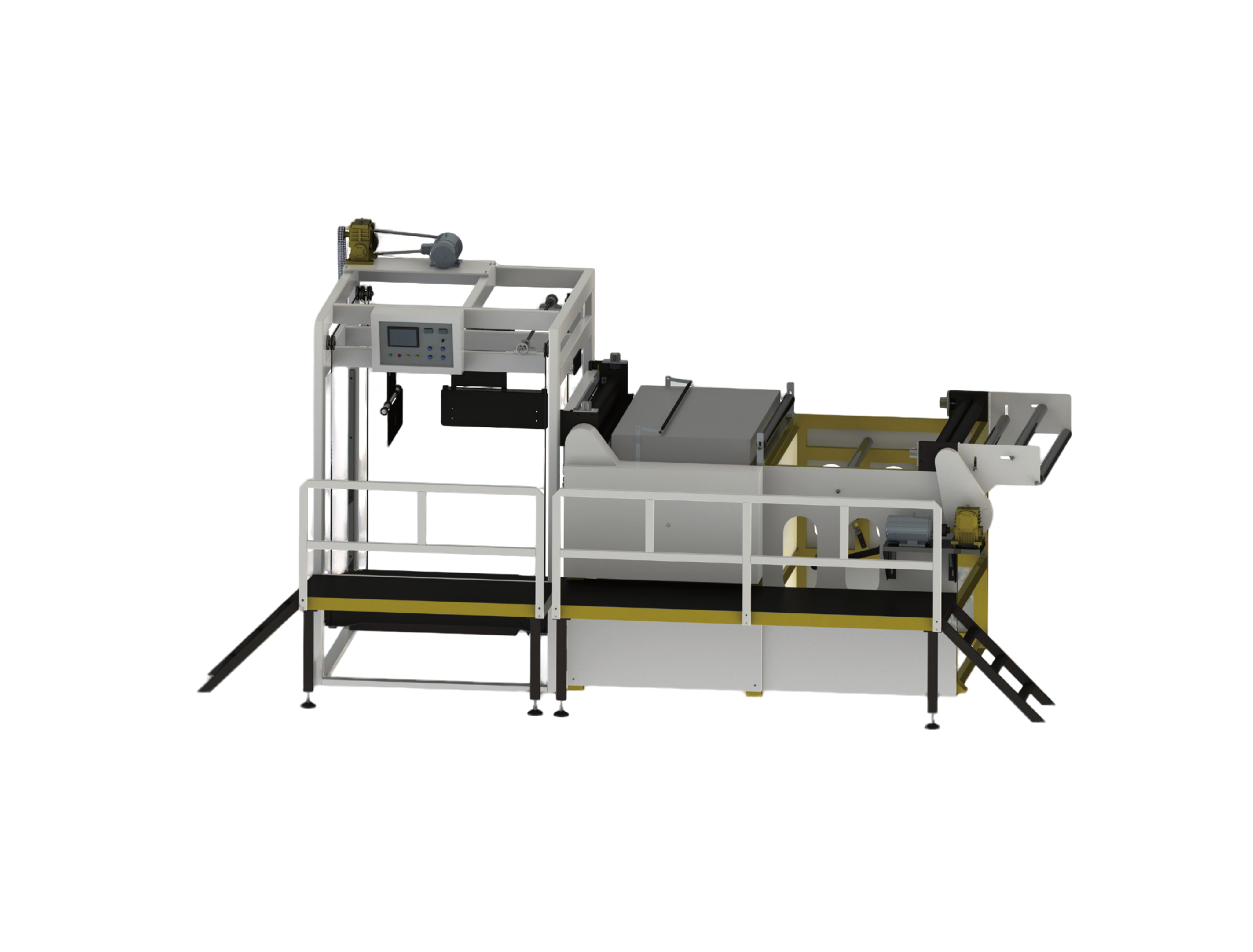
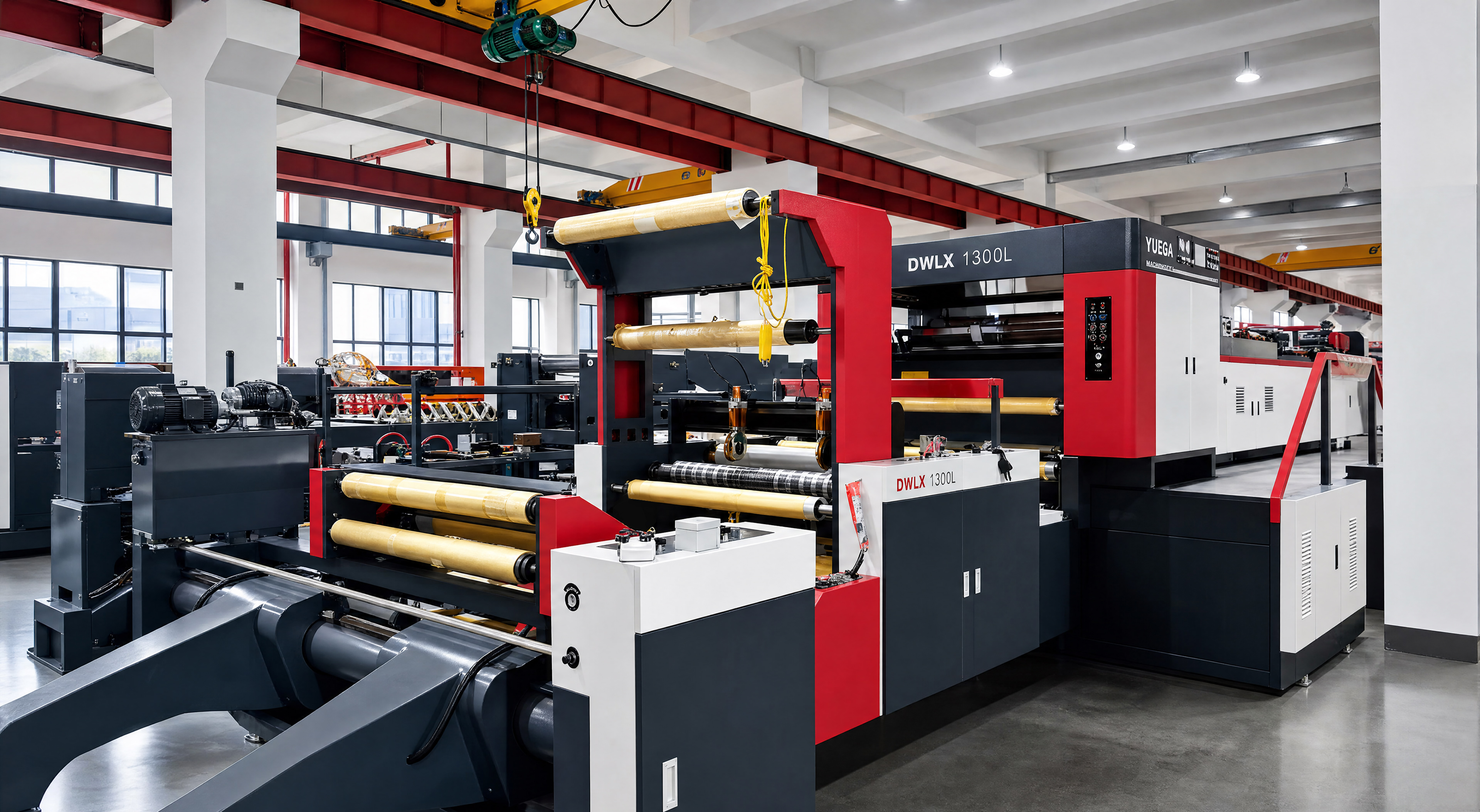
Yueda's published equipment range includes the DWLX1300L / DWLX1400L Double Rotary Sheet Cutter, the YD1300 / YD1400 Shaftless Positioning Sheeter and the FQN1200 / FQN1400 Elevation-Type Transverse Cutter. These are separate product families. Their capabilities should be reviewed against their own technical information, with the material and finished-sheet requirements supplied for the particular enquiry.
Do not transfer a feature, performance figure or application claim from one family to another. Ask for a proposal that clearly identifies the model, the supplied configuration and any optional items. If the supplier recommends a different arrangement after reviewing samples, have the reason and the revised scope documented before comparing the commercial offers.
Sheet quality can be undermined if the output arrangement does not suit the next operation. Discuss how sheets are collected, how the pile is removed and how it reaches the downstream equipment. The practical requirement may include pallet dimensions, pile identification, access for handling and the space needed to change between jobs.
Explain whether operators need to keep batches, printed versions or customer orders separate. Define the labelling information that should travel with each pile. A useful label may identify the material batch, format, job reference and inspection status, but the actual fields should follow the buyer's traceability system. The purpose is to make the next team confident about what they are receiving.
During a trial, inspect the pile as well as individual sheets. Note the condition of its edges, the accessibility of samples and the consistency of the arrangement. A neat photograph of a small stack does not establish sustained production performance. Keep the observations tied to the material, format and trial conditions that actually produced that stack.
A speed figure has meaning only when its conditions are known. Ask which material, width, cut length and configuration the figure relates to, and whether it is a stated limit or a result observed in a particular test. Neither should be converted into a guaranteed daily production quantity without a separate agreement.
Your production plan also includes activities outside a continuous run. Roll changes, format changes, quality checks, handling, cleaning and scheduled maintenance all affect the way a line serves its order book. List the activities that occur in a normal shift and discuss them with the supplier. This makes the capacity conversation more useful without inventing an efficiency percentage.
Where output is important to the purchasing decision, define the acceptance requirement explicitly. State the representative job, agreed input material, acceptable-sheet definition, recording period and exclusions. A transparent test record is more valuable than a broad productivity claim because both parties can see the basis of the result and the limits of what it demonstrates.
Choose trial materials that reflect meaningful differences in the intended work. A lightweight printed stock, a coated board and a difficult format may deserve separate consideration if all are important to the project. Agree the selection with the supplier so that the trial has a realistic purpose and sufficient material is available.
Prepare a short trial sheet before sending samples. Identify each material, the requested finished format, the downstream use and the observations to record. Retain a reference sample from the same supplied material where practical. If the supplier substitutes material, record that change clearly; the result then applies to the substituted stock rather than automatically to the buyer's original specification.
After the trial, request identified output samples and a written record of the conditions. Compare the sheets using the agreed method and involve the people responsible for the next process. A purchasing team can approve an attractive demonstration while a production team later rejects the material. Bringing those teams into the same evaluation reduces that gap.
An inspection checklist should describe defects in terms that different people can apply consistently. Include dimensions, squareness where required, visible surface condition, edge condition and the way the sheets are presented. Add customer-specific requirements only when they are supported by the intended application and have been communicated to the supplier.
Use photographs and labelled samples to clarify borderline cases. If a mark is acceptable on an internal layer but unacceptable on a printed face, say so. If an edge condition affects a particular downstream machine, explain that connection. The same visible feature can have a different consequence in another workflow, so a generic defect list may not resolve the real concern.
Record the inspection method along with the result. Note the tool, sample selection and material identification without turning an informal check into an unsupported statistical guarantee. Where formal sampling or measurement standards are required, the buyer's quality team should specify them. The supplier then has a clear basis for agreeing what will be demonstrated and documented.
Two buyers with the same total sheet requirement can have very different workloads. One may run long orders in a small number of formats, while another changes size, stock and printed version throughout the day. Describe this order mix when requesting a proposal, because it affects how the equipment fits the wider production system.
Ask which adjustments are part of a normal changeover, which resources are needed and how the supplier proposes to demonstrate the workflow. Avoid assuming that a feature described as automatic removes every manual activity. A useful explanation identifies the included functions and the work that remains with the operating team.
For the buyer's own planning, separate changeover observations from production guarantees. A demonstration may show a sequence under prepared conditions, while the installation will have different staffing, material access and inspection requirements. Capture those differences and agree any acceptance commitments in writing. This produces a practical plan without presenting a best-case observation as a universal result.
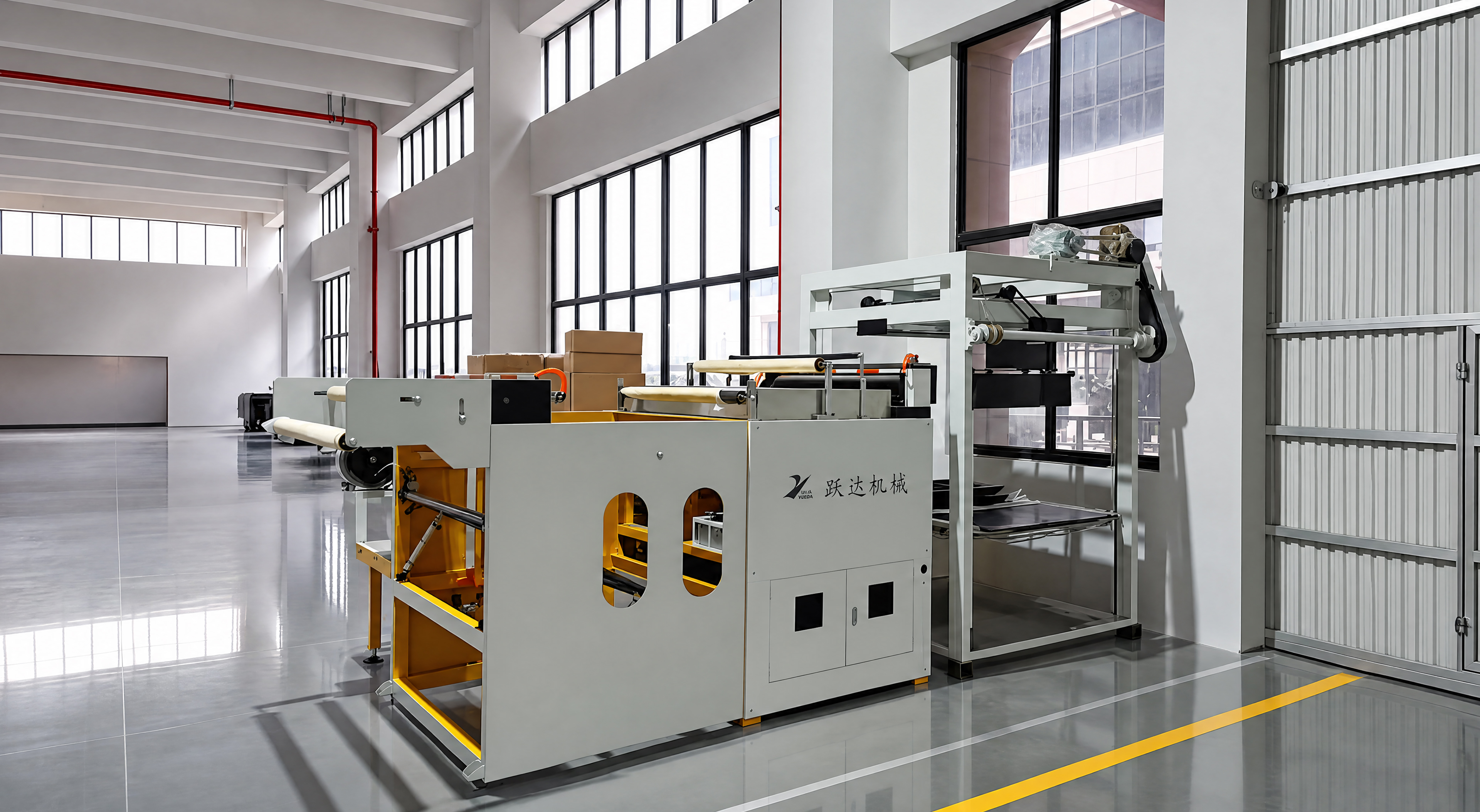
Request a layout appropriate to the quoted configuration. Review the complete working area, including incoming rolls, output piles, access routes and the space required for the documented maintenance activities. An equipment footprint is only one part of the installation plan. The site team should confirm that the proposed arrangement is suitable before the order is finalized.
Ask for the supplier's current utility and site requirements. Have the responsible local personnel review the electrical supply, foundations or floor requirements, and any other services specified for the machine. Do not substitute generic internet figures for the selected equipment's documentation. Requirements can change with model, options and installation conditions.
Clarify who provides unloading, positioning, service connections, commissioning support and operator training. Record these responsibilities in the offer or an agreed project checklist. A commercial comparison can look misleadingly favourable when one quotation includes substantial installation support and another leaves it to the buyer. Comparing the boundaries makes the actual project cost easier to understand.
Ask which manuals, drawings and maintenance information will accompany the supplied machine. Confirm the language and format the operating and maintenance teams need. Documentation should identify the supplied configuration so that a team is not relying on instructions for a different model or an earlier arrangement.
Discuss the training scope, who should attend and how questions will be handled after commissioning. Training is most useful when the buyer includes production, maintenance and quality responsibilities rather than assigning the whole project to one person. Agree how the supplier will record completion and what support remains available after the installation phase.
For spare parts, request a list tied to the proposed equipment and the intended support arrangement. Clarify identification, ordering and expected response procedures. Avoid treating a generic statement about easy maintenance as evidence that every part will be locally available. A documented parts and service discussion gives the buyer a more realistic basis for planning continuity.
Build a comparison sheet that uses the same application brief for every offer. Include the model and configuration, materials reviewed, format range under discussion, output arrangement, included accessories, documentation, installation responsibilities and acceptance proposal. Record unanswered questions separately instead of filling the blanks with assumptions.
Commercial terms should be reviewed with the same care as the machine description. Identify the quoted delivery scope, packaging, payment milestones and the basis of any lead-time statement. These are matters for the actual offer and contract. A published product description is not a substitute for a project-specific commitment from the supplier.
When one offer differs substantially, ask what explains the difference. It may involve a different model, a missing function, a different test basis or a different service boundary. Resolving those differences can be more useful than negotiating immediately on the headline amount. The objective is to compare equipment that addresses the same defined production requirement.
Separate specification review, the supplier's trial or factory acceptance activity, installation checks and the buyer's production acceptance. Each stage answers a different question. A successful sample cut does not establish that the installed line has met every site requirement, and a completed installation does not by itself establish sustained output on every intended material.
For each agreed stage, identify the material, format, measurements, responsible people and records to retain. Define how open points will be listed and resolved. Keep photographs and samples connected to the relevant test rather than collecting an unstructured folder that cannot show which conditions produced a particular result.
If a result falls outside the agreed criteria, describe it precisely and ask for the proposed next step. Avoid changing acceptance criteria informally during a demonstration just to reach a pass. A transparent record allows both parties to distinguish a configuration question, a material issue and a measurement disagreement, then address the actual cause.
Consider a converter that buys rolls for several printed packaging jobs and needs sheets in a changing set of formats. The first enquiry might ask only for a high-speed sheeter. A more useful brief separates the recurring long jobs from the short jobs, identifies the paper grades involved and states how the sheets will enter the next process. This reveals which differences actually affect the equipment discussion.
The buyer could select one representative long job and one representative short job for initial review. For each, the trial record would identify the material, required format, surface orientation, pile arrangement and agreed quality observations. These are planning examples, not results achieved by any particular model. Their value is that they turn a broad production ambition into a set of questions the supplier can answer.
Suppose the long job produces acceptable individual sheets, but the downstream team has difficulty receiving the output pile. The correct next discussion concerns delivery and handling, rather than automatically requesting a different cutting mechanism. Conversely, if the output dimensions are disputed, the teams should first compare their measurement methods and retained samples. Keeping the observations separate helps identify what needs clarification.
After the review, the buyer can update the project brief with the accepted points and the open questions. That revised brief should be used for the quotation, the selected configuration and the acceptance plan. It prevents a favourable demonstration on one job from becoming an implied promise that every job in the converter's schedule has already been evaluated.
The team receiving the sheets needs enough information to connect a pile to the correct job and inspection record. Agree who releases the material, who identifies it and who records a problem found during the next process. Keep the handover practical: a consistent job reference and accessible samples can be more useful than a complicated form that nobody completes.
When a downstream issue appears, retain material identification and the affected sheet samples where practical. Describe the visible symptom and the stage at which it was noticed. Avoid changing several production variables simply to produce a better-looking result without a record of what changed. Technical adjustments should follow the supplier's documented procedures and the site's authorized operating responsibilities.
This feedback loop also improves future procurement. Repeated, well-documented needs can be incorporated into the next equipment brief, while one unusual material can remain a separate application question. The result is a clearer distinction between ordinary production requirements, special jobs and assumptions that still require a supplier review.
Is a paper sheeter the same as a laminating machine? No. Sheeting produces individual sheets from a continuous web, while lamination concerns combining or applying material layers in a different process. A production route may involve both, but their roles and specifications must be defined separately. Do not infer that one machine performs the other's function from a broad category name.
Does shaftless mean the complete line has no shafts? That is not a safe interpretation. Ask which assembly the term describes and how the proposed equipment handles the specified rolls. The supplier's drawings and documentation should explain the actual arrangement and the procedures that apply to it.
Can the published maximum speed be used as a daily output promise? It should not be used that way without a defined application and agreement. Daily accepted output depends on the job mix, material, configuration, handling and quality requirements. Ask for a test basis that resembles the production requirement you need to purchase.
What should accompany an initial enquiry? Send the input-roll profile, representative material information, required sheet formats, downstream process and principal quality criteria. Add the normal order mix and installation constraints. Clear information lets the supplier identify the questions that matter before a detailed technical and commercial proposal is prepared.
Start with three connected documents: an input-material profile, a finished-sheet specification and a representative job list. Use them to discuss the appropriate Yueda equipment family, the samples needed for review and the scope of a documented proposal. Keep the machine configuration and acceptance criteria connected throughout that discussion.
For an enquiry about a double rotary cutter, a shaftless positioning sheeter or an elevation-type transverse cutter, provide the same practical information and explain the differences that matter to your production. The result should be a clear application review with identified open questions. That is the foundation for a useful purchase decision and a measurable handover to production.
DWLX double rotary sheet cutter | YD shaftless positioning sheeter | FQN elevation-type transverse cutter
Contact: Peter Chen/Jack Chen
Mail : peterchen@yuedamachine.com
Cellphone: +86 18767458866/ +86 19857780001
Address: Building 2, No. 1333 Times Avenue, Longgang City,Wenzhou City, Zhejiang Province China
Copyright © 2026 Wenzhou Yueda Packaging Machinery Co., Ltd. All Rights Reserved.
SitemapThis website uses cookies to ensure you get the best experience on our website.
 Español
 Portugues
 Indonesia
 Tiếng Việt



 Phone
 E-mail
Comment
(0)