

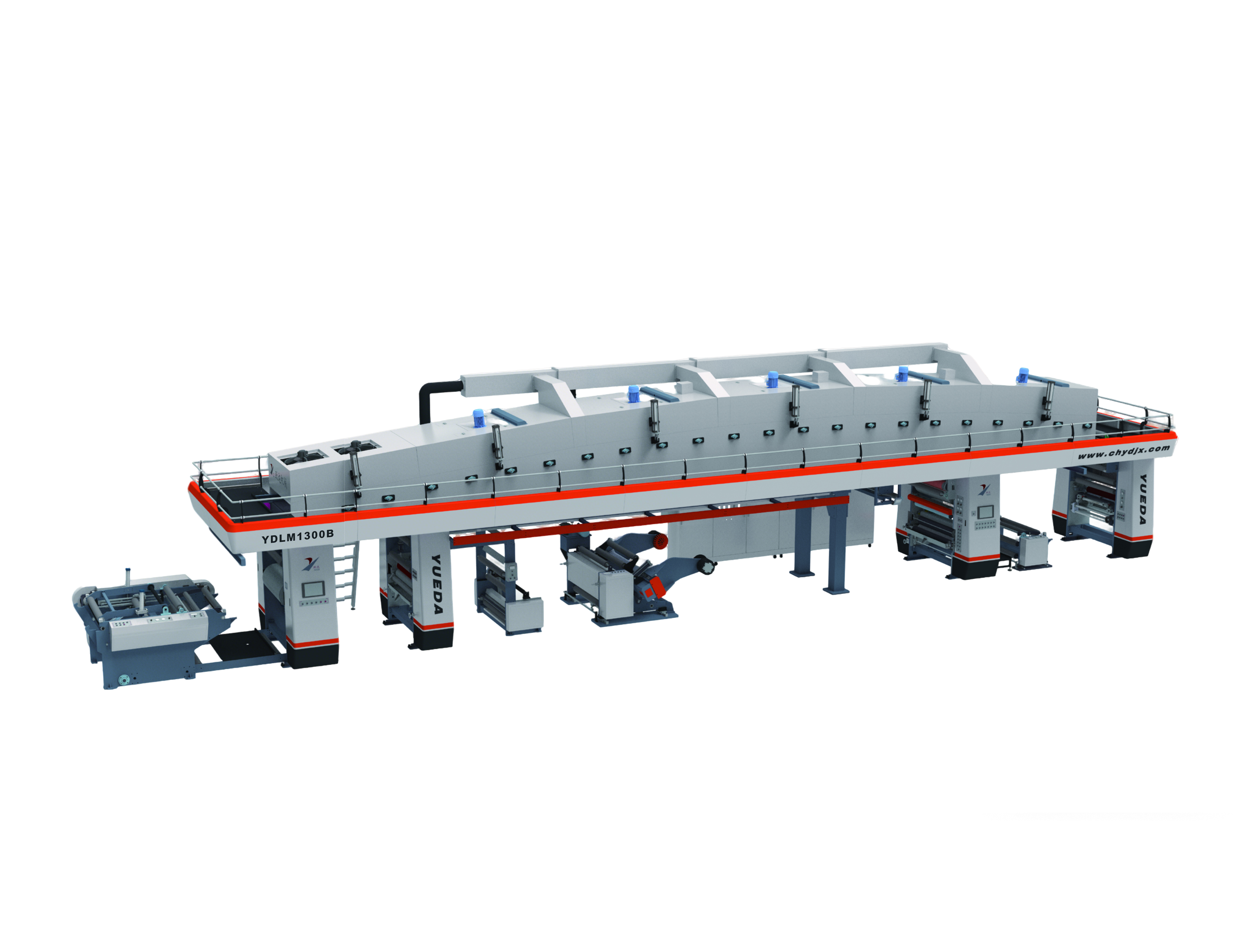
YD shaftless positioning sheeters are widely used in modern converting, printing, packaging, and paper processing lines where
high-precision sheet cutting, fast roll changeovers, and reliable format management are critical to production efficiency.
For production planners, quality teams, and operations managers, maintaining accurate roll and format change records is not just an administrative task;
it is a core part of production planning, traceability, waste reduction, and output consistency.
This content provides a detailed, SEO-friendly overview of YD shaftless positioning sheeters, including their definition, working principle, production planning value,
roll change documentation, format change records, technical parameters, operational advantages, and best practices for industrial use.
The information below is written in clean, original English and is suitable for direct use in blog posts, category pages, landing pages, industrial directories, and equipment knowledge sections.
A YD shaftless positioning sheeter is a high-performance industrial converting machine designed to cut continuous web materials into accurately sized sheets.
Unlike traditional shaft-based sheeters, a shaftless configuration supports faster roll loading, improved material handling flexibility, and easier adaptation to different roll widths and production formats.
The term positioning sheeter refers to the machine’s ability to cut with precise length control and repeatable positioning accuracy.
In most production environments, YD shaftless positioning sheeters are used for paper, board, film, laminated materials, label stock, and other roll-fed substrates.
Their major advantage is the combination of shaftless roll support and format positioning control, which helps operators switch between roll sizes and cutting specifications with less downtime.
In a converting or packaging operation, every roll change and every format adjustment affects output timing, material usage, labor allocation, and machine performance.
That is why roll and format change records are essential for production planning. These records document what material was used, when it was loaded, which format was selected,
who performed the change, and how the machine was configured.
Accurate change records help teams answer important operational questions such as:
For plants seeking higher efficiency, change records are a foundation for lean manufacturing, traceability, quality control, and machine utilization analysis.
| Function | Description | Production Value |
|---|---|---|
| Roll Feeding | Supports continuous roll input without a fixed shaft, improving loading flexibility. | Faster roll change and less downtime. |
| Positioning Control | Maintains accurate sheet length and cutting position for consistent output. | Better dimensional accuracy and reduced scrap. |
| Automatic Sheeting | Cuts web material into sheets according to programmed format settings. | Stable productivity and repeatable results. |
| Changeover Management | Allows operators to switch roll size or format with documented settings. | Improved planning and traceability. |
| Waste Reduction | Optimized setup and cutting logic reduce trim and startup waste. | Lower material cost and higher yield. |
YD shaftless positioning sheeters are commonly used with a broad range of roll-fed substrates. The exact material compatibility depends on machine configuration,
knife system, tension control, and web guiding performance. In general, these machines are suitable for:
For production planning, each material type should be linked to a specific roll record and format change record, because tension settings, knife wear, and output quality may vary by substrate.
The shaftless design is one of the main reasons production teams choose this type of sheeter. In conventional shafted systems, core loading and alignment may take longer,
especially when handling frequent roll changes or multiple formats in one shift. A shaftless setup reduces these limitations.
A well-structured roll change record provides a full summary of the material loading event. This helps production planning teams track usage, calculate downtime,
and maintain traceability from input roll to finished sheet output.
| Record Field | Purpose | Example Data |
|---|---|---|
| Change Date and Time | Identifies exactly when the roll change occurred. | 2026-10-11 08:15 |
| Order Number | Links the roll change to a specific production job. | ORD-45892 |
| Material Type | Defines the substrate being processed. | Coated paper |
| Roll Width | Records the web width for planning and setup. | 1050 mm |
| Roll Diameter | Helps confirm loading compatibility. | 1200 mm |
| Core Size | Supports shaftless loading configuration. | 3 inch / 76 mm |
| Roll Weight | Used for handling, logistics, and inventory control. | 850 kg |
| Operator Name | Identifies who completed the roll change. | Operator A |
| Reason for Change | Explains whether the change was due to depletion, format switch, or quality issue. | Job completion |
| Downtime Duration | Measures production interruption during changeover. | 12 minutes |
A format change record documents adjustments to sheet dimensions, cutting length, production speed, and machine settings.
Since a positioning sheeter is designed for accurate length control, every format update should be recorded clearly to support repeat jobs and reduce setup errors.
| Record Field | Purpose | Example Data |
|---|---|---|
| Format Code | Identifies the specific production format. | FMT-210x297 |
| Sheet Length | Defines final cut length. | 297 mm |
| Sheet Width | Defines sheet size across the web direction. | 210 mm |
| Cut Tolerance | Shows acceptable dimensional variation. | ±0.2 mm |
| Speed Setting | Records line speed during the run. | 180 m/min |
| Knife Setting | Documents knife position or configuration. | Adjusted |
| Web Guide Setting | Helps maintain alignment for accurate output. | Centered |
| Start-Up Scrap | Tracks waste generated during format changeover. | 25 sheets |
| Validation Result | Confirms if sample sheets meet specification. | Approved |
| Supervisor Approval | Shows that the new format was verified. | Yes |
Production planning depends on accurate input data. In a sheet cutting operation, roll and format records help planners build realistic schedules, estimate output,
and reduce machine idle time. If the planning team knows exactly which rolls are available and which formats are required, they can sequence jobs more efficiently.
The following table presents common specification ranges for a YD shaftless positioning sheeter. Actual values vary depending on machine size, application, automation level,
and production requirements.
| Specification | Typical Range / Value | Notes |
|---|---|---|
| Material Type | Paper, board, film, laminated web | Depends on machine configuration |
| Web Width | 500 mm to 1600 mm | Industrial models may vary |
| Sheet Length | 100 mm to 1500 mm | Positioning control required for accuracy |
| Cutting Speed | Up to 200 m/min or more | Dependent on substrate and setup |
| Length Accuracy | High precision | Useful for repeat orders and print alignment |
| Roll Loading Type | Shaftless | Supports quicker changeover |
| Knife System | Rotary or fixed knife options | Selected by application |
| Control System | PLC / HMI interface | Used for recipe and format settings |
| Tension Control | Automatic or semi-automatic | Improves web stability |
| Record Storage | Manual or digital log system | Important for traceability |
Roll changes occur for several operational reasons. In production planning, these reasons should be categorized because they affect efficiency metrics,
maintenance timing, and material cost analysis.
Format changes are often more frequent than roll changes in operations with diverse customer orders. A format may change because of a new sheet dimension,
a different stacking requirement, a downstream converting specification, or an updated customer request.
To get the most value from a YD shaftless positioning sheeter, change records should be standardized. Consistency makes it easier to compare shifts, identify bottlenecks,
and improve long-term production planning.
Many production facilities still use manual log sheets, while others are moving to digital production data systems.
Both methods can work, but digital recording usually provides better searchability, visibility, and planning value.
| Method | Advantages | Limitations |
|---|---|---|
| Manual Records | Simple, low cost, easy to start | Prone to errors, harder to analyze |
| Digital Records | Fast search, better traceability, easier reporting | Requires software and system setup |
| Hybrid System | Combines paper backup with digital storage | More administrative effort |
When managing a shaftless positioning sheeter, several KPIs can help evaluate changeover performance and planning quality.
These metrics support continuous improvement and provide a clear view of machine efficiency.
| KPI | Meaning | Why It Matters |
|---|---|---|
| Changeover Time | Time required to switch rolls or formats. | Measures production efficiency. |
| Startup Waste | Material lost during setup and calibration. | Affects yield and cost. |
| First Pass Yield | Percentage of output meeting specification on first run. | Shows setup quality. |
| Schedule Adherence | How closely actual production follows the plan. | Supports delivery reliability. |
| Machine Utilization | Percentage of time the machine is actively producing. | Indicates asset efficiency. |
| Change Frequency | Number of roll or format changes per shift/day. | Helps identify planning optimization opportunities. |
Efficient changeover is one of the biggest performance drivers in sheet cutting operations.
By reducing the time required for roll and format changes, plants can increase throughput without adding more shifts or equipment.
A positioning sheeter must maintain stable sheet length, straight edges, and consistent stacking. Every roll and format change can influence quality, especially during startup.
Therefore, quality checks should be included in the same record workflow.
For content optimization, the following keyword themes are strongly related to this topic and can be used naturally in page copy, metadata, headings, and internal links:
The following is a simple record template structure often used in production planning systems for shaftless positioning sheeters.
| Section | Fields to Include |
|---|---|
| Job Identification | Order number, customer reference, machine ID, shift |
| Roll Information | Material type, roll width, diameter, core size, weight, batch number |
| Format Information | Sheet length, sheet width, format code, tolerance, speed setting |
| Changeover Details | Change time, operator, downtime, reason for change, validation status |
| Quality Notes | Inspection result, scrap amount, defect type, approval signature |
YD shaftless positioning sheeters play an important role in industrial production environments that demand precise sheet cutting, fast roll changes,
and reliable format management. Their shaftless design supports flexible roll handling, while their positioning capability ensures accurate and repeatable sheet output.
When roll and format changes are properly documented, production teams gain better planning visibility, reduced waste, improved quality control, and stronger traceability.
For companies and facilities focused on production planning, changeover control, and sheet cutting efficiency,
maintaining accurate roll and format change records is essential. These records support better scheduling, smarter material use,
and long-term process optimization across the full converting workflow.
```
Contact: Peter Chen/Jack Chen
Mail : peterchen@yuedamachine.com
Cellphone: +86 18767458866/ +86 19857780001
Address: Building 2, No. 1333 Times Avenue, Longgang City,Wenzhou City, Zhejiang Province China
Copyright © 2026 Wenzhou Yueda Packaging Machinery Co., Ltd. All Rights Reserved.
SitemapThis website uses cookies to ensure you get the best experience on our website.
 Español
 Portugues
 Indonesia
 Tiếng Việt



 Phone
 E-mail
Comment
(0)