

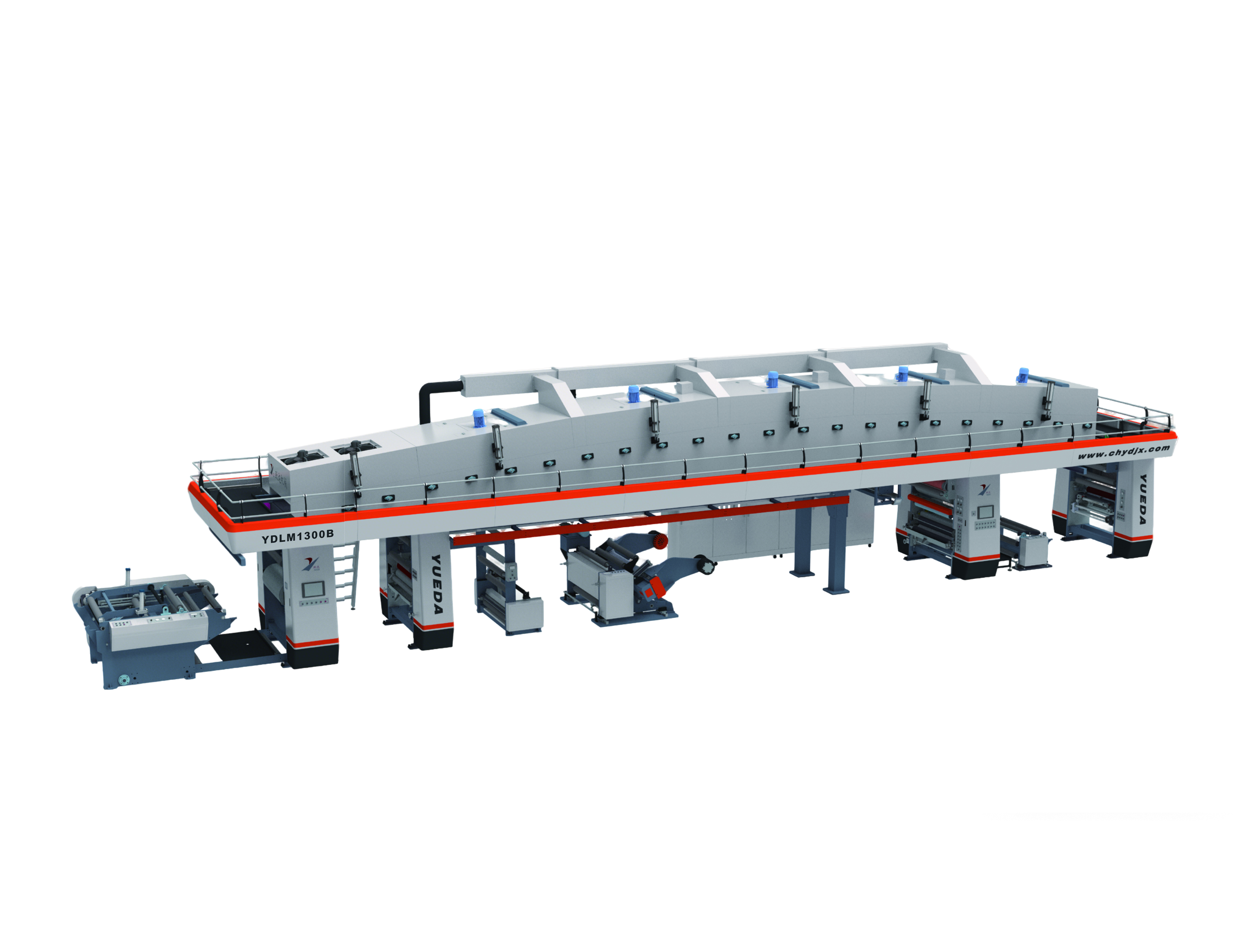
Shaftless positioning sheeters are widely used in paper converting, printing, packaging, labeling, and finishing operations where accurate cut-to-length output is essential. For facilities planning production capacity, two common machine classes often discussed are the YD1300 shaftless positioning sheeter and the YD1400 shaftless positioning sheeter. These machine categories are typically evaluated by usable web width, cut sheet length range, job mix flexibility, feed stability, repeat accuracy, and throughput under real production conditions.
When selecting or comparing a sheeter for capacity planning, the most important factors are not only maximum speed, but also the actual job mix and sheet size data the machine can handle efficiently. In practical terms, this means understanding what materials will be processed, how frequently sheet dimensions change, how narrow or wide the output formats are, and how much downtime may occur during changeovers. This article provides industry-generic information about YD1300 and YD1400 shaftless positioning sheeters, including definitions, advantages, technical reference ranges, capacity planning guidance, and sheet size tables for SEO-friendly use in blogs, directory pages, and industrial content hubs.
A shaftless positioning sheeter is a converting machine designed to unwind roll material, control web tension, and cut the material into precise sheet lengths without relying on a traditional mechanical line shaft. Instead of a shaft-driven layout, the system typically uses servo control or independent drive sections to manage registration, positioning, and cutting accuracy. This architecture improves responsiveness, reduces mechanical complexity, and supports more flexible job settings.
Shaftless positioning sheeters are commonly used for:
In capacity planning, shaftless positioning sheeters are often selected because they can support frequent order changes and variable sheet sizes while maintaining good cut consistency. This is especially valuable in modern converting environments where small batch production and mixed job schedules are increasingly common.
In industry usage, model designations such as YD1300 and YD1400 usually indicate the nominal web width category of the machine. While exact specifications vary by configuration, the number generally reflects the approximate maximum parent roll width or working width range the machine can accommodate.
For example:
The difference between these two categories may seem small, but in production planning, even 100 mm of additional width can affect sheet layout efficiency, parent roll utilization, output count per cut cycle, and job nesting flexibility. A wider machine can sometimes improve throughput for larger-format orders or reduce trim waste when sheet widths are near the upper range of the line.
Capacity planning for a sheeter is not determined by maximum speed alone. A machine that performs well on one product type may slow down significantly when the job mix includes short sheets, frequent changeovers, fragile substrates, or tight registration requirements. The job mix describes the range and frequency of orders processed on the line.
Important job mix variables include:
A balanced job mix analysis helps determine whether a YD1300 or YD1400 shaftless positioning sheeter is more suitable for a particular production environment. For instance, if a plant mainly produces medium-width sheets with frequent SKUs, the YD1300 class may be adequate and cost-effective. If the plant handles wider webs, larger sheet formats, or wants more layout flexibility, the YD1400 class may offer a better long-term fit.
Shaftless positioning sheeters offer several operational advantages that make them attractive for modern converting operations. These advantages can directly support higher productivity and better capacity utilization.
| Advantage | Operational Impact | Capacity Planning Benefit |
|---|---|---|
| Independent drive control | Improves tension stability and positioning accuracy | Supports consistent output across varied jobs |
| Flexible sheet length setting | Allows fast format changes | Useful for multi-SKU production and short runs |
| Reduced mechanical linkage | Lower complexity compared with shaft-driven systems | Can improve maintainability and uptime |
| Better registration control | More precise alignment with printed marks or pre-printed rolls | Important for quality-sensitive orders |
| High compatibility with automation | Easier integration with stackers, conveyors, and inspection systems | Improves line efficiency and output consistency |
In addition to these benefits, shaftless positioning sheeters are often preferred for mixed production environments where a machine must handle many different sheet sizes without excessive downtime.
Before selecting a YD1300 or YD1400 shaftless positioning sheeter, planners should review the full operating profile of the line. The following technical factors are especially important for estimating realistic capacity.
These factors are more important than headline speed alone because real production capacity depends on how the machine performs under the exact combination of job types, material grades, and changeover frequency.
A YD1300 shaftless positioning sheeter is commonly associated with medium-width converting work. It is often suitable for plants that process a broad range of paper-based sheets with moderate format sizes.
| Job Mix Type | Common Sheet Characteristics | Typical Production Notes |
|---|---|---|
| Commercial printing sheets | Medium-width sheets, frequent size changes | Requires accurate cut positioning and repeatability |
| Packaging inserts | High volume, stable format, moderate weight paper | Often benefits from steady throughput and reliable stacking |
| Label and tag stock | Smaller widths, tighter registration, short runs | Useful when multiple SKUs are produced in one shift |
| Book and publishing sheets | Uniform lengths, consistent quality | Requires clean cuts and minimal waste |
| General converting jobs | Mixed sheet sizes and order volumes | Flexible for facilities with diverse customer demand |
For the YD1300 format class, the most efficient jobs are often those with moderate sheet width, frequent but manageable changeovers, and steady demand. It is well suited for operations that value flexibility and accuracy more than extreme web width.
A YD1400 shaftless positioning sheeter generally provides a wider working class than the YD1300 category. That extra width can support broader sheet layouts, larger parent roll utilization, and more flexibility for high-output production planning.
| Job Mix Type | Common Sheet Characteristics | Typical Production Notes |
|---|---|---|
| Wide-format packaging sheets | Larger sheet widths and longer cut lengths | Useful for maximizing material usage on larger rolls |
| High-volume commercial converting | Repeated formats, longer runs | Supports stable output with fewer interruptions |
| Multiple-up layout production | Wider web used to nest more pieces across the sheet | Can improve yield and reduce waste |
| Specialty paper and board processing | Higher basis weight or thicker material | Requires good tension control and robust feeding |
| Mixed industrial sheet jobs | Variable sheet lengths with high format diversity | Better suited where width flexibility is strategically important |
The YD1400 class is often considered when future growth, larger order sizes, or wider sheet formats are expected. In capacity planning, selecting a wider machine can help protect against future production bottlenecks caused by limited width availability.
Sheet size data is one of the most important inputs in sheeter planning. A machine may technically handle a broad range of lengths, but actual production feasibility depends on how well the sheet size fits the substrate, the cutting system, and the downstream stacker or delivery unit.
The following tables provide generic planning ranges commonly associated with the YD1300 and YD1400 shaftless positioning sheeter classes. These values are industry-oriented reference points, not fixed manufacturer claims.
| Parameter | Typical Planning Range | Capacity Planning Notes |
|---|---|---|
| Nominal working width | Up to about 1300 mm | Used for medium-width web converting |
| Recommended sheet width range | Approx. 200 mm to 1250 mm | Actual limits depend on substrate and layout |
| Typical sheet length range | Approx. 300 mm to 1600 mm | Shorter lengths require precise servo response |
| Common production segment | Medium-format sheets | Suitable for flexible paper converting |
| Best fit job size profile | Small to medium batch orders | Balances speed with quick changeovers |
| Parameter | Typical Planning Range | Capacity Planning Notes |
|---|---|---|
| Nominal working width | Up to about 1400 mm | Supports wider converting applications |
| Recommended sheet width range | Approx. 250 mm to 1350 mm | Often better for broad-format sheet layouts |
| Typical sheet length range | Approx. 300 mm to 1800 mm | Longer sheet potential than narrower machine classes |
| Common production segment | Medium to large-format sheets | Useful for higher flexibility in layout planning |
| Best fit job size profile | Medium and larger orders | Can reduce reconfiguration pressure in wide-sheet lines |
These sheet size references are helpful when comparing production alternatives or preparing a line capacity model. The actual usable range depends on the machine design, control system, material type, and the mechanical limits of the unwind, cut section, and stacker.
A direct comparison between the YD1300 and YD1400 shaftless positioning sheeter classes is useful for planning both current output and future growth. The right choice depends on material width, product variety, and the expected mix of short and long production runs.
| Comparison Factor | YD1300 Shaftless Positioning Sheeter | YD1400 Shaftless Positioning Sheeter |
|---|---|---|
| Nominal width class | Approximately 1300 mm | Approximately 1400 mm |
| Typical sheet width suitability | Medium sheet formats | Medium to wider sheet formats |
| Material utilization | Efficient for standard-width orders | Better for broader layout flexibility |
| Changeover demand | Suitable for frequent short runs | Suitable for flexible multi-format lines |
| Expansion potential | Good for stable medium-format operations | Better for future width growth |
| Common use case | General paper converting | Wider packaging and converting applications |
From a capacity perspective, the YD1400 often provides more room for nesting and layout optimization, while the YD1300 may offer a more compact fit for plants centered on moderate widths and frequent size changes. Neither is universally better; the correct option depends on the specific job mix and production objectives.
Capacity planning for a shaftless positioning sheeter should be based on realistic operating assumptions. A machine’s rated speed is only one part of the equation. The actual output depends on sheet length, cut frequency, material handling efficiency, stack stability, and setup time.
A practical planning formula considers:
For example, a line producing shorter sheets may process more cuts per minute but spend more time coordinating registration and stack delivery. A line producing longer sheets may have fewer cuts per hour, but each cut can represent more finished area. The best planning method is to calculate production in finished square meters or sheets per shift using actual order data.
To build a useful capacity planning model for YD1300 or YD1400 shaftless positioning sheeters, collect the following information:
| Data Point | Why It Matters | Example Use in Planning |
|---|---|---|
| Parent roll width | Defines machine compatibility and nesting space | Selecting between 1300 and 1400 width classes |
| Average sheet length | Determines cuts per roll and output count | Estimating sheets per hour |
| Sheet width distribution | Affects layout efficiency and trim loss | Optimizing yield from each job |
| Order frequency | Impacts setup time and scheduling load | Planning line utilization |
| Run length per job | Influences downtime percentage | Estimating effective productivity |
| Material grade | Affects tension, wear, and cut quality | Matching line configuration to substrate |
| Stacking requirements | Can limit real output if downstream handling is slow | Preventing bottlenecks |
For website owners and B2B publishers, YD1300 and YD1400 shaftless positioning sheeters are strong SEO topics because they sit at the intersection of industrial equipment, sheet size data, and capacity planning. Searchers often want practical information about machine width, sheet format compatibility, and production efficiency rather than pure marketing language.
High-value content for this keyword cluster should include:
This format helps satisfy informational search intent and improves the chances of ranking for long-tail keywords such as YD1300 shaftless positioning sheeter sheet size, YD1400 sheeter capacity planning, shaftless positioning sheeter job mix, and industrial sheeter width range.
| Industry Segment | Typical Sheet Output | Why the Sheeter Is Used |
|---|---|---|
| Printing | Pre-cut sheets for press feed or finishing | Supports accurate format control and repeatability |
| Packaging | Carton boards, inserts, and liners | Helps standardize sheet production |
| Publishing | Book blocks, cover sheets, and inserts | Requires clean edges and stable lengths |
| Label converting | Carrier sheets and label stock formats | Needs precise positioning and short-run flexibility |
| Industrial converting | Specialty rolls converted into flat sheets | Supports customized specifications |
To maximize utilization of a YD1300 or YD1400 shaftless positioning sheeter, production planners should focus on reducing idle time, standardizing the most common sheet sizes, and scheduling jobs in logical batches. Grouping similar sheet widths and lengths together can reduce changeover frequency and improve hourly output.
Other useful planning practices include:
These practices support a more accurate capacity model and reduce the risk of overestimating machine performance.
The YD1300 shaftless positioning sheeter and YD1400 shaftless positioning sheeter represent two widely used width classes in industrial sheet converting. Both are relevant to capacity planning because they support flexible job mixes, controlled sheet cutting, and efficient handling of varied sheet sizes. The most important planning factors are not only nominal width and speed, but also the real job mix, sheet size distribution, substrate type, and changeover behavior.
For medium-format production environments, the YD1300 class can offer a balanced solution with good flexibility and efficient use of space. For wider layouts, larger orders, or future capacity expansion, the YD1400 class may provide greater sheet size freedom and layout efficiency. In both cases, successful planning depends on matching the machine’s capability to actual production demand.
When used with accurate job mix analysis and sheet size data, shaftless positioning sheeters can become a reliable foundation for modern converting lines, supporting consistent output, better yield, and smarter capacity utilization.
| Question | Short Answer |
|---|---|
| What is a shaftless positioning sheeter? | A converting machine that cuts roll material into sheets using independent drive and positioning control. |
| What is the main difference between YD1300 and YD1400? | The YD1400 class generally supports a wider working format than the YD1300 class. |
| Why is job mix important? | Because different sheet sizes, materials, and run lengths affect throughput and changeover time. |
| Can both machines handle multiple sheet sizes? | Yes, both are typically used for flexible production, but exact limits depend on configuration. |
| Which one is better for capacity planning? | Neither is universally better; the choice depends on sheet width, output goals, and future growth. |
Contact: Peter Chen/Jack Chen
Mail : peterchen@yuedamachine.com
Cellphone: +86 18767458866/ +86 19857780001
Address: Building 2, No. 1333 Times Avenue, Longgang City,Wenzhou City, Zhejiang Province China
Copyright © 2026 Wenzhou Yueda Packaging Machinery Co., Ltd. All Rights Reserved.
SitemapThis website uses cookies to ensure you get the best experience on our website.
 Español
 Portugues
 Indonesia
 Tiếng Việt



 Phone
 E-mail
Comment
(0)