

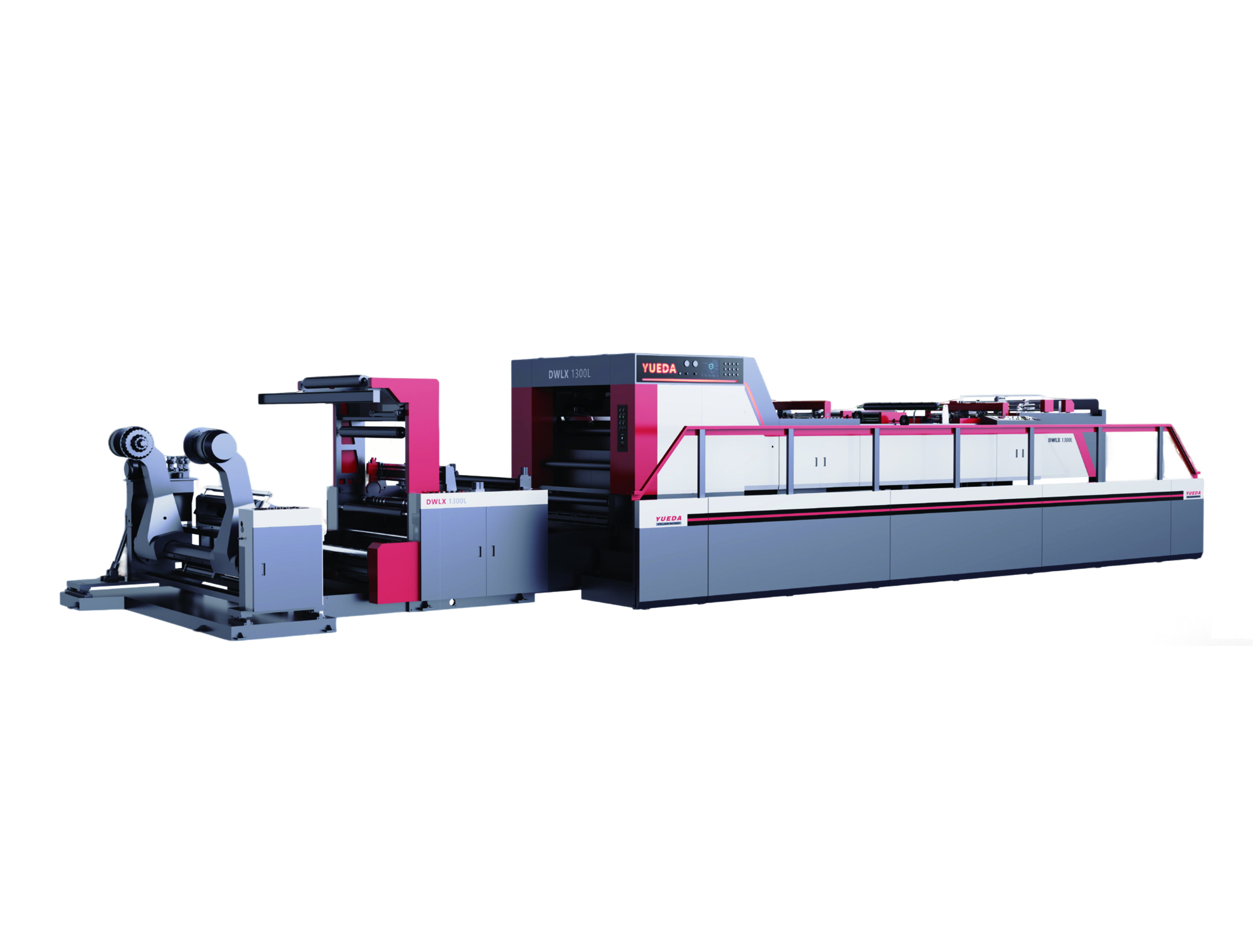
ZNFH water glue lamination machines are widely used in industrial converting, packaging, printing, paper finishing, and
flexible material processing workflows. As the demand for stable adhesion, cost-effective lamination, and environmentally
friendly production increases, water-based glue lamination systems continue to be a preferred choice for many manufacturers.
To achieve consistent output, operators and production planners must clearly understand the input materials that
can be processed and the downstream converting requirements that follow after lamination.
This guide provides a detailed, SEO-friendly overview of water glue lamination machines, including material definitions,
compatible substrates, converting parameters, performance advantages, machine specifications, workflow considerations, and
downstream finishing requirements. The content is designed for industrial blogs, directory pages, product category pages, and
general manufacturing knowledge bases. It focuses on industry-standard information only, without recommending any
specific brand or supplier.
A water glue lamination machine is an industrial laminating system that applies water-based adhesive to one
surface and bonds it to another substrate under controlled pressure, temperature, and tension. Unlike solvent-based systems,
water glue lamination machines use adhesives formulated with water as the primary carrier. This makes the process suitable
for many applications where lower odor, safer handling, and improved environmental performance are important.
In a typical converting line, the machine may combine paper, film, foil, nonwoven fabric, foam, sponge, cardboard, or
decorative material into a single composite structure. The final laminated product is then processed through downstream
converting operations such as cutting, slitting, sheeting, die cutting, rewinding, folding, laminating-to-print, or bag
making.
Water glue lamination continues to be important because it balances production efficiency, cost control, and application
versatility. For many industries, water-based adhesive lamination provides sufficient bond strength while reducing certain
handling concerns associated with solvent systems. It is commonly used when production requires a stable bond on porous or
semi-porous surfaces and when the final application does not demand extreme heat resistance or ultra-fast curing.
Input materials are the raw layers, substrates, and auxiliary materials that enter the lamination process. Proper definition of
input materials is essential because adhesive performance, web handling, drying behavior, and final bond strength depend heavily
on the physical and chemical characteristics of each layer.
In a water glue lamination machine, input materials typically include:
Water glue lamination machines can process a wide range of substrates. Material choice depends on surface energy, porosity,
thickness, thermal resistance, tension tolerance, and end-use performance. Below is a summary of commonly laminated materials
in industrial converting.
| Input Material Type | Typical Characteristics | Common Applications | Compatibility Notes |
|---|---|---|---|
| Paper | Porous, printable, economical, easy to cut | Packaging, labels, cartons, covers | Excellent absorbency; often pairs well with water-based glue |
| Paperboard / Cardboard | Thicker, rigid, structural | Boxes, displays, inserts | Requires stable pressure and controlled drying |
| Film (PET, BOPP, PE) | Smooth, non-porous, flexible | Packaging, protective layers, printed laminates | May require surface treatment or primer for strong adhesion |
| Aluminum Foil | Barrier, reflective, thin, sensitive to wrinkles | Food packaging, insulation, decorative laminates | Needs careful tension control and adhesive distribution |
| Nonwoven Fabric | Soft, breathable, textured | Medical, hygiene, filtration, interior materials | Absorption rate influences glue application speed |
| Textile / Woven Fabric | Flexible, strong, surface texture varies | Furniture, garments, automotive trim | May need pre-treatment for consistent bonding |
| Foam / Sponge | Compressible, thick, elastic | Acoustic panels, cushioning, furniture, packaging | Requires precise coating to avoid glue seepage |
| Leather / Synthetic Leather | Decorative, durable, premium finish | Interior surfaces, upholstery, accessories | Surface compatibility must be verified before production |
| Decorative Paper / Printed Film | Appearance-focused, patterned, coated | Decor panels, consumer goods, display products | Protect print quality during lamination |
| Insulation Materials | Functional, layered, often thick or fibrous | Building materials, thermal barriers, HVAC products | Thermal and compression requirements may be strict |
Successful water glue lamination depends on selecting materials with compatible physical properties. The most important input
material factors include surface treatment, thickness consistency, moisture content, porosity, tension response, and dimensional
stability.
| Material Property | Why It Matters | Production Impact |
|---|---|---|
| Surface Energy | Determines how well adhesive wets the surface | Low surface energy can reduce bond strength |
| Porosity | Controls adhesive absorption and drying speed | Too much absorption can weaken the bond line |
| Thickness | Influences pressure distribution and roller gap settings | Uneven thickness may cause wrinkles or edge defects |
| Moisture Content | Impacts glue drying and dimensional stability | High moisture may extend curing time |
| Heat Resistance | Affects whether lamination survives later converting steps | Important for hot cutting, embossing, or thermoforming |
| Elasticity | Determines how material behaves under tension | Highly elastic materials may require careful web control |
| Dimensional Stability | Measures shrinkage or expansion during processing | Critical for alignment, registration, and final appearance |
Water glue lamination machines can work with different adhesive formulations depending on the substrate pair, bond strength
requirement, drying conditions, and end use. The most common adhesive families are acrylic-based, EVA-based, starch-based, and
modified waterborne formulations. Each adhesive type offers distinct processing characteristics.
| Adhesive Type | Main Features | Best Suited For | Processing Notes |
|---|---|---|---|
| Acrylic Water-Based Adhesive | Clear, flexible, stable, widely used | Film, paper, labels, decorative laminates | Offers good aging resistance and broad compatibility |
| EVA Water-Based Adhesive | Good tack, economical, easy to apply | Paperboard, packaging, general bonding | Often chosen for standard industrial lamination |
| Starch-Based Adhesive | Renewable, cost-efficient, absorbent | Paper, corrugated, carton converting | Best for porous materials; drying control is important |
| Modified Polymer Adhesive | Enhanced flexibility, bond strength, resistance | Mixed substrates and demanding applications | May require specific process settings |
| Specialty Waterborne Adhesive | Custom performance for unique applications | High-performance packaging, technical laminates | Formulation should match final product requirements |
The machine process usually begins with unwinding one or more substrates. Adhesive is then transferred through a roller,
gravure, knife, slot, or similar coating system. After application, the adhesive layer is spread evenly across the target
surface. The second substrate is aligned and pressed into place through laminating rollers. Finally, the laminated web may pass
through a drying or curing section before rewinding, sheeting, or entering the next converting stage.
Typical process sequence:
The performance of a water glue lamination machine depends on its mechanical design, coating precision, control system, drying
capacity, and web handling stability. The following specifications are commonly evaluated in industrial procurement and
production planning.
| Specification Item | Typical Consideration | Why It Matters |
|---|---|---|
| Working Width | Determines max material width | Must match product format and line efficiency |
| Line Speed | Measured in m/min or similar unit | Affects output capacity and adhesive drying needs |
| Coating Method | Roller, gravure, knife, slot, etc. | Controls glue distribution and coverage accuracy |
| Drying System | Hot air, infrared, or hybrid drying | Important for curing and final bond stability |
| Tension Control | Automatic or manual web tension regulation | Reduces wrinkles, stretching, and misalignment |
| Pressure Control | Adjustable nip pressure | Ensures uniform bonding across the web |
| Temperature Control | Heating zone regulation | Supports stable adhesive drying and material handling |
| Automation Level | Basic, semi-automatic, or fully automatic | Impacts productivity, labor cost, and consistency |
Downstream converting refers to the operations performed after lamination to transform the composite material into a finished
or semi-finished product. A successful lamination process must be designed with these later steps in mind, because cutting,
folding, slitting, and packaging can expose weaknesses in adhesion, dimensional stability, or web flatness.
Common downstream converting requirements include:
| Downstream Process | Purpose | Important Requirement |
|---|---|---|
| Slitting | Splits wide laminated rolls into narrower rolls | Requires strong edge integrity and uniform winding |
| Rewinding | Rewinds laminate into finished roll format | Needs stable tension and wrinkle-free web handling |
| Sheeting | Cuts laminate into sheets | Requires accurate length control and clean cut surfaces |
| Die Cutting | Produces custom shapes | Bond must survive punching and high-speed cutting |
| Printing | Adds graphics, text, or codes | Surface must be stable, dry, and suitable for ink adhesion |
| Folding | Forms cartons or packaging structures | Laminate must not crack or separate at fold lines |
| Bag Making | Converts material into bags or pouches | Requires good sealing and dimensional uniformity |
| Embossing | Adds texture or decorative relief | Adhesive layer must tolerate pressure and heat |
| Thermal Conversion | Applies heat-based shaping or sealing | Bond and substrate must resist temperature exposure |
One of the most important principles in water glue lamination is that input material selection directly affects downstream
converting behavior. A laminate that performs well on the machine may still fail later if the substrate pair, adhesive coating
level, or drying conditions are not balanced.
For example, if a highly absorbent paper is laminated with insufficient adhesive coverage, the bond may appear acceptable at
first but fail during die cutting or folding. Likewise, if a film-backed laminate does not have enough surface preparation,
it may delaminate during slitting or winding. Therefore, process planners should evaluate both initial lamination
performance and final converting performance.
Water glue lamination machines are chosen in many industries because they offer practical advantages across production cost,
quality, and operational flexibility. While each application has different technical requirements, the following benefits are
commonly associated with the process.
| Advantage | Description | Industrial Value |
|---|---|---|
| Versatile Substrate Compatibility | Can handle many porous and semi-porous materials | Expands product possibilities |
| Lower Production Cost | Water-based adhesives are often economical | Supports large-scale converting operations |
| Cleaner Working Environment | Reduced odor and simpler handling compared with some solvent systems | Improves shop-floor usability |
| Good Bonding on Paper-Based Products | Especially effective for paper and cardboard composites | Strong fit for packaging and graphic industries |
| Compatible With Many Finishing Steps | Can feed into slitting, cutting, folding, and printing | Supports integrated production lines |
| Scalable Production | Machines can be configured for small, medium, or large output | Useful for custom and mass production alike |
Quality control is essential in water glue lamination because defects can appear at multiple stages: during coating, bonding,
drying, winding, or downstream conversion. Standard quality checks help ensure that the final product meets customer and
manufacturing requirements.
| Defect | Possible Cause | Typical Result |
|---|---|---|
| Wrinkling | Uneven tension, poor web alignment, material deformation | Reduced appearance quality and runnability |
| Bubbling | Trapped air, insufficient pressure, moisture imbalance | Weak spots in the laminate |
| Delamination | Poor adhesion, low surface energy, insufficient drying | Failure during converting or end use |
| Glue Squeeze-Out | Excess adhesive or high nip pressure | Messy edges and possible contamination |
| Edge Curling | Uneven moisture, tension imbalance, thermal stress | Poor stacking and conversion issues |
| Misregistration | Alignment drift or unstable feeding | Graphic or structural mismatch |
Water glue laminated composites are used across many industrial segments. Because the process can combine cost efficiency with
functional performance, it is suitable for both technical and decorative applications.
To maximize performance, manufacturers should plan the water glue lamination process together with downstream converting from
the beginning. This integrated approach helps avoid defects, material waste, and production delays.
| Category | Key Information | Typical Industrial Focus |
|---|---|---|
| Machine Type | Water glue lamination machine | Roll-to-roll or roll-to-sheet composite production |
| Adhesive System | Water-based adhesive application | Paper, film, textile, foam, and board bonding |
| Input Materials | Paper, cardboard, film, foil, nonwoven, fabric, foam | Industrial substrate pairing |
| Main Output | Laminated composite web or sheet | Ready for converting and finishing |
| Downstream Operations | Slitting, cutting, rewinding, folding, printing, die cutting | Final product transformation |
| Key Performance Factors | Bond strength, drying speed, flatness, tension stability | Production reliability and product quality |
ZNFH water glue lamination machines represent a practical category of industrial converting equipment focused on applying
water-based adhesive to compatible substrates and producing stable laminated composites. The success of the process depends on
clearly defining input materials, understanding adhesive behavior, and planning downstream converting requirements in advance.
Whether the final product is destined for packaging, printing, interior decoration, hygiene, insulation, or industrial
composites, the same core principles apply: choose the right input materials, maintain accurate machine settings, ensure proper
drying and bonding, and verify compatibility with slitting, cutting, folding, or other finishing steps. With careful process
control, water glue lamination can deliver efficient production, consistent quality, and strong downstream performance.
For industry pages, catalog descriptions, and blog content, the most effective SEO strategy is to use precise keywords such as
water glue lamination machine, water-based adhesive lamination, lamination input
materials, downstream converting requirements, laminated composite materials, and
industrial converting process. These keywords align well with how buyers, engineers, and production managers
search for technical information online.
Contact: Peter Chen/Jack Chen
Mail : peterchen@yuedamachine.com
Cellphone: +86 18767458866/ +86 19857780001
Address: Building 2, No. 1333 Times Avenue, Longgang City,Wenzhou City, Zhejiang Province China
Copyright © 2026 Wenzhou Yueda Packaging Machinery Co., Ltd. All Rights Reserved.
SitemapThis website uses cookies to ensure you get the best experience on our website.
 Español
 Portugues
 Indonesia
 Tiếng Việt



 Phone
 E-mail
Comment
(0)