

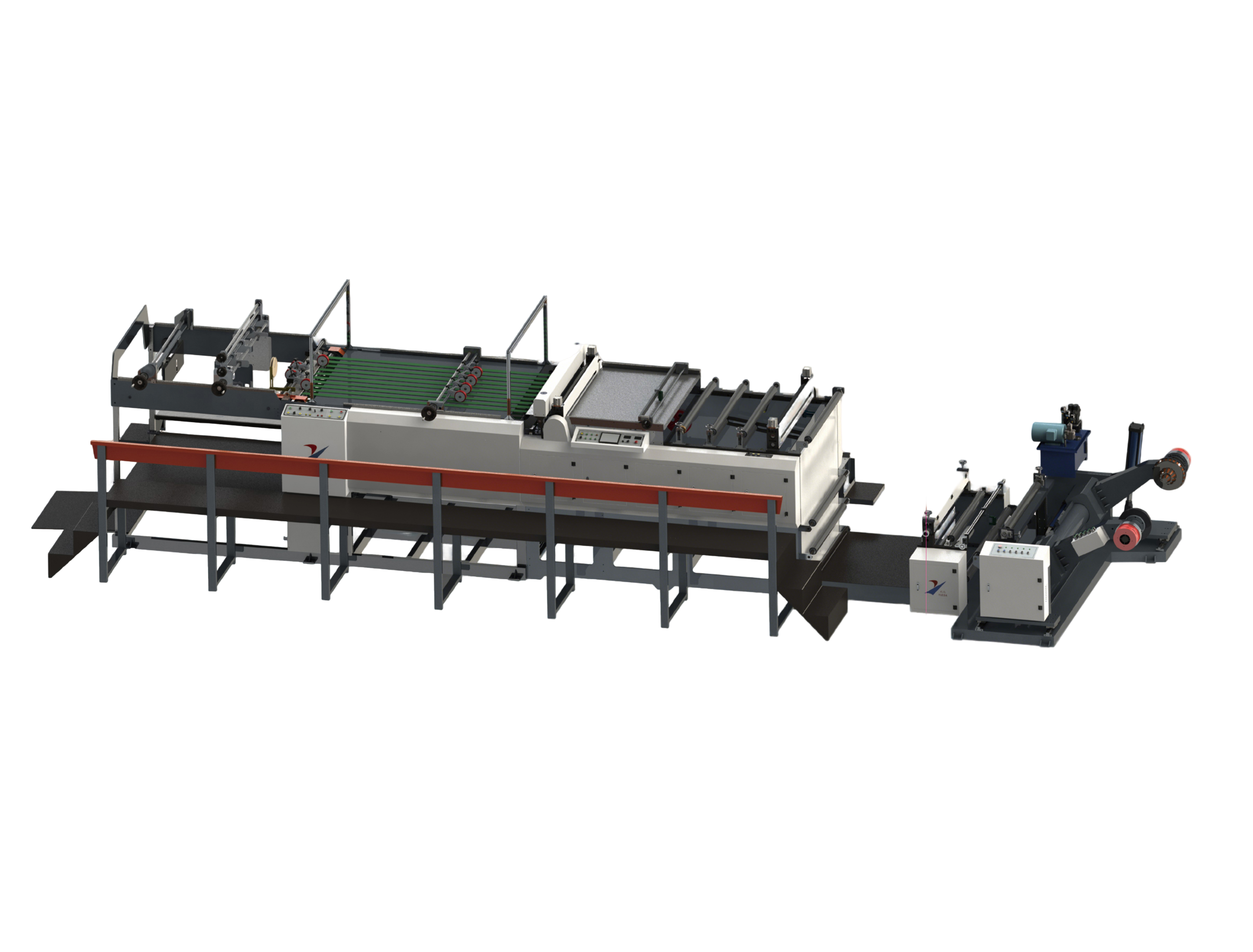
ZNFH water glue lamination is a widely used bonding process in packaging, printing, labels, flexible materials, paper converting, and industrial assembly.
In many production environments, technical support teams need clear, traceable records for material batch control and bonding defect documentation to maintain quality, reduce waste, and improve process stability.
This article provides an industry-focused, SEO-friendly overview of ZNFH water glue lamination, including definitions, process benefits, batch record structures, bonding defect records, inspection standards, troubleshooting information, and practical specification tables.
This content is designed for use in blog posts, directory pages, product category pages, and industry landing pages.
It contains only general industry information and does not recommend any specific company or brand.
The goal is to help readers understand water glue lamination technical support records, improve search visibility for related keywords, and provide a clear reference for quality documentation.
ZNFH water glue lamination refers to a lamination method that uses a water-based adhesive system to bond two or more layers of material together.
In most industrial applications, the phrase is used to describe a process where a liquid adhesive is applied to a substrate, then combined with another layer under pressure and controlled drying or curing conditions.
The result is a bonded composite structure with improved strength, appearance, protection, or performance.
Water glue lamination is commonly used because it supports strong adhesion, relatively low odor, cleaner handling, and a more environmentally friendly workflow compared with some solvent-based systems.
It is especially useful in applications involving paper, cardboard, labels, packaging film, decorative sheets, textile substrates, and certain industrial composites.
| Item | Definition | Common Use |
|---|---|---|
| Water Glue Lamination | Lamination process using water-based adhesive for layer bonding | Packaging, printing, labels, paper converting |
| Material Batch | Traceable group of raw materials produced or received together | Quality control, inventory tracking, defect analysis |
| Bonding Defect | Any failure or abnormality in adhesive performance or laminate integrity | Technical support, inspection, root cause analysis |
| Technical Support Record | Documented information used to troubleshoot and improve process performance | Production quality, after-sales support, process optimization |
Material batch records are essential in ZNFH water glue lamination because adhesive performance can vary based on raw material source, formula consistency, storage conditions, shelf life, and environmental exposure.
When a bonding problem occurs, batch traceability helps technical support teams identify whether the issue is related to a specific lot of adhesive, substrate, primer, coating, or additive.
Without accurate batch records, it becomes difficult to compare production runs, identify recurring quality problems, or isolate the cause of adhesive failure.
A complete batch record system supports faster troubleshooting, more reliable production control, and stronger customer confidence.
A useful material batch and bonding defect record should capture enough information to trace the full production path from raw materials to final bonding result.
The record should be easy to read, standardized, and consistent across shifts and production lines.
| Batch Record Field | Description | Purpose |
|---|---|---|
| Batch Number | Unique identifier for adhesive or substrate lot | Traceability and history tracking |
| Material Name | Name of adhesive, base material, or top layer | Identification of input materials |
| Supplier or Source Code | Internal reference to material source | Supplier-level analysis |
| Production Date | Date of receiving or production | Shelf-life and age tracking |
| Storage Conditions | Temperature, humidity, and storage duration | Quality preservation monitoring |
| Mixing Ratio | Proportion of adhesive components, if applicable | Formula control |
| Application Parameters | Coating weight, speed, pressure, temperature | Process consistency |
| Inspection Result | Pass/fail or measured bonding performance | Quality verification |
| Defect Code | Standard category of observed problem | Trend analysis and troubleshooting |
| Corrective Action | Immediate response or process adjustment | Technical support and improvement |
Bonding defects can appear in many forms, depending on the substrate type, adhesive chemistry, line speed, drying efficiency, and pressure control.
Understanding common bonding defects is a core part of technical support for ZNFH water glue lamination.
| Defect Type | Appearance | Likely Cause | Technical Support Focus |
|---|---|---|---|
| Weak Bonding | Layers separate easily under stress | Insufficient adhesive, poor surface prep, low pressure | Check coating weight, press settings, and surface energy |
| Delamination | Partial or complete layer separation | Improper drying, contamination, incompatible substrate | Inspect materials, curing time, and environmental control |
| Bubble Formation | Visible air pockets or trapped gas | Uneven coating, trapped moisture, high line speed | Adjust adhesive flow, pressure, and drying balance |
| Wrinkling | Surface distortion after lamination | Excess moisture, tension mismatch, temperature imbalance | Review web tension and thermal settings |
| Edge Lifting | Edges peel upward after bonding | Low adhesive coverage, uneven pressure, poor edge compression | Check edge coating and rolling pressure |
| Glue Overflow | Adhesive visible outside target zone | Too much glue, poor viscosity control | Reduce coating amount and monitor viscosity |
| Drying Marks | Streaks or surface marks after cure | Uneven drying or contamination | Inspect drying uniformity and material cleanliness |
| Bond Line Staining | Color change at adhesive line | Material reaction, aging, or impurity | Review formula compatibility and storage history |
A bonding defect record is a structured document that helps technical support teams investigate lamination failures.
It should record what happened, when it happened, which materials were used, and what corrective actions were taken.
The more precise the record, the faster the troubleshooting process.
| Record Section | Recommended Content |
|---|---|
| Problem Summary | Short description of the defect observed during or after lamination |
| Material Batch Information | Batch numbers for adhesive, substrate, and auxiliary materials |
| Process Conditions | Temperature, pressure, speed, coating amount, drying time, humidity |
| Inspection Findings | Visual results, peel performance, bond strength data, defect area |
| Probable Cause | Initial technical judgment based on records and observation |
| Corrective Action | Changes made to fix the issue and prevent recurrence |
| Follow-Up Result | Post-adjustment test results and whether the problem was resolved |
Inspection is an important part of quality control in water glue lamination.
The following table provides general inspection parameters that are commonly monitored in industrial technical support environments.
| Inspection Parameter | Typical Purpose | General Observation Method |
|---|---|---|
| Adhesive Viscosity | Confirms glue flow and coating behavior | Viscometer or process observation |
| Coating Weight | Ensures sufficient adhesive coverage | Weight comparison or thickness measurement |
| Drying Time | Determines whether moisture is properly removed | Timed process control |
| Bond Strength | Measures the strength of the final laminate | Peel test or tensile test |
| Surface Cleanliness | Checks for dust, oil, or contamination | Visual inspection and cleaning audit |
| Humidity Level | Monitors ambient moisture that may affect bonding | Environment sensor or recording system |
| Pressure Uniformity | Confirms even bonding across the full width | Machine setting verification |
| Surface Energy Compatibility | Evaluates how well materials can accept adhesive | Material compatibility assessment |
The following table presents general specification ranges commonly used in water glue lamination environments.
Actual values depend on substrate type, production line design, adhesive formula, and end-use requirements.
| Specification Item | General Range / Value | Notes |
|---|---|---|
| Adhesive Type | Water-based glue | Chosen for cleaner handling and broad compatibility |
| Substrate Types | Paper, cardboard, film, textile, composite sheet | Depends on application design |
| Operating Temperature | Process-dependent | Controlled to support drying and bonding stability |
| Pressure Range | Process-dependent | Must ensure full contact without distortion |
| Line Speed | Low to high, based on equipment capability | Higher speed may require tighter process control |
| Drying/Curing Time | Varies by formula and material thickness | Should be sufficient to avoid residual moisture |
| Quality Check Frequency | Per batch, per shift, or per production lot | Higher risk processes need more frequent checks |
| Documentation Level | Batch record + process log + defect report | Strongly recommended for technical support |
Water glue lamination offers several important advantages for industrial users and quality control teams.
These advantages make it a practical solution for many product categories and production systems.
Technical support records should always include root cause analysis when bonding defects occur.
In water glue lamination, common root causes often relate to one or more of the following categories:
In practical production support, batch and defect records are used to compare good and bad runs, identify patterns, and determine which factor changed before the defect appeared.
For example, if weak bonding only appears after a new batch of adhesive is introduced, the batch record may reveal a viscosity change, storage issue, or formulation variation.
If defects occur across multiple batches, the issue may be more process-oriented, such as machine pressure inconsistency or insufficient drying.
This is why a strong documentation system is one of the most valuable tools in ZNFH water glue lamination technical support.
| Problem Pattern | Likely Investigation Direction |
|---|---|
| Defect only on one batch | Check raw material lot, storage history, and incoming quality |
| Defect across many batches | Check machine settings, operator behavior, and environment |
| Defect appears after storage | Review curing, packaging, and moisture exposure |
| Defect appears at high speed | Review line speed, coating uniformity, and drying capacity |
| Edge defect only | Check pressure distribution, glue coverage, and edge alignment |
To improve ranking relevance and practical usefulness, companies and industrial pages discussing ZNFH water glue lamination should emphasize high-quality record keeping.
Good records are not just administrative documents; they are a technical support asset.
The following keyword phrases are naturally relevant to this topic and may support organic search visibility when used appropriately in content structure, headings, and descriptive text:
The following sample template can be adapted for blog content, directory pages, or internal technical pages.
It is structured for clarity, consistency, and SEO-friendly readability.
| Section | Example Entry |
|---|---|
| Project Name | ZNFH Water Glue Lamination Support Record |
| Date | Production date and inspection date |
| Material Batch | Adhesive lot, substrate lot, auxiliary material lot |
| Machine Settings | Speed, pressure, temperature, glue amount |
| Defect Description | Weak bonding, bubble formation, edge lifting, or delamination |
| Inspection Result | Pass, fail, or partial pass with measured details |
| Root Cause | Environmental variation, adhesive inconsistency, or setup error |
| Action Taken | Adjusted pressure, changed adhesive batch, or improved drying time |
| Final Status | Resolved, under monitoring, or requires further analysis |
ZNFH water glue lamination is an important industrial bonding process that depends heavily on material batch traceability and accurate bonding defect records.
By collecting detailed technical support data, manufacturers and quality teams can improve lamination consistency, reduce bonding failures, and strengthen root cause analysis.
Batch records help identify material-related issues, while defect records help explain process-related and environmental causes.
For industrial blogs, directory pages, and SEO-oriented industry pages, this topic offers strong relevance because it combines high-value technical terminology with practical documentation guidance.
When structured clearly with tables, keyword-rich headings, and descriptive content, ZNFH water glue lamination pages can become highly searchable and useful for users seeking general information about bonding defects, batch tracking, and technical support in water-based lamination systems.
```
If you want, I can also provide:
1. a more SEO-optimized version with meta title/description + FAQ schema text, or
2. a longer 3000–5000 word version with more tables and H2/H3 structure.
Contact: Peter Chen/Jack Chen
Mail : peterchen@yuedamachine.com
Cellphone: +86 18767458866/ +86 19857780001
Address: Building 2, No. 1333 Times Avenue, Longgang City,Wenzhou City, Zhejiang Province China
Copyright © 2026 Wenzhou Yueda Packaging Machinery Co., Ltd. All Rights Reserved.
SitemapThis website uses cookies to ensure you get the best experience on our website.
 Español
 Portugues
 Indonesia
 Tiếng Việt



 Phone
 E-mail
Comment
(0)